
Uptake of low emissions agriculture research outputs by policymakers and other stakeholders requires time. Even when researchers are interested in pursuing the scaling and use of research outputs, most are not incentivized to take this on. Allocating targeted resources and donor support, while involving science communicators and outreach specialists can be effective in overcoming constraints to delivering low emission development research to policymakers.
In Colombia, Kenya, and Vietnam, national low emissions development (LED) policymakers, practitioners, researchers, and development organizations worked together to co-design LED research priorities, outputs, and impact pathways for integration into the LED strategies for large greenhouse gas (GHG) mitigation impacts. Key users of the research outputs include national climate change units within ministries of agriculture and environment, producer organizations, and local governments.
Related Articles: North-South Collaboration | Women In Agriculture Initiative | Climate Smart Agriculture in Vietnam
The U.S. Department of Agriculture’s (USDA) Foreign Agricultural Service, with funding from the Department of State through the Enhancing Capacity for Low Emission Development Strategies (EC-LEDS) program, partners with the agriculture ministries and research organizations in Colombia, Kenya, and Vietnam. This capacity-building program developed several technical outputs, including activity data for fertilizer emissions estimates and mitigation potentials for cacao plantation (Colombia), climate-smart agriculture (CSA) data atlas, and a CSA planning guidebook (Kenya), and national feed database and feed ration formulation tool (Vietnam).

The USDA EC-LEDS program partnered with the University of Vermont/CGIAR Research Program on Climate Change, Agriculture, and Food Security to scale the use of these research outputs and evaluate opportunities for uptake of research into policy decisions in Colombia, Kenya, and Vietnam.
Colombia: Fertilizer activity data used in the national inventory
The research output targeting activity data related to fertilizer emissions estimation has contributed to improving Colombia’s National GHG Inventory. These data for Colombia are disaggregated by the amount of nitrogen fertilizer use by crops, areas, and sources. These data help to reduce the uncertainties in nitrous oxide emissions calculation associated with applied nitrogen fertilizer in the crops. The data for fertilizer also help in planning mitigation activities such as improving nitrogen use efficiency by changing the rates and methods of fertilizer application and agronomic practices.
As a result, the Institute of Hydrology, Meteorology, and Environmental Studies, responsible for improving the National GHG Inventory, has incorporated these data for fertilizer emissions estimation. The Ministry of Agriculture and Rural Development also included the data in its climate change plans (PIGCCS-Agriculture in Spanish). The mitigation measures defined in PIGCCS-Agriculture are included in the nationally determined contribution (NDC) accountability. The updated plan highlights the importance of fertilizer use and emission reduction from the different crops in Colombia.
Kenya: Data books support the development of County CSA programs
Translating the Kenyan National Climate-Smart Agriculture Strategy into action at the local level is a key priority of government agricultural policymakers. Kenya’s Public Finance Management Act (2012) mandates that all counties develop a County Integrated Development Plan (CIDP) for budget management at the county level. A CIDP provides an overall framework for development. County CSA Action Plans are being integrated into the CIDPs.
CSA planning guidebook and data atlas help to operationalize CSA into local adaptation and mitigation planning while building the capacity of sub-national agriculture development planners and extension service providers. The use of the CSA planning guidebook and data atlas in some counties has already shown potential for improved participatory and evidence-based CSA planning at the local level. updated NDC recognizes the need for capacity building at the county level. Therefore, the value of the research outputs (CSA guidebook and data atlas) is evident for capacity building and CSA planning at national level.

Vietnam: Database and software for decreased livestock emission intensity
The EC-LEDS research outputs in Vietnam were tailored to support the national Low Carbon Development Strategy that identifies the actions necessary to achieve the emission reduction goal proposed in the country’s NDC. Improved feed for dairy cattle can have multiple benefits: improvement in milk or meat yield and production efficiency, as well as reduction of GHG emission intensity from the dairy sector. The Ministry of Agriculture and Rural Development participated in developing the national feed database and customizing the ration formulation tool through the advocacy of the research activities, including meetings and workshops with the key actors in the livestock sector. Vietnam’s NDC update and submission to the Subsidiary Body of Scientific and Technological Advice recognized improved feed formulation for the low emission feed management in the livestock sector. This recognition supports the planning and implementation of mitigation options in livestock.
Key lessons
Co-develop and action planning among scientists, policymakers, and implementers results in better integration of research outputs and LED decision making in the country and extends the impact of each research and capacity building initiative. Outputs such as activity data, emission factors, technical options, and tools, databases, knowledge portals, and guidance are needed to improve LED decision-making. However, research institutes need to include this outreach phase in their programs explicitly.
The USDA EC-LEDS’s bilateral partnership with the national governments and research organizations targeted technical assistance and building the shared knowledge base on low emissions development strategies. Evidence-based decision making is critical to ensure LED strategies, NDC updating, implementation, and national inventories track emissions accurately to support national reporting and identify high-impact opportunities. There are many evidence gaps related to LEDS and capacity development, which need enhancing research outputs and for decision makers to use them.
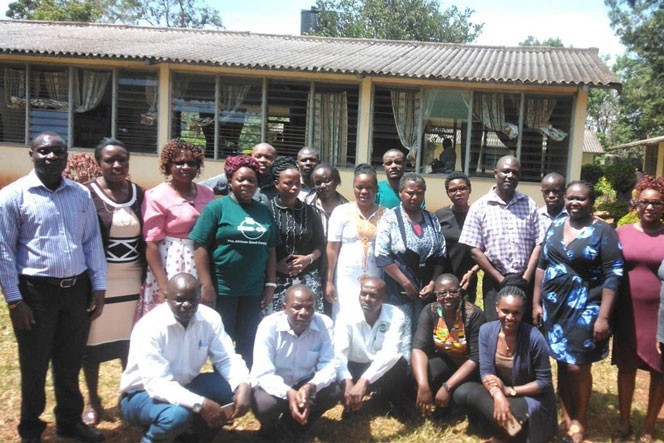
Editor’s Note: The opinions expressed here by Impakter.com contributors are their own, not those of Impakter.com. In the Featured Photo: EC-LEDs team members with national and county government officials during capacity building training on CSA in Busia, Kenya. Featured Photo Credit: USDA EC-LED project team, Kenya.