While global attention is focused elsewhere, Serbia’s student movement for health sector reform deserves notice. These students argue that social well-being depends not only on economic opportunity and political fairness, but also on environmental protection, education, and community health. They want a voice in shaping the health system that will influence their future, and have embraced the concept of One Health, the interface between human, animal, plant, and ecosystem wellbeing.
Social media has widened their reach, much as pamphlets, public squares, and church doors once did, but the pattern is the same: opposition to exclusion, the rise of collective identity, and the demand for rights.
History and Role of Grassroots Movements
The current student-led movement in Serbia reflects a long historical pattern of change driven from the bottom up. From early communities, where survival and health relied on collective decision-making, to later agricultural societies with more hierarchical systems, people have repeatedly challenged power structures that failed to protect the common good. Whether peaceful or conflict-driven, such shifts have long been central to social resilience and public well-being.
In the last millennium, bottom-up change has frequently redefined the determinants of population health. The Magna Carta (1215) limited authoritarian overreach, laying groundwork for legal protections relevant to welfare and justice. The Peasants’ Revolt (1381) emerged after the Black Death, highlighting the connection between systemic inequality and vulnerability to disease. Martin Luther’s reforms (1517) expanded access to literacy and health-related knowledge. The French Revolution (1778–1799) articulated rights-based principles that underpin modern social and health systems. The peaceful revolutions of 1989 in Eastern Europe decentralized governance, enabling more community-driven approaches to health.
Related Articles
Here is a list of articles selected by our Editorial Board that have gained significant interest from the public:
Serbian Student Activism
The Serbian student movement is very much in this long tradition, shaped by current conditions. Students are calling for governance that safeguards democratic principles, equitable access to opportunities, and environmental integrity — all fundamental pillars of the One Health approach. They seek to address key health determinants simultaneously:
- Social determinants — by advocating for fairness, transparency, and inclusive decision-making.
- Environmental determinants — by linking political accountability to ecological stewardship.
- Educational determinants — by leveraging access to knowledge and digital communication for broad-based engagement.
Community engagement is essential. This requires building local capacity for self-organization, promoting cross-sector collaboration, and making governance systems more responsive to emerging health challenges. When communities help shape health-related decisions, the results are not only more equitable but also more resilient to future shocks. The Serbian student movement is therefore more than a political moment; it is a chance to strengthen collaborative, coordinated, community-based approaches to health.
The student efforts go far beyond academic concerns. They aim to reshape the determinants of health in Serbia by redistributing resources, changing laws, and redefining health as a public right — changes that could transform how the country addresses disease, equity, and resilience.
In doing so, the students are risking their futures as they face resistance from the government and some health professionals. Yet with commitment, energy, and courage, they could drive major reform in Serbia’s health sector. If they succeed, they may become a model for change in other countries. They deserve support and greater media attention.
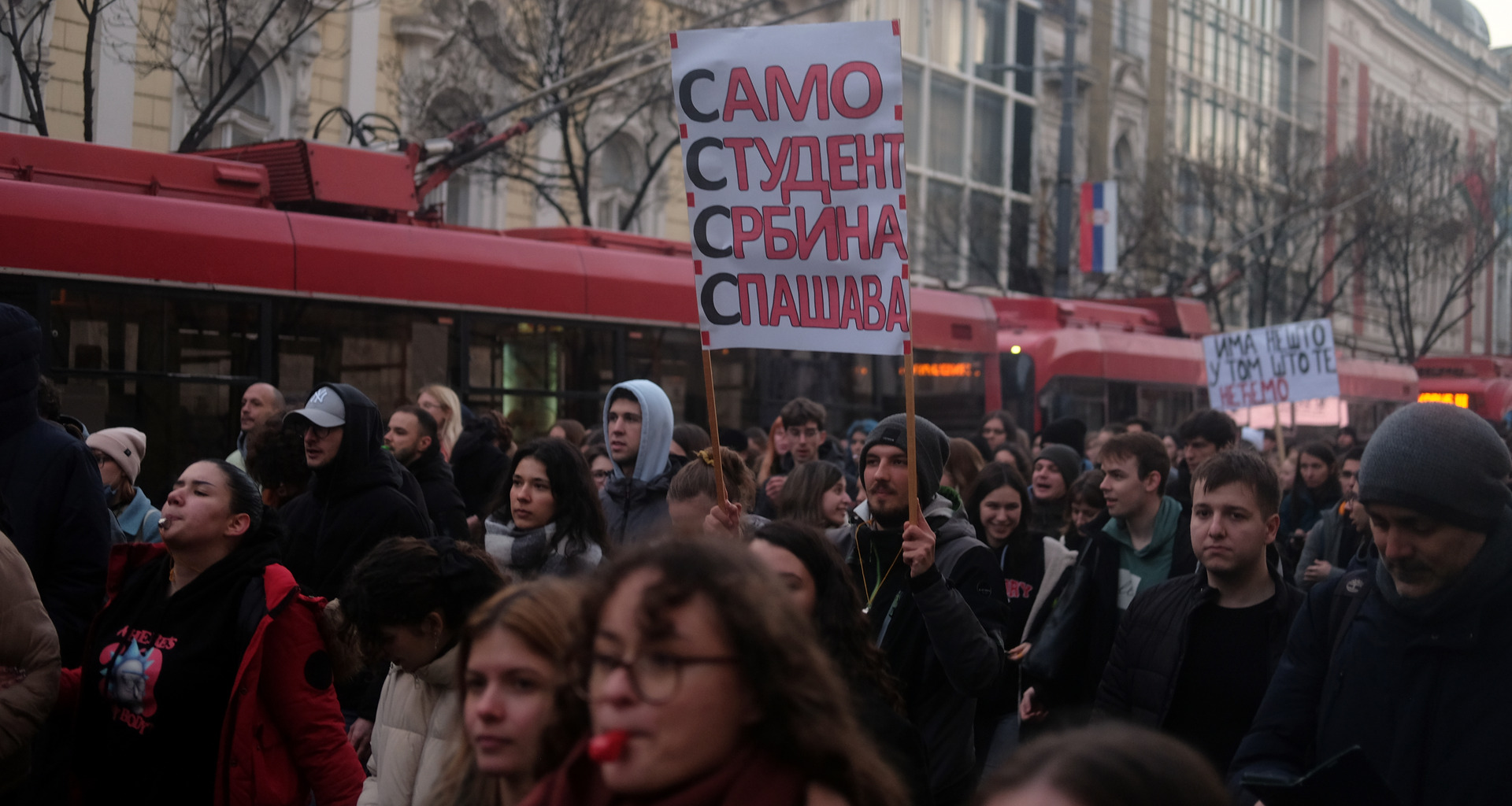
Editor’s Note: The opinions expressed here by the authors are their own, not those of impakter.com — In the Cover Photo: A march during the general strike in Belgrade, Serbia, Jan. 24, 2025. Cover Photo Credit: Wikimedia Commons.