Today, more than ever, the transformation of food systems requires collective action in the face of COP25 results.

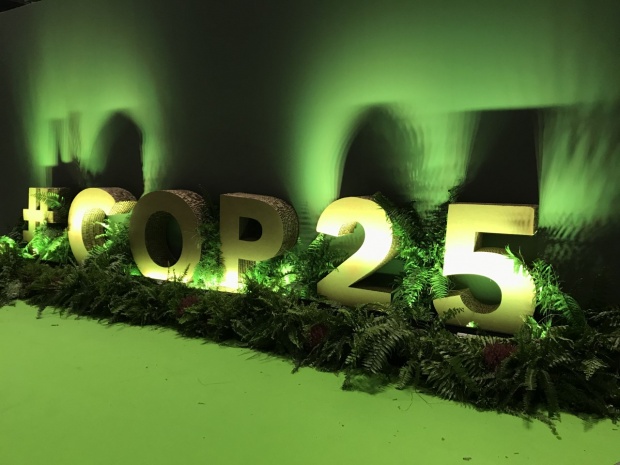
The 25th United Nations Framework Convention on Climate Change Conference of the Parties (COP25) concluded on Dec. 15th, as countries needed additional time to reach an agreement, which sees major issues including the future of the carbon markets and common timeframes for Nationally Determined Contributions (NDCs) pushed down the road to COP26 in Glasgow, even as the Chilean Presidency’s efforts to secure commitments from countries to raise their ambition in line with the science proved to be a major challenge. There was some hope though with a new five year Gender Action Plan adopted and the European Green Deal being announced at the same time.
Related topics: After COP25 – Cities key steps to fight against climate change – Time to Trade Collective Inertia for Collective Action
The COP took place even as over 500,000 climate protesters gathered to put pressure on decision makers to take ambitious and transformative action. During the talks, Greta Thunberg warned delegates that ‘we have achieved nothing’ until emissions fall drastically, an appropriate warning given that the latest projections show we are heading towards a 3°C warmer world.
The following summary of agriculture and climate at COP25 draws on the CGIAR Research Program on Climate Change, Agriculture and Food Security’s (CCAFS) organization of and participation in over 18 events at the conference, with over 38 partners.
Spotlight on Latin America
With Chile holding the COP presidency, the efforts of Latin American countries to transform their food systems were highlighted at the conference. One of the most notable was the launch of the Latin American and Caribbean Platform for Climate Action in Agriculture (PLACA), with 10 countries and the World Bank and CCAFS signing an agreement to provide technical support to PLACA.
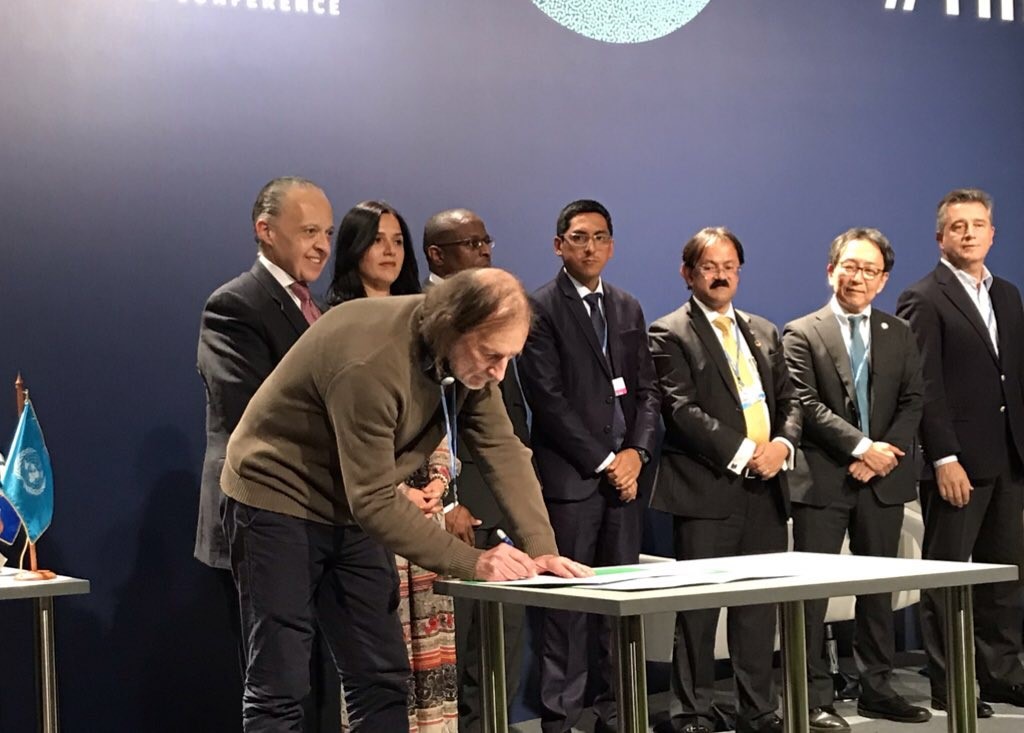
Bruce Campbell, CCAFS Program Director, signs the agreement to provide support to PLACA’s implementation. Photo: M. Van Epp (CCAFS)
Other events focused on specific opportunities and tools for promoting climate action through the transformation of food systems in the region. Two tools stood out. Firstly, the utility of the Local Technical Agroclimatic Committee (LTAC) approach was highlighted by different stakeholders in several discussions, and secondly, a series of briefs on climate change impacts on agriculture in Latin America was launched by the Inter-American Development Bank (IDB) to support regional adaptation planning.
Improving nutrient use and manure management
The 4th Koronivia Joint Work on Agriculture workshop at the conference focused on improved nutrient use and manure management. Despite the many technologies and solutions to improve nutrient management practices already available, barriers remain. Concerns cited by countries include efficiency of manure in replacing synthetic fertilizer, means for implementing and upscaling existing technologies, availability of data for planning precision agriculture and evaluating social impacts, redirection of subsidies and even the role of dietary change. The workshop discussion points to priorities for research that will help countries achieve sustainable and resilient agriculture.
Farmers at the center
A transformation in food systems in not possible unless it is led by farmers and consumers. Several events focused on developing solutions with these stakeholder groups and supporting them to implement those solutions. In one, the World Farmers’ Organisation (WFO) and CCAFS discussed their partnership that links science to farmer-led action, with CCAFS Program Director Bruce Campbell presenting the results of an evaluation of climate-smartness of technologies and practices proposed by farmers.
Climate services are an essential tool for helping farming communities cope with climate change. Their importance was underlined by the launch of the first State of Climate Services report from the World Meteorological Organization (WMO) and a wide range of partners, produced in response to a request from the previous COP. The report offers pathways for countries to strengthen their climate services.
Addressing the implementation gap
While informing ambitious commitments is important, support for implementation is also crucial. Enhancing countries’ Nationally Determined Contributions (NDCs) in 2020 is an important opportunity to address the ‘implementation gap’. In recognition of this opportunity, the World Resources Institute (WRI) and United Nations Development Programme (UNDP) released guidance on enhancing agriculture related actions in NDCs. Funding is a prominent missing piece of the implementation puzzle, too. A series of investment plans for climate-smart agriculture launched by the World Bank and partners[1] gives practical examples from Bangladesh, Cote d’Ivoire and Zambia (with more countries on the way) on how investment for realizing food security and climate benefits can be secured. Finally, as noted at a Marrakech Partnership for Global Climate Action event organized by the Global Resilience Partnership (GRP), metrics and tracking are needed to assess the success of implementation.
Connecting science to social movements
Social movements and youth have the power to catalyze transformative climate action in food systems and beyond. A participatory theater performance at an event led by the Food, Agriculture and Natural Resources Policy Analysis Network (FANRPAN) and partners[2] showcased how theater can be a tool for young farmers to engage policy makers and investors.
Some key takeaways? Firstly, incremental change is not sufficient to address the scale of the challenge. A transformation is needed, and fast. Secondly, disconnected, piecemeal projects will also not suffice. With so many areas of food systems needing climate action, a systems approach is called for. Lastly, we cannot afford to waste time arguing over terminology—we must focus on what vulnerable farmers need and making change happen on the ground. CCAFS aims to answer these calls with Transforming food systems under a changing climate, a global initiative bringing together over 100 partners to catalyze comprehensive, transformative climate action in global food systems. Join us in February to discuss opportunities for achieving zero emissions.
[1] In partnership with the The International Center for Tropical Agriculture (CIAT), the World Farmers’ Organisation (WFO), Adaptation of African Agriculture (AAA) initiative, and the African Adaptation Initiative (AAI).
[2] Partners include CARE International, World Bank, Deutsche Gesellschaft für Internationale Zusammenarbeit (GIZ), the Centre for Coordination of Agricultural Research and Development for Southern Africa (CCARDESA), and Adaptation of African Agriculture (AAA).
About the author:Dhanush Dinesh is Global Policy Engagement Manager of the CGIAR Research Program on Climate Change, Agriculture and Food Security (CCAFS). Ciniro Costa is Junior Science Officer for CCAFS and Project Coordinator at IMAFLORA. Deissy Martínez Baron is Regional Program Coordinator for CCAFS in Latin America. Marissa Van Epp is Global Communications and Knowledge Manager for CCAFS.
EDITOR’S NOTE: The opinions expressed here by Impakter.com columnists are their own, not those of Impakter.com. Photo Credit: M. Van Epp (CCAFS)