Set up in 1985, the Barunga Festival is one of the largest gatherings of Indigenous Australians that takes place within the annual calendar, attracting more people every year to its remote location in Australia’s Northern Territory. As the Festival 2022 has just been announced to take place between 10th-12th June, it seems an appropriate time to reflect on the history of such a politically significant event and reconsider its place in Australian society today.
Despite the view of many that relations between Indigenous and non-Indigenous Australians have improved, the country remains more divided than ever. As Maggie Walter writes, highlights in the 21st century, Australian national identity exists within uneasy opposing “supportive and reconciliatory attitudes and levels of anti-Aboriginal sentiment” which appear to “coexist as the Australian norms.”
A trickle of small changes began to take place this year in the wake of the most recent wave of the Black Lives Matter Movement and calls to decolonise society, education systems, and politics. Two months ago, the Daintree Rainforest was handed back to its original Indigenous custodians in a landmark deal with the Australian government.
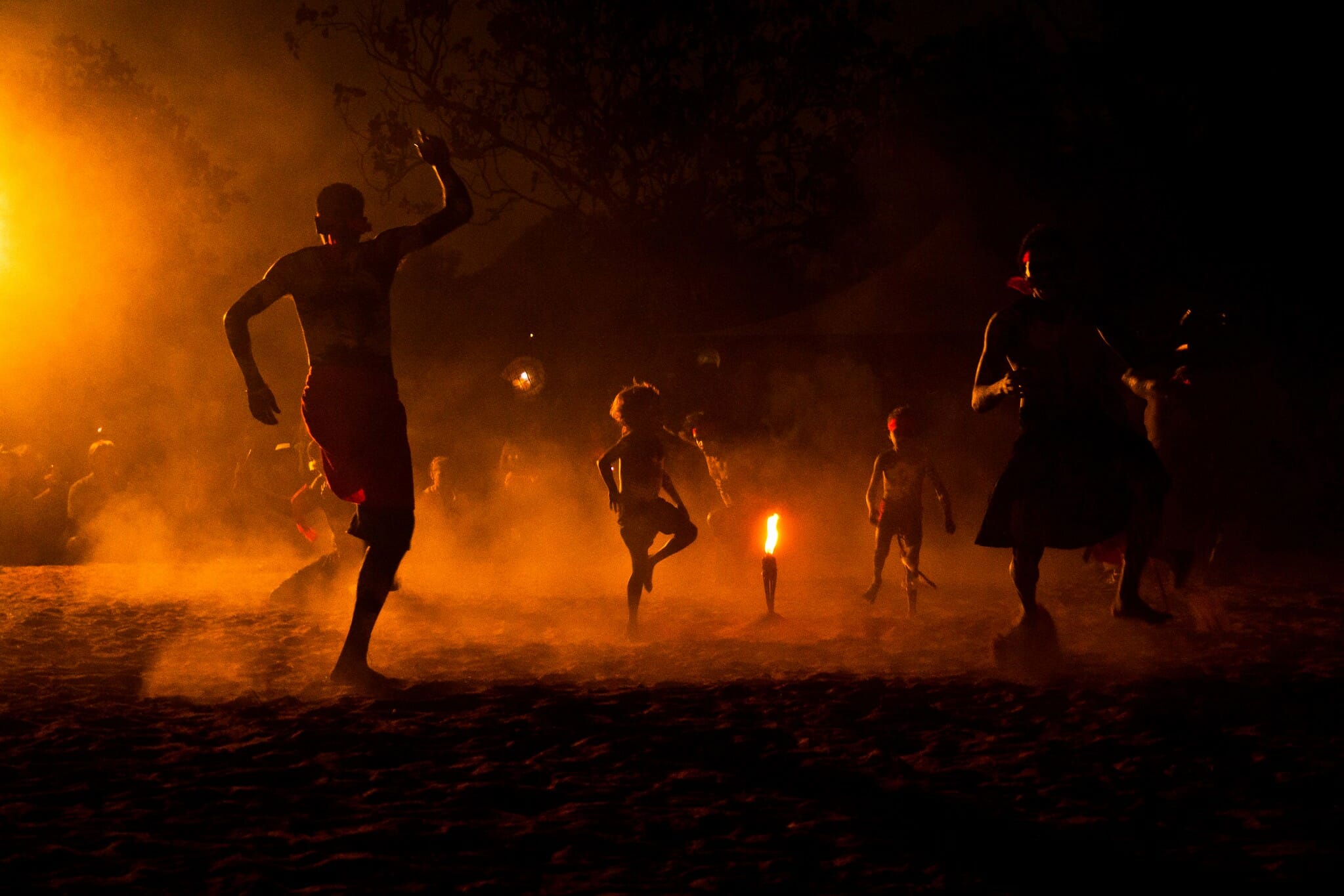
The Barunga festival is a three-day long event, located 80 kilometers to the South of Katherine, where audiences descend upon the small remote community to camp and take part in a program of music, sport, traditional arts and cultural activities at a remove from Westernised Australian society and its colonial legacy. It is a microcosm of Indigenous Australian empowerment that aims to celebrate the survival of one of the world’s oldest living cultures. This puts the Festival in pole position to instigate social change and stand up for Indigenous Australian rights.
'I'm proud': Maningrida women share their stories, music and culture at Barunga Festival https://t.co/1NeXSo0oqP
— ABC News (@abcnews) June 13, 2021
1988: a watershed moment for the Barunga Festival
At the 1988 Festival, Aboriginal leaders presented the then Australian Prime Minister, Bob Hawke with the “Barunga Statement”. The “Statement” called for a treaty between Indigenous owners and occupiers of Australia and the government for the recognition of Indigenous rights in Australia. In an act that looked promising for Indigenous Australians, Hawke signed the statement, but he failed to ever bring the treaty before parliament.
Indigenous band Yothu Yindi released a hit single in 1991, written in response to these events. Thirty years later, at the 2018 Festival (tag-lined “Treaty”), Yothu Yindi’s lyrics – “promises can disappear/Just like writing in the sand” – were still resonant and were even reflected in the t-shirts worn by land council members, which read: “30 years of broken promises.”
This political inaction is a direct reflection of Australia’s colonial history and its legacy in contemporary society, which sees a continually perpetuated divide between Indigenous and non-Indigenous Australians.
However, the Festival has contributed to an explosion of popular Indigenous bands like Yothu Yindi, who fuse Indigenous Australian music with Western popular musical styles to reach wider audiences. Most closely related to Yothu Yindi are Barunga frequenters, the Saltwater Band from Echo Island combines their Yolngu musical traditions with Reggae/ska-influenced pop music, also resonating with the term Ganma or “both ways” prominent in Yolngu ideology. The term demonstrates the unique ability of Indigenous Australian culture to adapt to mainstream society whilst maintaining its cultural heritage.
Skinnyfish music, Barunga’s long-time partner, has been responsible for the production and distribution of the recordings of Barunga artists Blekbala Mujik, B2M, Lonely Boys and Saltwater Band. The Barunga Festival has created a positive space for Indigenous performers to grow and develop as well as building links with agencies such as the Skinnyfish to disseminate Indigenous music whilst supporting the notions of “Indigenous subjectivity, collectivist, and sovereignty”.
The lineup for this year’s Barunga Festival is sure to promote the globally successful names of Indigenous popular groups as well as traditional Bungul or ceremonial dance and the telling of Dreamtime mythological stories. The Festival remains deeply rooted in ancient Yolngu tradition as well as reflecting the culture’s relevance in society today.
Related Articles: ‘Bird Like Him Never Die’: Dalaithngu, Giant of Australian Cinema Dies | World’s Oldest Tropical Rainforest Handed Back To Original Indigenous Custodians
“Words are cheap, words are easy”: Barunga’s political legacy
More than thirty years since the treaty was signed, the Barunga Festival is framed within its political legacy. Discussions of a treaty between Indigenous Australians, the government and non-Indigenous Australians re-emerged within political circles and on the first day of the 2018 Festival, Northern Land Council chairman Samuel Bush-Blanasi and Northern Territory (NT) chief minister Michael Gunner signed the “Barunga agreement” to “develop a process to negotiate a Northern Territory treaty”.
Whilst this appeared less ambitious than the original promise of a treaty concerning all Indigenous Australians, it was followed through with the NT Treaty Commission releasing the discussion paper on 30 June 2020 as part of the second stage of its consultation program.
Treaty yeah, treaty now? 27 years ago today Barunga Statement was presented to PM Bob Hawke http://t.co/6yhmNtx80M pic.twitter.com/22MIgcUL0i
— AIATSIS (@AIATSIS) June 10, 2015
Despite this, accounts of recent Festivals suggest that people are growing tired of “talking politicians”, as put by Yothu Yindi in “Treaty”.
At last year’s event, politics occupied an external presence and the celebration of Indigenous music and culture took centre stage. After all, until more action is taken by the NT Treaty Commision, Yothu Yindi’s lyric, “words are easy, words are cheap/ Much cheaper than our priceless land” will reverberate around the event.
The survival of the world’s most ancient cultures is key to the preservation of knowledge systems; and the world must soon learn the value of such ancient cultures if we – humanity as a whole – are to protect our planet for a sustainable future.
The 2022 Barunga Festival will take place between the 10th and 12th of June next year. Stay tuned to hear more about this important event that has been the centre of decades of political relations between Indigenous and non-Indigenous Australians, hoping to finally “fix” for everyone what “national identity” means – in short, what Australians stand for.
Editor’s Note: The opinions expressed here by Impakter.com columnists are their own, not those of Impakter.com. — In the Featured Photo: Barunga Festival, Northern Territory (2012). Featured Photo Credit: Mathew McHugh