In April 1989, thousands of students began gathering in Beijing’s Tiananmen Square to make an unprecedented cry for freedom.
The protests, which began to mark the death of a popular senior Communist Party official, grew quickly. Thousands became a million as workers and ordinary people joined the students calling for democracy, including freedom of the press and free speech. Protests were rare in China and the Communist authorities were unsure how to react.
The huge demonstrations lasted six weeks before the government sent the tanks in. Hundreds died as the protests were brutally quashed in what continues to be one of the most sensitive and censored topics in mainland China.
In Xi Jinping’s China, the June 4 1989 Tiananmen Square massacre is a secret the authorities are desperate to keep buried. In Taiwan, however, the anniversary of the massacre can still be commemorated openly.
Taiwanese democracy holds an exemplary reputation, warts and all. Ranked 10th in the latest Economist Intelligence Unit’s Democracy Index 2022 (mainland China is ranked 156th) Taiwan is considered one of three full democracies in Asia, alongside Japan and South Korea.
China’s 2021 crackdown in Hong Kong placed the mission to counter collective amnesia imposed by Beijing firmly on Taiwan’s shoulders. Last year, Taiwanese activists erected a replica of the Pillar of Shame to mark the 33rd anniversary of the Tiananmen massacre. The sculpture was originally created by Danish artist Jens Galschiøt in 1997 to stand at the University of Hong Kong to honour the victims of the 1989 massacre, but was removed by authorities in 2021.
Taiwan’s democratic standing now appears even more pronounced in contrast to mainland China’s autocracy under Xi Jinping’s increasingly personalised totalitarian regime — its democratic governance a trump card and the core of its soft power strategy.
The contrast between what the Chinese call “Lian An San Di” (“two sides of the Strait, and three places”) became even starker towards the end of last year when the White Paper Movement broke out in China — a nationwide protest movement, the largest since Tiananmen Square. People across 20 cities and students from more than 200 universities took to the streets in shared grievances over humanitarian disasters, a loss of personal freedoms under the Covid-zero policy and the 20th Party Congress ushering another term for the Xi regime.
“We want to be citizens, not slaves,” they chanted.
“We want elections, not a dictator”.
Xi’s domestic political repression and aggression abroad have made the United States and its allies rediscover the value of Taiwan as a fellow democracy. Supporting Taiwan’s national security and international participation has often been a response to Beijing’s challenges to regional security and rules-based international order.
Despite Beijing’s warnings and military provocations, 13 nations still maintain diplomatic ties with Taiwan and several others, notably the United States, maintain “strategic ambiguity.”
Last month, Taiwanese Foreign Minister Joseph Wu told The Japan Times that Taipei has been forging unofficial relations with the international community.
“If you look at the number of delegations coming from Europe, or even from the United States, it’s just so many of them. We will have two delegations coming from France and more delegations coming from Germany,” Wu said.
“They want to come to Taiwan, stand on Taiwanese soil and declare that they support Taiwan in the face of the threat coming from China.”
Related Articles: Taiwan: Could China’s War Games Turn Real? | President Biden Launches New Indo-Pacific Trade Deal, Without Taiwan
Taiwan’s democratic rule is frequently cited as a factor in justifying security commitments — it adds a moral consideration on top of Taiwan’s strategic location and crucial role in the global manufacturing of semiconductor chips. For example, the 2022 Joint Statement of Australia-US Ministerial Consultations “reaffirmed their commitment to maintaining peace and stability across the Taiwan Strait”. It considered “Taiwan’s role as a leading democracy in the Indo-Pacific region” as well as an “important regional economy, and a key contributor to critical supply chains.”
In a 2018 speech on Double Ten Day, Taiwan’s annual national holiday, President Tsai declared Taiwan as “a beacon of democratic transition for people in mainland China, Hong Kong and friends all over the world pursuing democracy.”
Taiwan’s role as a free and democratic territory has placed it in a niche position to be able to support the cause of democracy on the mainland. But its support for this cause has garnered mixed results, according to experts in an upcoming book.
Taipei has maintained active democracy diplomacy by promoting itself internationally as a great democracy deserving to be cherished on the world stage. Its flagship agency, the Taiwan Foundation for Democracy, a not-for-profit managed by the Ministry of Foreign Affairs, actively provides funds to activist groups in the Indo-Pacific, including mainland China and Hong Kong. It also produces the annual China Human Rights Report.
But resources allocated to directly support democracy and rights campaigns launched by Chinese/Hong Kong groups remain very limited compared to other pursuits, especially compared to the rate at which Taiwanese politicians champion their democracy as a pathbreaker for all the Chinese people.
Since being founded in 2006, the organisation has yet to give its annual Asia Democracy and Human Rights Award, one of the world’s most generous awards of its kind, to any Chinese or Hong Kong advocacy group or activist. Instead, representatives from many countries neighbouring China have received the well-financed award despite the lack of democracy and human rights in China posing as the most serious threat to Taiwan’s democracy and national security.
Even at the height of Hong Kong’s protest movement in 2019-2020, when international democracy promotion groups were throwing support behind protesters, the Foundation for Democracy gave its annual awards to two Sydney-based NGOs.
Many Hongkongers who have fled to Taiwan to seek asylum in what they assumed should be the most staunch supporter of their homeland’s democracy have also had to swallow a bitter pill. Taipei has persistently refused to create a clear legal framework for political asylum based on international refugee laws and it has been exceedingly hard to gain a permanent settlement, driving many of them to “second exile” in the US.
It is natural for Taipei to capitalise on its “beacon of democracy” status to shore up international support. More and more people across the island identify themselves as “Taiwanese,” not Chinese, in order to distance their identity away from the People’s Republic of China — a growing trend called de-Sinification.
The upcoming fresh government and set of legislators, to be elected in less than a year, should remember that Taiwan’s security ultimately lies in the democratisation of China.
— —
This piece is based on a larger research project funded by The Chiang Ching-kuo Foundation for International Scholarly Exchange. It was originally published by 360info™.
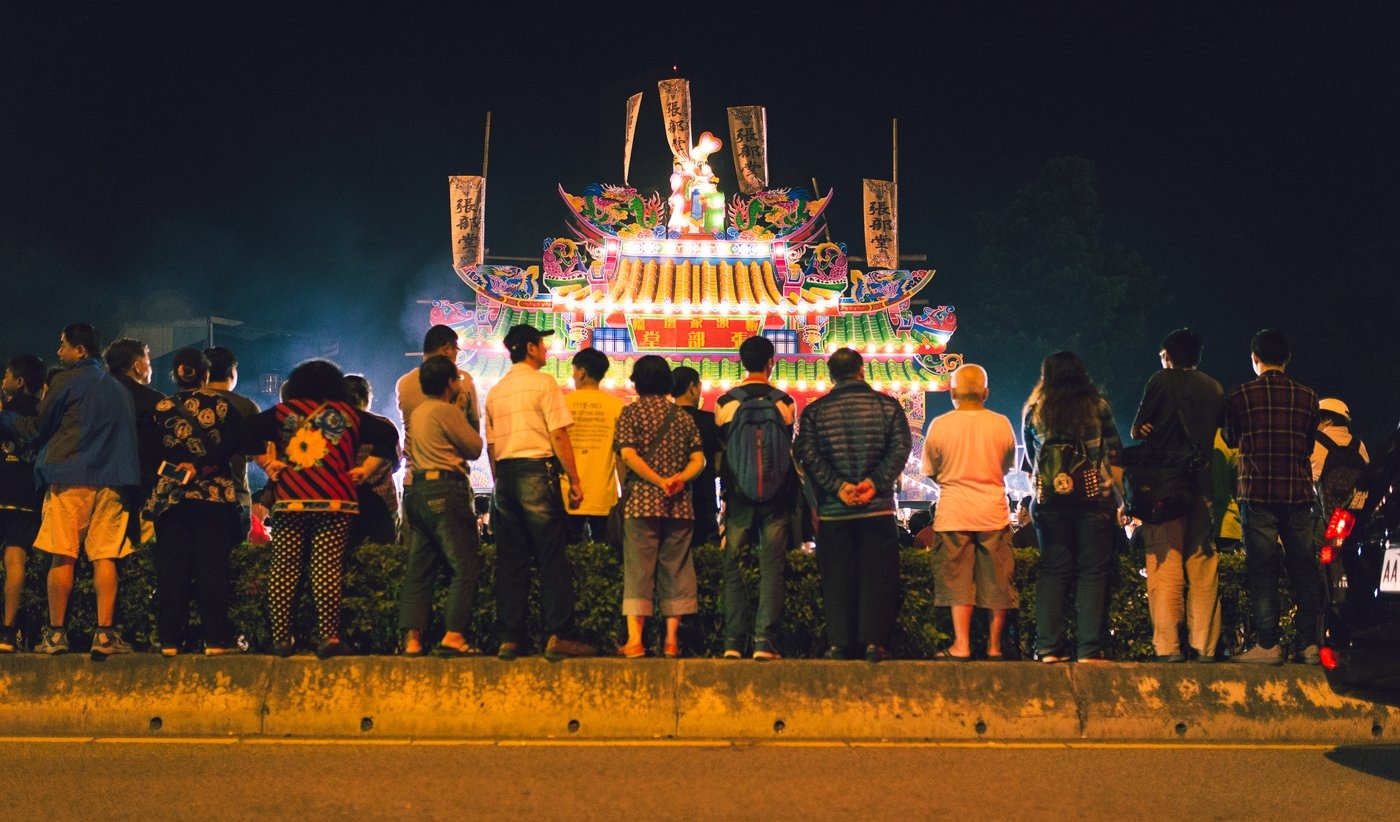
Editor’s Note: The opinions expressed here by the authors are their own, not those of Impakter.com — In the Featured Photo: Taiwan was the first place in Asia to recognise same-sex marriage. Featured Photo Credit: Taiwan Scenery Gallery/Flickr.