Impakter
  • Environment
    • Biodiversity
    • Climate Change
    • Circular Economy
    • Energy
  • FINANCE
    • ESG News
    • Sustainable Finance
    • Business
  • TECH
    • Start-up
    • AI & Machine Learning
    • Green Tech
  • Industry News
    • Entertainment
    • Food and Agriculture
    • Health
    • Politics & Foreign Affairs
    • Philanthropy
    • Science
    • Sport
  • Editorial Series
    • SDGs Series
    • Shape Your Future
    • Sustainable Cities
      • Copenhagen
      • San Francisco
      • Seattle
      • Sydney
  • About us
    • Company
    • Team
    • Global Leaders
    • Partners
    • Write for Impakter
    • Contact Us
    • Privacy Policy
No Result
View All Result
Impakter logo
No Result
View All Result
European Union Deforestation Regulation and its impact on small coffee farmers across the globe

How the EU’s Deforestation Regulation Could Affect the Coffee Industry

As the end-of-year deadline approaches, small farmers throughout the coffee-producing world are struggling to keep up

Sarah PerrasbySarah Perras
May 9, 2025
in Environment, Food and Agriculture
0

Europe is the largest consumer of coffee in the world. From a tiny cup of espresso in a local Italian cafe to an expensive pour-over in a hip Swedish neighborhood, Europe undeniably loves coffee. It imports around 33% of the world’s coffee, and according to the USDA, it is responsible for 25% of coffee consumption.  

So what? Well, coffee farming is a significant contributor to deforestation.

Deforestation is the second-largest source of carbon emissions, with 90% of deforestation caused by agricultural expansion. Annually, ten million hectares of forest, or an area the size of Portugal, are cut down worldwide to make room for farming or urban expansion. Focusing on that little brown bean, coffee farming is linked to about 6% of Europe-led deforestation across the coffee-producing world. 

To help end deforestation, the European Union (EU) created the European Union Deforestation Regulation (EUDR), which came into effect in June 2023. The regulation aims to increase transparency in supply chains and ensure that key EU products do not contribute to further deforestation. 

Starting Dec. 30, 2025, large companies will be required to specify the exact location of coffee bean production. Smaller companies will be subject to the same requirements beginning in June next year. Other industries affected by this regulation include cocoa, soy, rubber, and wood, among others. 

The regulation, which has been delayed from its planned start date of Dec. 30, 2024, is putting pressure on the supply chains of coffee and other agricultural industries. If a company cannot specify the exact production location, it will lose access to the European market.

The EUDR’s Effect on the Coffee Industry

Brazil, Vietnam, Colombia, Indonesia, and Ethiopia are among the world’s largest coffee-producing countries, with Brazil exporting over 60 million bags of coffee a year. Thousands of small farms contribute to each country’s coffee exports, with Vietnam having over 1.4 million small farms. For most of these countries, the coffee industry is a significant part of the economy.  

coffee farmer picking coffee beans could face challenges with EU deforestation regulation
Small coffee farmers are facing challenges with EU regulation. Photo credit: Wikimedia Commons

Many small farmers are finding themselves under a lot of pressure with the enforcement of this regulation. A large majority of coffee production happens in developing countries. Many small-time farmers don’t have access to the geolocation technology required per the EUDR, which is putting a strain on the supply chain. 

The cost of complying with the EUDR could be significant for many small, family-run farms. Several requirements, such as the cost of geolocation technology, certifications, and additional data collection, could cause a financial burden on many small farmers who rely heavily on the European market.

In a recent interview with The New York Times, ODI Global, an international think tank dedicated to positive change, economist Jodie Keane said:

“We all want to prevent deforestation, but if you’re going to apply that standard to rural producers, you’re going to have to provide a lot of outreach, sensitization, you’re going to have to invest in learning how to do things differently so that they don’t just get dropped from the supply chain.”

The New York Times also interviewed some of the farmers this new regulation would affect, including Dejene Dadi, head of the Oromia Coffee Farmers Cooperative Union in Ethiopia. “Of course, data is very important to us, but what we are just saying is we need support. It’s very challenging and costly, and we don’t have any help,” said Dejene Dadi.


Related Articles: Is Beanless Coffee the Future? | To Adapt to a Changing Climate, Coffee Farmers Need Bold Allies | Brewing Sustainability: Imagining a Circular Coffee Supply Chain

The European Commission announced on April 14 that it is taking steps to simplify the regulations’ guidelines while also aiming to reduce unnecessary costs for economic operators and authorities by about 30%. These revisions also include a decrease in due diligence statements, with the goal of guaranteeing easier and more efficient data entry. 

A lack of information on specific implementation strategies and minimal decision-making power are huge concerns for these small farmers. The revision of the guidelines last month will hopefully ease these uncertainties and offer support to these small-time producers. 

Jessika Roswall, Commissioner for Environment, Water Resilience and a Competitive Circular Economy, stated: 

“We are committed to implementing EU rules on deforestation in a spirit of close partnership, transparency, and open dialogue. Our aim is to reduce administrative burden for companies while preserving the goals of the regulation. We will continue to work very closely with all stakeholders to ensure that our rules deliver on reducing global deforestation and forest degradation in the least burdensome way for companies.”

Additionally, according to the recent press release, the Commission has allocated 86 million euros to aiding partner countries in their compliance efforts. 

The true impact of this regulation will not be fully realized until December. Until then, we can only hope that our favorite coffee beans will continue gracing our local cafes and supermarkets. 

So next time you savor a sip of that dark brown energy juice, be mindful of its journey and the people who brought it to you. 


Editor’s Note: The opinions expressed here by the authors are their own, not those of impakter.com — Cover Photo Credit: Wojciech Pacześ.

Tags: AgricultureClimate ChangeEUEuropean UnionImpakterSustainability
Previous Post

Eight of the Top 10 Online Shows Are Spreading Climate Misinformation

Next Post

Bill Gates Voices Need for World Unification in 2045 Target to Donate his Wealth

Related Posts

ESG News regarding Flooding in Indonesia; Glencore promises copper production boost; Trump proposes slashing fuel efficiency standards, and Vulcan Energy receives $2.57bn of funding for lithium project
Business

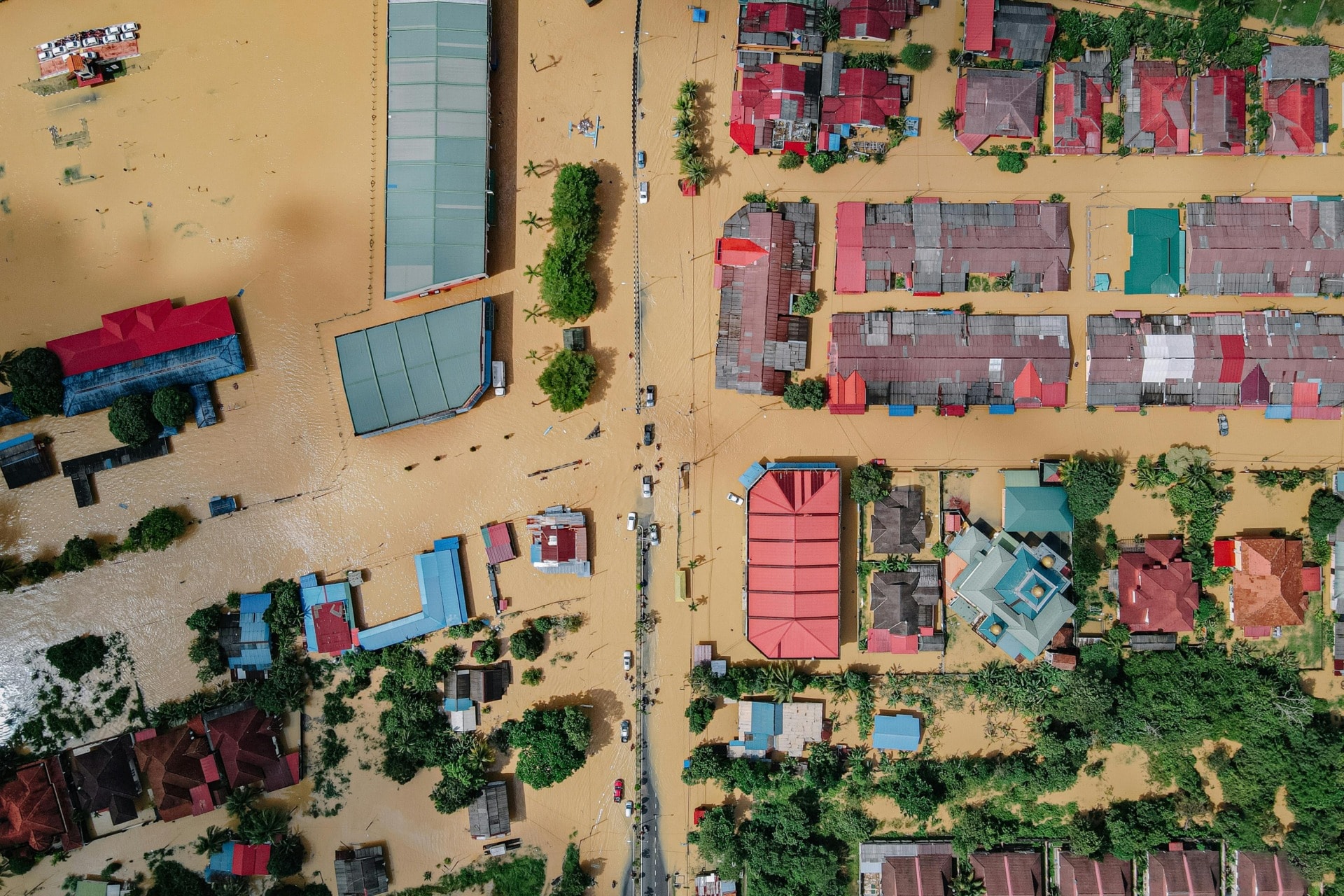
Indonesians Blame Deforestation for Recent Floodings

Today’s ESG Updates: More than 700 Lives Lost in Recent Indonesian Floods: A combination of mass deforestation and heavy rainfall...

byAriq Haidar
December 4, 2025
How a Framework Convention Could Address Climate and Socio-Economic Displacement
Politics & Foreign Affairs

How a Framework Convention Could Address Climate and Socio-Economic Displacement

The unprecedented shift in human (im)mobility has seen over 120 million forced to flee their homes due to war, violence,...

byDr. Shepherd Mutsvara - Research Fellow at the University of Münster, Germany
December 3, 2025
ESG News regarding EC’s public consultation for climate resilience, e.on ceo deprioritizing solar and wind, EIB funding Polish offshore wind farm, and Taiwan restarting nuclear program
Business

European Commission Opens Climate Resilience Consultation

Today’s ESG Updates EU Invites Public to Shape Climate Policy: The European Commission launched a consultation to gather public input...

bySarah Perras
December 2, 2025
ESG News regarding the UK’s Updated Environmental Improvement Plan, modernizing Mauritania’s railway system, the EU carbon border tax, and the EU’s cross-border energy projects
Business

UK Unveils Updated Environmental Improvement Plan

Today’s ESG Updates UK Accelerates Nature Recovery: The government commits £500m to Landscape Recovery and targets 250,000 hectares of restored...

bySarah Perras
December 1, 2025
fossil fuel subsidies
Business

How G20 Nations Can Make Progress After the Group Stalls on Fossil Fuel Subsidy Reform

The 2025 G20 Leaders’ Summit in South Africa sent mixed signals on climate action. In this year’s Leaders’ Declaration, climate change...

byInternational Institute for Sustainable Development (IISD)
November 28, 2025
Shock After Shock After Shock, Warns ECB
Business

Shock After Shock After Shock, Warns ECB

Today’s ESG Updates Higher Threat of Shocks to the Economy: The ECB warns of the high level of threats to...

byPuja Doshi
November 28, 2025
Animal Health
Biodiversity

Better Animal Health Is the Low-Risk, High-Reward Climate Investment We Need

Imagine if there was a way to reduce emissions from the meat, egg and dairy sector by nearly a quarter,...

byCarel du Marchie Sarvaas
November 26, 2025
Can Government Efforts to Regulate AI in the Workplace Make a Difference?
AI & MACHINE LEARNING

Can Government Efforts to Regulate AI in the Workplace Make a Difference?

An overview of AI regulations and laws around the world designed to ensure that the technology benefits individuals and society,...

byRichard Seifman - Former World Bank Senior Health Advisor and U.S. Senior Foreign Service Officer
November 21, 2025
Next Post
ESG news regarding Bill Gates to give away wealth by 2045, JP Morgan appoints green banking leader, Google to eliminate 25,000 tonnes of GHG, NOAA ends extreme weather database

Bill Gates Voices Need for World Unification in 2045 Target to Donate his Wealth

Recent News

ESG News covering Great British Energy’s 2030 clean-power strategy, UK government investment, nationwide renewable expansion, community energy projects, offshore wind development, and job creation in the energy transition.

Great British Energy Unveils 2030 Clean Power Strategy

December 4, 2025
Crypto Portfolio Margin Access defined

What Is Crypto Portfolio Margin Access?

December 4, 2025
Governments Are Hiding Data, Threatening Democracy. Here’s How It Affects You

Governments Are Hiding Data, Threatening Democracy. Here’s How It Affects You

December 4, 2025
  • ESG News
  • Sustainable Finance
  • Business

© 2025 Impakter.com owned by Klimado GmbH

No Result
View All Result
  • Environment
    • Biodiversity
    • Climate Change
    • Circular Economy
    • Energy
  • FINANCE
    • ESG News
    • Sustainable Finance
    • Business
  • TECH
    • Start-up
    • AI & Machine Learning
    • Green Tech
  • Industry News
    • Entertainment
    • Food and Agriculture
    • Health
    • Politics & Foreign Affairs
    • Philanthropy
    • Science
    • Sport
  • Editorial Series
    • SDGs Series
    • Shape Your Future
    • Sustainable Cities
      • Copenhagen
      • San Francisco
      • Seattle
      • Sydney
  • About us
    • Company
    • Team
    • Global Leaders
    • Partners
    • Write for Impakter
    • Contact Us
    • Privacy Policy

© 2025 Impakter.com owned by Klimado GmbH