
As US President Joe Biden said in his address on September 30, just before Hurricane Ian made landfall in South Carolina, the full scale of the devastation it caused in Florida cannot yet be estimated.
“We’re just beginning to see the scale that destruction is likely to rank among the worst of the nation’s, and the worst in the nation’s history. You have all seen on television homes and property wiped out. It’s gonna take months years to rebuild,”
Hurricane Ian, the most violent to ever hit the US mainland, has claimed 21 lives in Florida and has left about 2.6 million people without power as water swamped streets and wrecked houses. The hurricane made landfall in South Carolina on September 30.
We were in the eye wall of Cat. 4 #Hurricane #Ian for over 5 hours and the back side was the worst.
I haven't experienced anything close to this in over 30 years @weatherchannel pic.twitter.com/wfEqcuEBAm— Mike Seidel (@mikeseidel) September 29, 2022
According to local officials, 20,000 utility personnel are ready to begin turning on the electricity. Rescuers are meanwhile flying and sailing to get to those who weren’t evacuated.
The Florida Division of Emergency Management said that more than 500 individuals in the hardest-hit Charlotte and Lee Counties had been rescued; the little community of Fort Myers Beach, located on a barrier island off the coast, seems to have been completely destroyed.
Fort Myers Beach is gone. Hurricane #Ian’s storm surge caused catastrophic damage. Getting flashbacks to Katrina along the Mississippi Gulf Coast. 😢💔 #flwx pic.twitter.com/xpjYhAIbxf
— Dylan Federico (@DylanFedericoWX) September 29, 2022
Jared Moskowitz, a former Florida disaster management official who flew over the area on Thursday, said that a portion of the causeway linking to adjacent Sanibel Island was also gone and another section had fallen.
Early estimates suggest insured losses may total up to $40 billion. The storm’s severe impact on infrastructure made it difficult to assess the damage and get to hard-hit barrier islands, where houses and businesses are now piles of wood pulp and crumbled masonry.
Up and down the coast, cell coverage was patchy or nonexistent, which was another excruciating barrier to locals’ attempts to ask for assistance or locate lost relatives.
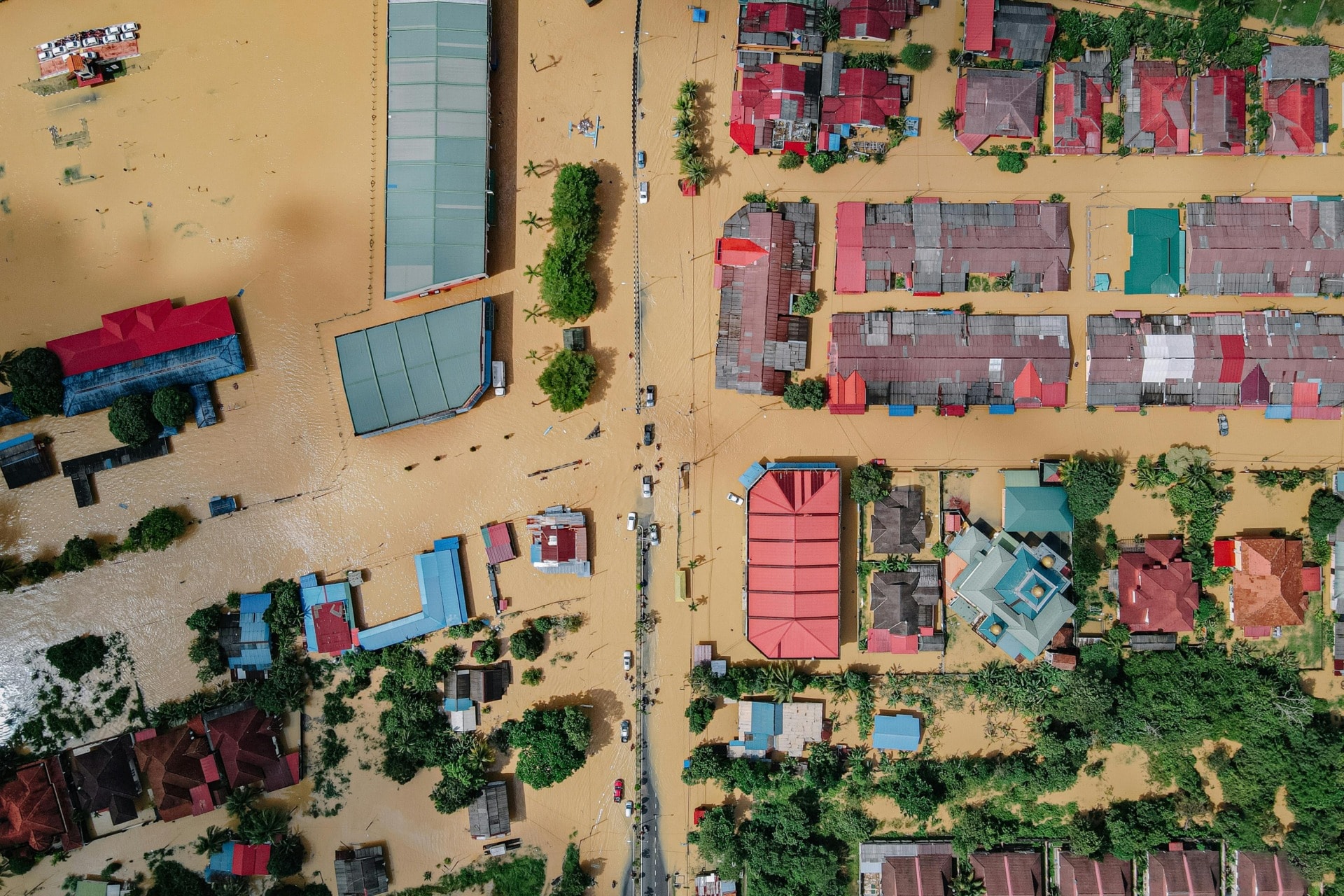
Those who chose not to flee spoke of terrifying flood waters up to their chests. Some ultimately managed to escape on jet skis or by paddling along a four-lane motorway, some huddled on moving vehicles; others watched from the second floor as their sofas and other furniture floated across their living rooms.
In an area strongly reliant on tourism and leisure, the storm’s economic impact is only starting to be felt. While Disney stated its theme parks seemed to have minor structural damage and will start to reopen on Friday, Universal Studios in Orlando has not yet made a statement regarding when they would reopen.
Beachside bars, boardwalks, and piers that were once crowded with holidaymakers on both the east and west coastlines are now a wasteland of murky detritus.
Related articles: Evidence Keeps Piling Up: Humans Worsen 71% of Extreme Weather Events | Our Emissions Are Aggravating Almost 60% of All Infectious Diseases
As opposed Florida’s southwest coast, where Ian originally made landfall, cities further inland and along the Atlantic Coast looked to have withstood the storm with less damage.
However, intermittent periods of persistent rain caused the National Weather Service to issue warnings of “widespread, life-threatening catastrophic flooding” in Central Florida.
At the Avante, an assisted-living facility in Orlando, rescuers waded through floodwaters to evacuate the facility’s 100 inhabitants, bringing some of them out on stretchers while rain and wind swirled around them.
According to industry experts, several hospitals and nursing homes were operating on generator power while patients from at least 16 hospitals and an additional 3,500 nursing home residents were evacuated from other institutions in southern Florida.
https://twitter.com/SawyerHackett/status/1575119384401657869?s=20&t=xdY25ETuAfnbhqQ4z4Yucg
How did Hurricane Ian become so powerful?
Scientists assert that while the frequency of hurricanes does not necessarily increase due to climate change, their intensity does.
As NASA explains, “hurricanes that form are more likely to become intense” due to global warming. Climate change also makes hurricanes deadlier by slowing down the speed at which they travel.
Further, as the Center for Climate and Energy Solutions (C2E2) puts it, scientists are “certain that the intensity and severity of hurricanes will continue to increase” as we continue to warm our planet.
There is, however, another important factor that helped Hurricane Ian become the most potent storm to ever hit the US mainland; according to recent NASA statistics, it was the high sea surface temperatures in the Gulf of Mexico, made hotter by climate change, that facilitated this intensity.
“The seas are abundant sources of moisture to feed growing storm clouds. Just as critically, they are vast repositories of thermal energy that can move from the sea to the sky,” NASA writes in a statement.
On its way from Cuba to Florida, Hurricane Ian “moved over an abundant fuel source in the Gulf of Mexico,” NASA adds.
Over the past 50 years, the oceans have absorbed more than 90% of the surplus heat from global warming induced by human activity. The majority of this heat is stored in the top couple of hundred metres of the ocean.
Although they haven’t resulted in more hurricanes, warmer ocean temperatures accordion to scientists have strengthened and sustained these storms, increasing their force. Since 1980, when satellite imaging started consistently tracking hurricanes, the fraction of the most catastrophic storms — Categories 4 and 5 — has climbed. As have, of course, global temperatures.
Government response: “None of that left-wing stuff,” says DeSantis
Ron DeSantis, the governor of Florida and a Republican, revealed a proposal on Tuesday to start tackling the impacts of increasing global temperatures.
The three-year plan, dubbed “Always Ready Florida,” would invest $270 million in more than 76 projects around the state to help address issues like coastal flooding, which several studies have found is likewise exacerbated by warming temperatures.
“What I’ve found is when people start talking about things like global warming, they typically use that as a pretext to do a bunch of left-wing things that they would want to do anyways. And so we’re not doing any left-wing stuff,” DeSantis said at a Tuesday news conference.
On Thursday, US President Joe Biden signed a disaster declaration that would unlock more funds and federal resources for Florida’s nine worst-affected counties.
In his address today, Biden announced he is adding another four Florida counties for individual disaster relief, saying that the federal government will be with the people of Florida “every step of the way.”
“America’s heart is literally breaking just watching people, watching on television. I just want the people of Florida to know, we see what you’re going through and we’re with you. We’re going to do everything we can for you,” Biden said today.
The funds in DeSantis’s proposal would be used to strengthen Florida’s coastal defences against rising sea levels. Specifically, the money will be used to construct stormwater pumps in coastal towns and bury utility lines in order to prepare for the possibility of bigger hurricanes brought on by warming waters.
Additionally, money would be made available for the state to buy homes that are vulnerable to flooding. The plan must be approved by the Republican-controlled state Legislature, which failed to act on a similar measure brought forth by former Gov. Charlie Crist.
Looking at sea level rise projections from organisations like the National Oceanic and Atmospheric Administration, a significant portion of South Florida will be drowned in the ensuing decades. While waiting for the waters to rise, cities like Miami Beach have already started investing hundreds of millions of dollars to build pumping stations and raise roads.
But scientists warn that those attempts eventually won’t succeed because of the rapidly accelerating pace of sea level rise and Florida’s porous limestone substrate.
“This is just one part, there’s going to be a whole host of other projects announced in the near future with a lot more money,” DeSantis said. “You’re going to end up seeing well over a billion dollars in this over the next few years.”
A June report by Resilient Analytics and the Centre for Climate Integrity concluded that Florida would likely face $76 billion in climate change costs by the year 2040, the Tampa Bay Times reported.
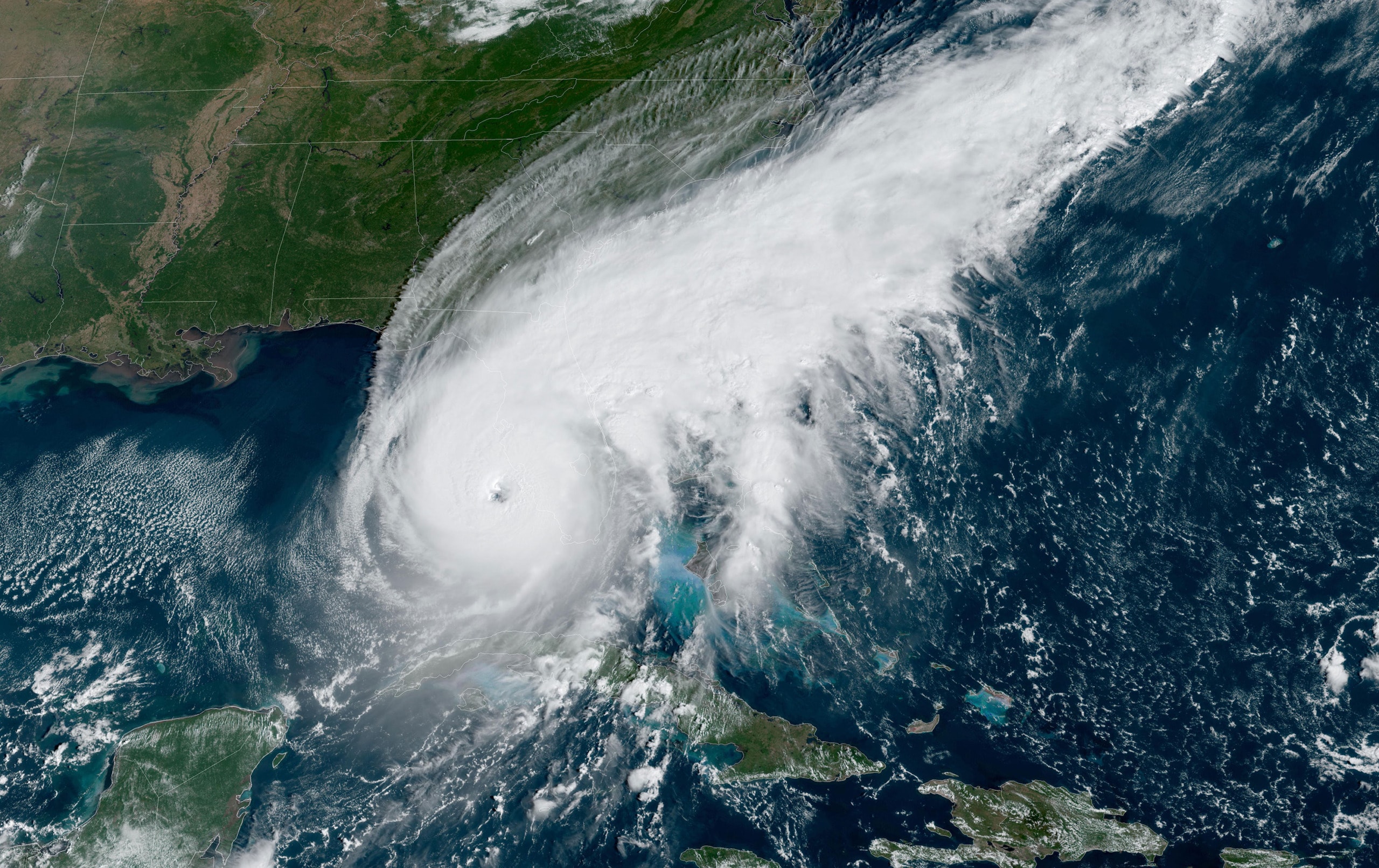
Editor’s Note: The opinions expressed here by the authors are their own, not those of Impakter.com — In the Featured Photo: A satellite image from the National Oceanic and Atmospheric Administration shows Hurricane Ian approaching Florida on Wednesday, September 28, 2022, at 10:41 a.m. ET. Featured Photo Credit: Wikimedia Commons.