Introduction
Alick Bartholomew, author of The Spiritual Life of Water, describes four geologic periods when forests thrived on this planet. The first was the Carboniferous, 350 million years ago, when land vertebrates established. The second was the Jurassic, 170 million years ago, when dinosaurs dominated the planet. The third, the Eocene epoch, 60 million years ago, witnessed the first primitive mammals. The last, the Holocene epoch, which began some 500,000 years ago, ushered in modern humanity. Bartholomew suggests that perhaps, “in each case the forests delivered a boost in the oxygen content of the atmosphere, which may have been a trigger for an evolutionary explosion of life forms.”
Ten thousand years ago, the land along the Mediterranean was covered in mixed forests of conifers and oak. Lebanon’s forests provided timber for the exploring ships of the Phoenician empire in third century BCE. North Africa, a fertile forest two thousand years ago, is now a desert. A thousand years ago, three quarters of the world was forest. Today forest and woodland cover only a third of the world. The UK is currently the least wooded area of Europe with 13% woodland cover; its ancient woodland is being removed at a faster rate than the Amazon rainforest. Humanity is currently cutting down trees at a rate of 15 billion a year. We are losing forests the size of New York City daily; every 100 days we lose forests the size of Scotland; within a single year we lose forest ecosystems the size of Italy.
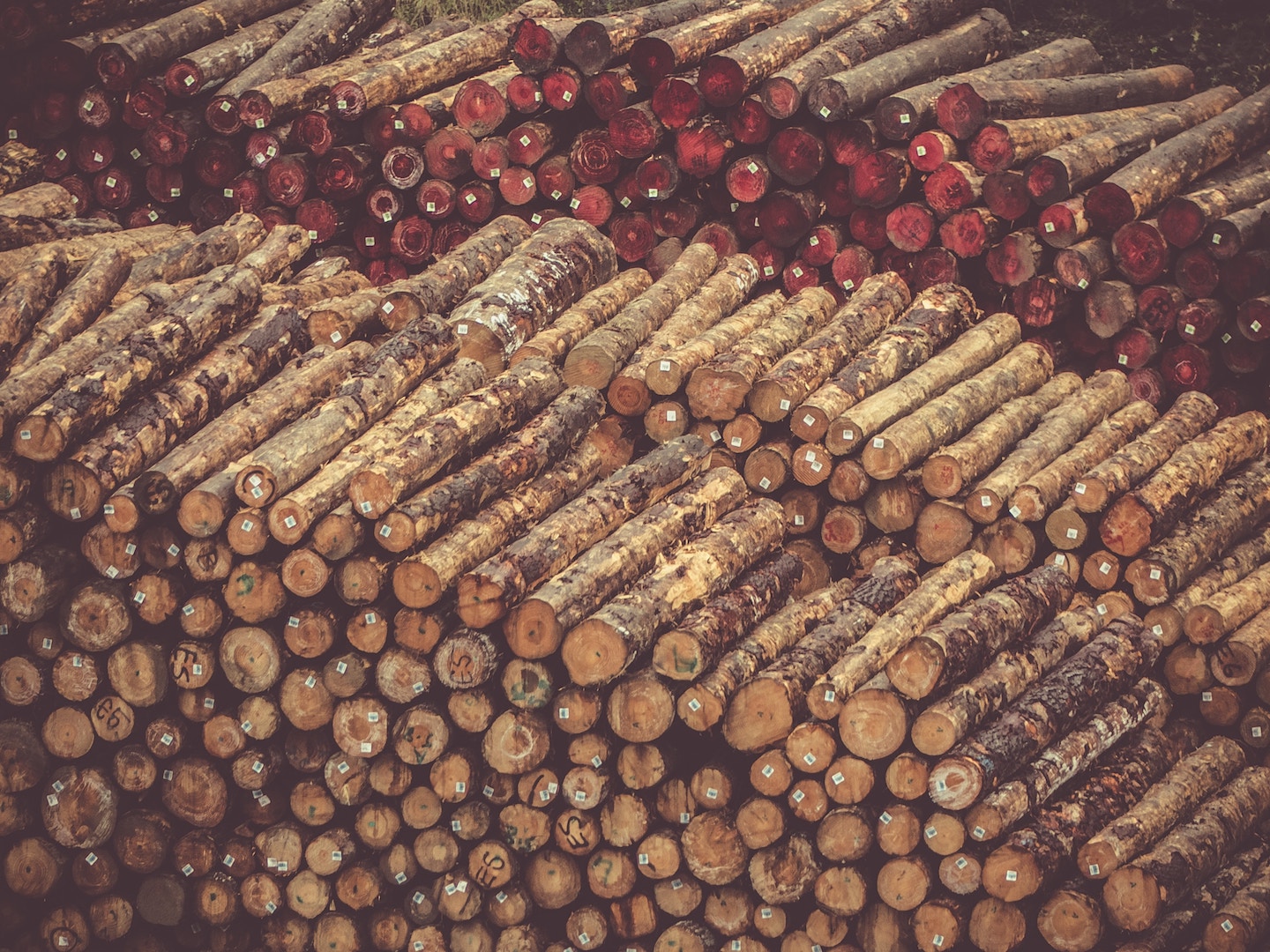
In the Photo: Logging may have been sustainable hundreds of years ago, but it certainly isn’t now. Photo Credit: Mildly Useful
Since humanity arrived, we have cut down trees for timber, agriculture and development. Our impact is a matter of scale. When humanity was a mere 300 million in pre-medieval times, forest ecosystems remained intact. We are now over 7 billion, doing essentially the same thing we did thousands of years ago. What may have been sustainable then is now extirpating entire complex ecosystems, along with species we may never know existed. Deforestation releases a massive carbon sink into the atmosphere, driving global warming. It is largely responsible for reducing populations of wildlife by half in the last 40 years, and for starting the sixth massive extinction event.
While too many of us do not understand or appreciate the global consequences of deforestation, we remain intimately and personally connected with trees: in ways we don’t realise or have forgotten.
This article overviews the perspectives of five writers on the role and history of trees in global planetary health and our journey with climate change. I explore three non-fiction books and two fiction books. The non-fiction books include Witness Tree (2017) by Lynda Mapes, The Global Forest (2011) by Diana Beresford-Kroeger, and The Songs of Trees (2018) by David George Haskell. The two fiction books include The Overstory (2018) by Richard Powers and Barkskins (2016) by Annie Proulx. Each work is a compelling testament of humanity’s connection with trees, both historically and in the present. All provide powerful and evocative optimism in different ways.
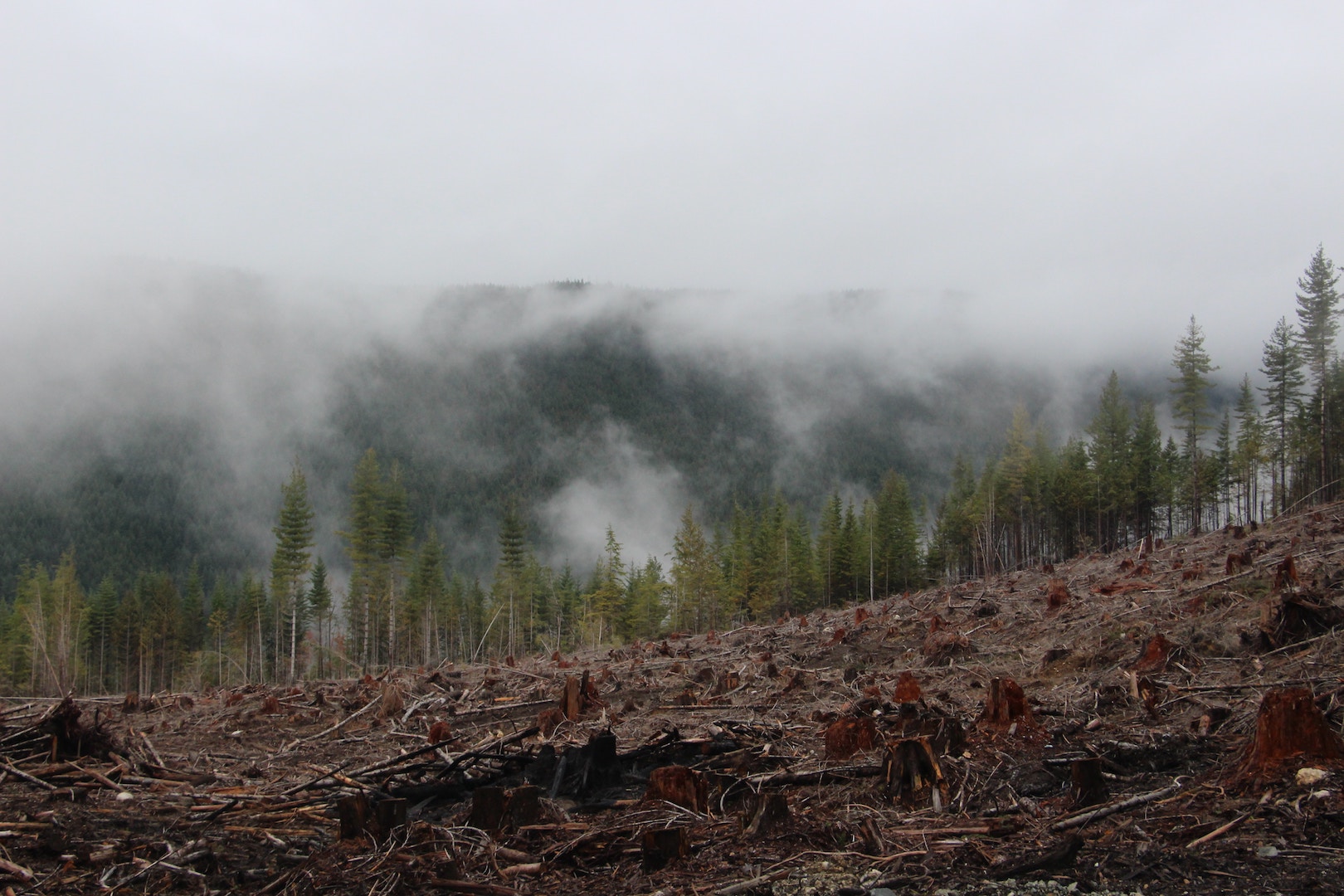
In the photo: Areas previously covered in forests are now left bare. What if there is not another forest? Photo Credit: Jamie Morris
The Philosophical Optimism of Lynda Mapes
Seattle Times environmental reporter and author of Witness Tree, Lynda V. Mapes explores a changing natural world and humanity’s relationship with it through a single Century-old red oak tree over four seasons. Mapes brings in elements of physics, ecology, biology and sociology and philosophy to probe her witness tree and reveal a colourful history of aboriginal life, colonialism, commodification and human-caused climate change.
In describing her oak tree, journalist and author of Witness Tree, Lynda V. Mapes writes, “The big oak dominates its space…but it also supports a vast web of life and relies in turn on a menagerie of helpers, aboveground and below. With its crown in the wind and its roots in the teeming soil, the big oak connects earth and sky, and many millions of beings, and is home to each and to all. It is just one tree, and yet a whole world unto itself.”
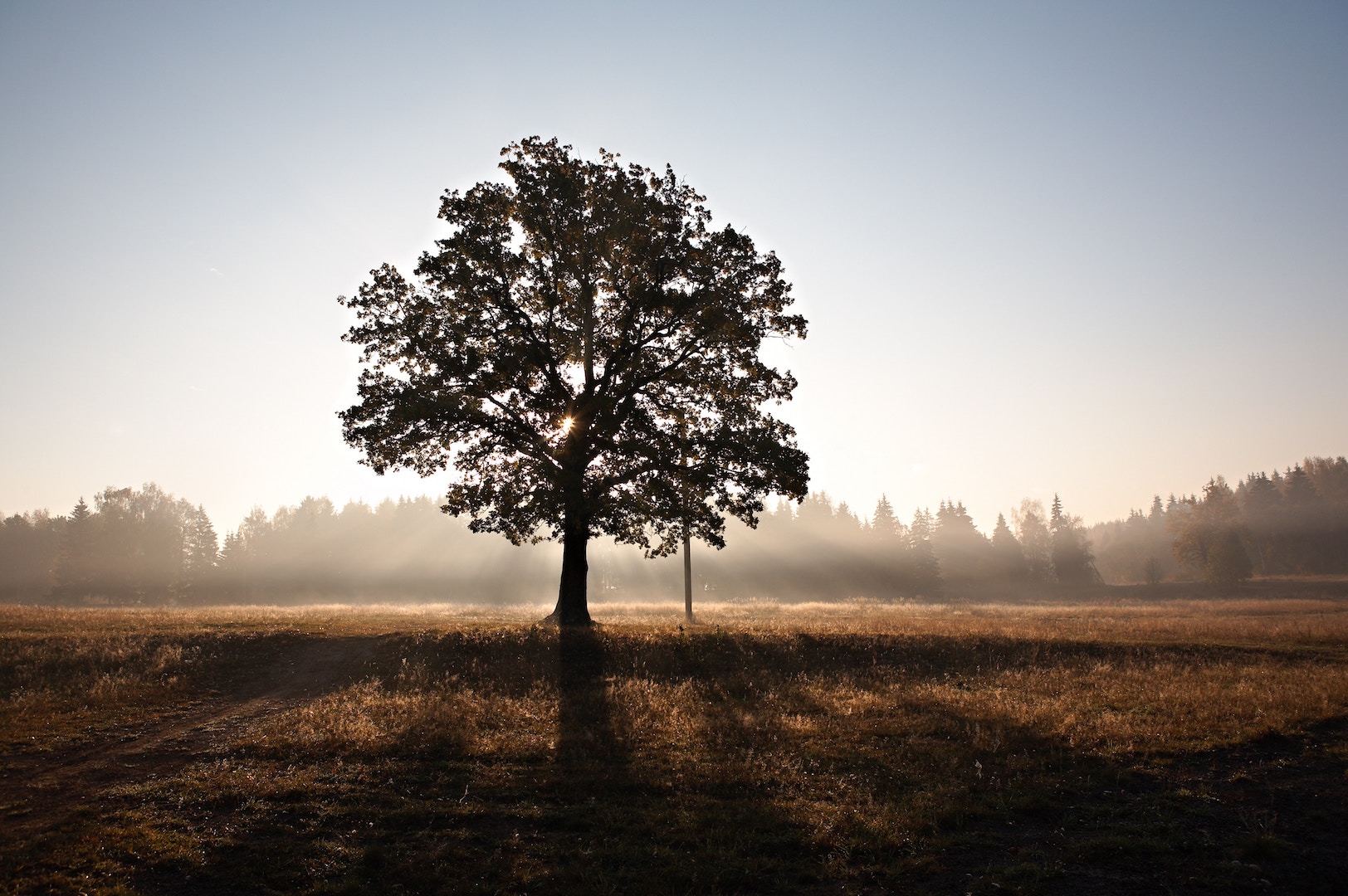
In the Photo: A mighty oak in the sunset. A sight that inspired Lynda Mapes, Photo Credit: Roman Averin
Mapes reveals that her witness tree overcame a 1 in 500 chance of taking root from tiny acorn to seedling to become a thirteen-storey tall giant. Mapes considered her oak a living timeline that revealed through its phenology how climate change is resetting the seasonal clock. Mapes sought “the quiet testimony of living things.” Through an “intimate exploration” in which she dug below, climbed up and lay beneath her oak, Mapes found vulnerability, loss, renewal, and hope.
“No matter what else the future may bring, in an uncertain world forests are a repository of only good verbs: Forests shelter. Nurture. Moderate. Cleanse. Regenerate. Provide. Connect. Sustain…Trees can be our wellspring of inspiration. More than building material, fuel, and carbon-storage utilities, forests are foundational to life on the earth, refugia for countless animals, and an endless source of human joy, renewal, and refreshment.”
“People and trees are meant to be together, and if we work at it, that’s how we will stay,” writes Mapes at the end of her book. It is both hope and warning. A quiet clarion for us to “remember” our place in the world and to embrace our relationship with trees as wisdom guide.
Mapes invites us to connect with the forest.
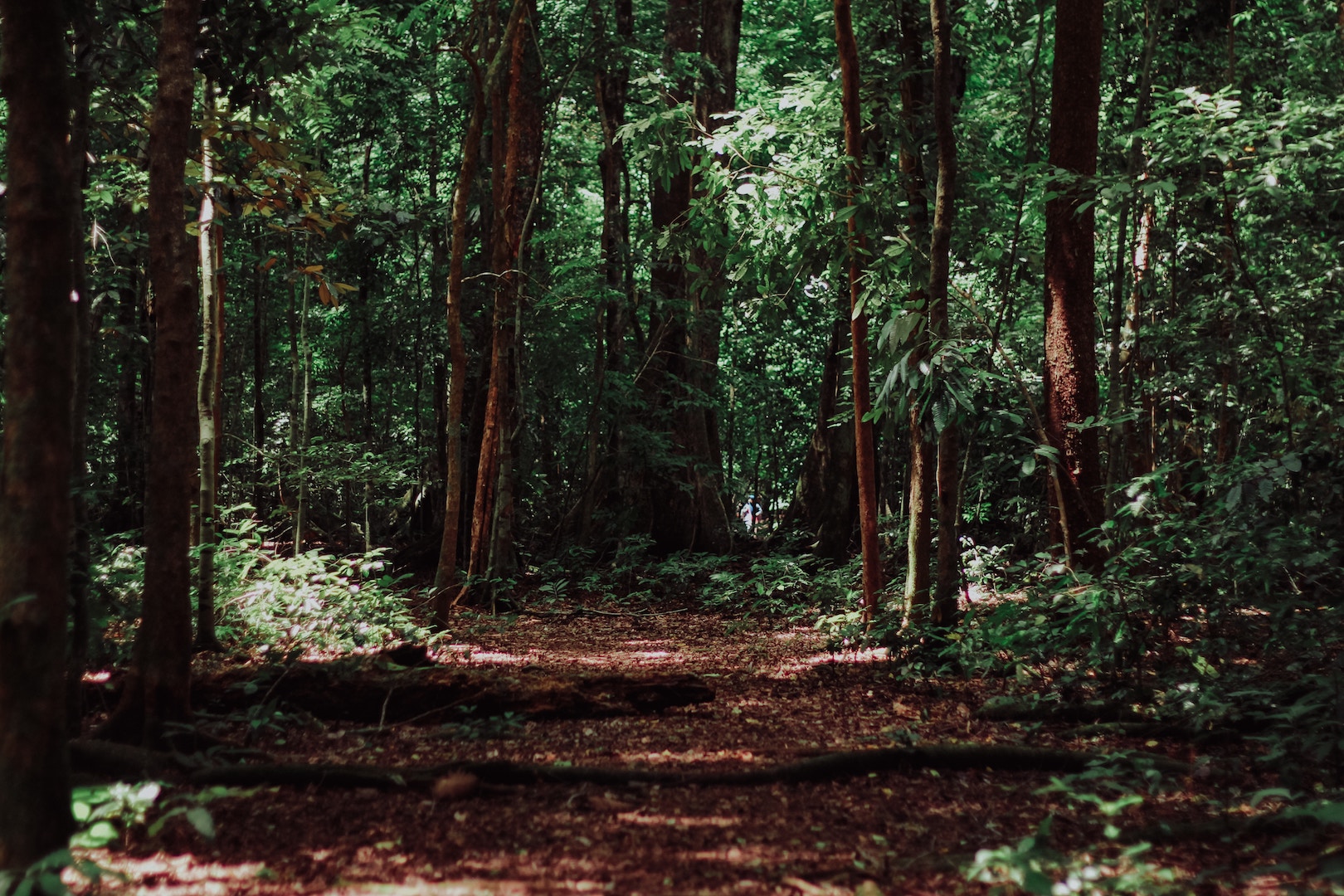
In the Photo: A forest footpath. Lynda Mapes inspires hope that this experience will not be lost. Photo Credit: Imat Bagja Gumilar
The Practical Optimism of Diana Beresford-Kroeger
In her book The Global Forest: 40 Ways Trees Can Save Us, botanist and medical biochemist Diana Beresford-Kroeger tells us that “a functioning forest is a complex form of life. It is interconnected by its own flora and driven by the mammals, the amphibians and insects in it. It is kept in place by fungi, algae, lichens, bacteria, viruses, and bacteriophages. The primogenitors of the forests are trees. They communicate by carbon-coded calls and mass-market themselves by infrasound. The atmosphere links forests into the heavens and the great oceans. The human family is both caught and held in that web of life.”
Written with passionate lyricism and a mother’s nurturing spirit, Irish storyteller Beresford-Kroeger weaves a compelling tapestry of ancient forest lore with modern science to promote the global forest. Tapping into aboriginal wisdom and ancient pagan legend, Beresford-Kroeger invites you into the forest to explore the many beneficial and pharmaceutical properties of trees—from leaves that filter the air of particulate pollution, the cardiotonic property of hawthorn, fatty acids in hickory nuts and walnuts that promote brain development, to the aerosols in pine trees that calm nerves.
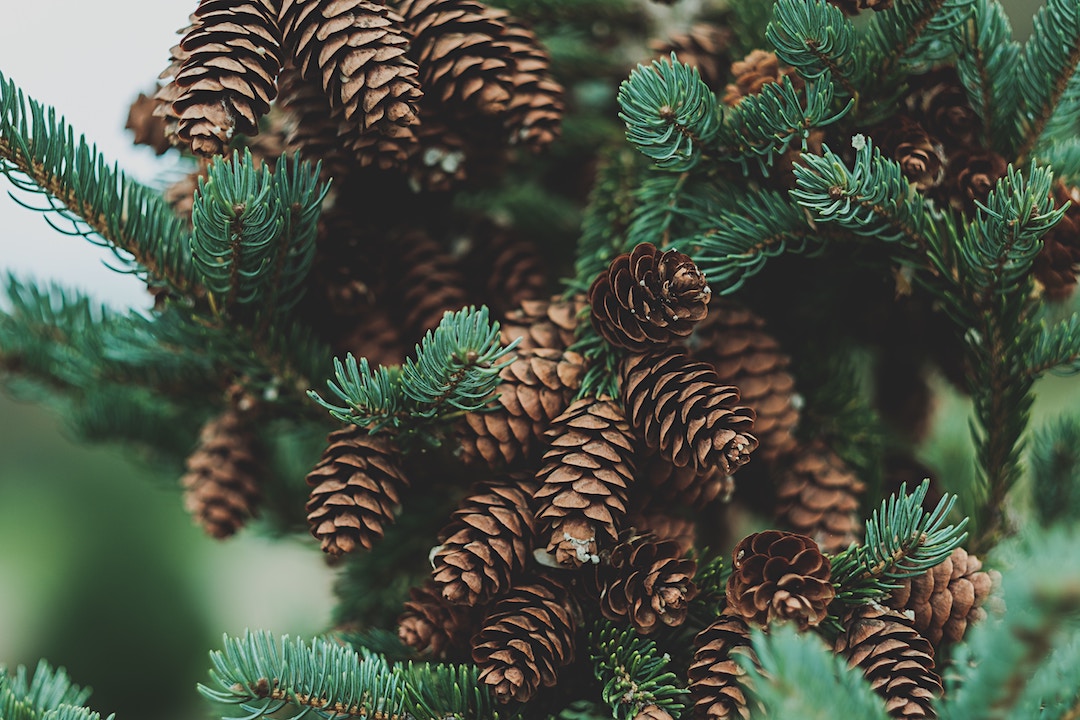
In the photo: Scientists are only just realising how many trees have medicinal uses, such as Pine and Yew trees. Photo Credit: Osman Rana
The titles of her chapters reveal an overarching agenda: “The Global Forest Has Within Itself a Master Plan for Sustainability”; “Climate Change Can Be Reversed: Simplicity, Sustainability, and Sanity”.
“This [global] forest is the environment that drives and fulfils the dream of each leaf in a vast rhythmic cycle called life. Nothing is outside. We are all of it in a unity that transcends the whole. Maybe, just maybe, this resonates of God. If that is so, then we are all His children, every earthworm, every virus, mammal, fish and whale, every fern, every tree, man, woman and child. One equal to another. Again and again.”
Beresford-Kroeger compels us to interact with and learn from the forest.
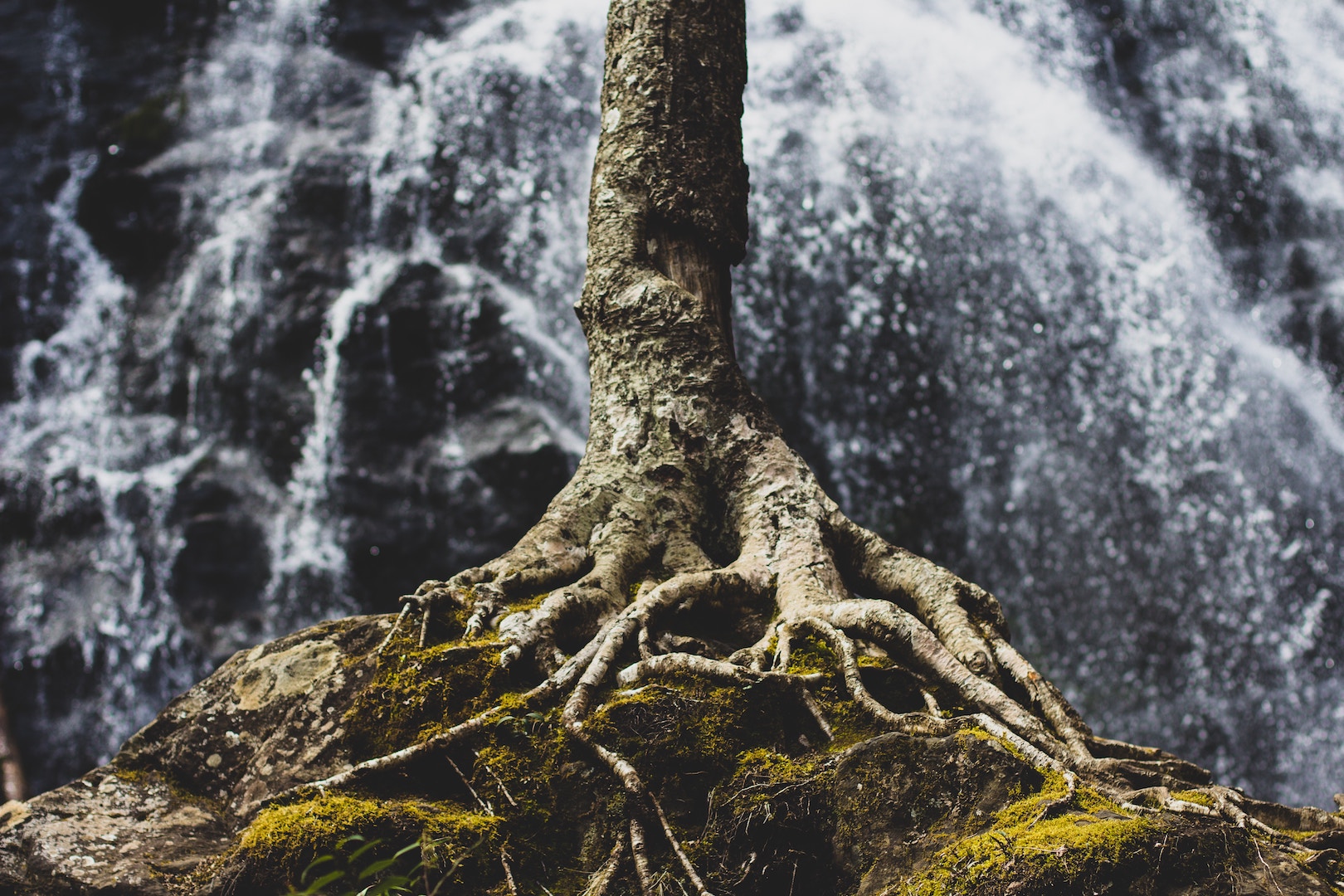
In the photo: Forests are more connected than we thought. Photo Credit: Zach Reiner
The Existential Optimism of David George Haskell
In The Songs of Trees: Stories from Nature’s Great Connectors, biologist David George Haskell pens an existentialist poem to life’s interconnected network. Haskell’s notion of ‘listening to trees’ arises not from metaphor or metaphysics but from a spiritual understanding of the woven tapestry of life.
“For the Homeric Greeks, kleos, fame, was made of song. Vibrations in air contained the measure and memory of a person’s life. To listen was therefore to learn what endures. I turned my ear to trees, seeking ecological kleos. I found no heroes, no individuals around whom history pivots. Instead, living memories of trees, manifest in their songs, tell of life’s community, a net of relations. We humans belong within this conversation, as blood kin and incarnate members. To listen is therefore to hear our voices and those of our family…To listen is therefore to touch a stethoscope to the skin of a landscape, to hear what stirs below.”
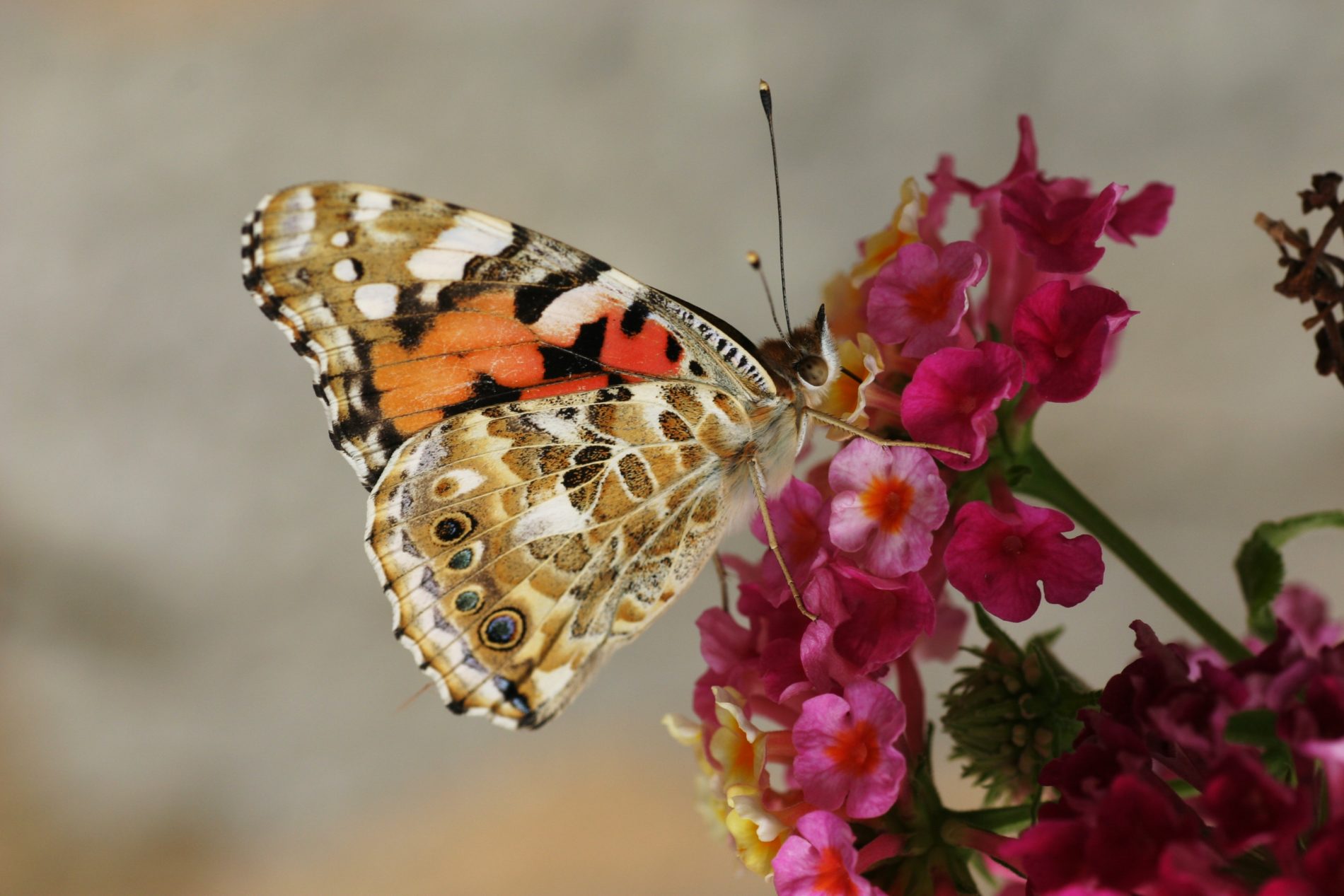
In the photo: Forests support a network of wildlife- an embodied network. Photo Credit: Martina Misar-Tummelts
In his travels to visit iconic trees around the world, Haskell draws on the wisdom and moral ethics of “ecological aesthetics” to describe a natural beauty—not as individual property but as a world within a world of interactive life to which we belong and serve but do not own:
“We’re all — trees, humans, insects, birds, bacteria — pluralities. Life is embodied network…where ecological and evolutionary tensions between cooperation and conflict are negotiated and resolved…Because life is network, there is no ‘nature’ or ‘environment,’ separate and apart from humans. We are part of the community of life, composed of relationships with ‘others,’ so the human/nature duality that lives near the heart of many philosophies is, from a biological perspective, illusory…We cannot step outside life’s songs. This music made us; it is our nature…To listen to trees, nature’s great connectors, is therefore to learn how to inhabit the relationships that give life its source, substance, and beauty.”
In the vein of the naturphilosophie of Goethe and Schelling—and later of Carson, Thoreau, Eisely and Dillard—Haskell invites us to cultivate a strong sense of place and being, one that extends beyond “self” to the existential nature of experience. Glancing up a magnificent oak or beech tree reveals wood as “an embodied conversation between plant life, shudder of ground and yaw of wind.”
Haskell exhorts us to be the forest.
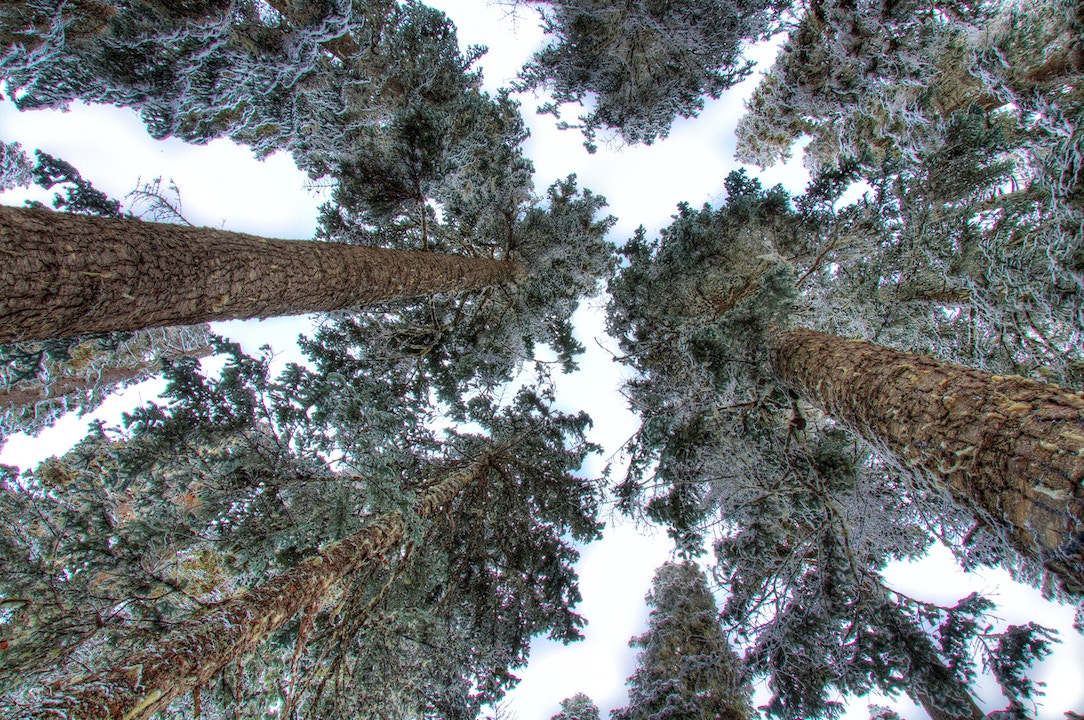
In the photo: Looking up at trees from the ground is a powerful sight. Photo Credit: James Wheeler
The Fierce Optimism of Richard Powers
At the heart of Richard Powers’s The Overstory are the pivotal lives of two women, botanist Patricia Westerford and college student Olivia Vandergriff. Both will inspire a movement against the destruction of forests.
Patricia Westerford—whose work resembles that of UBC’s Suzanne Simard—is a shy introvert who discovers that trees communicate, learn, trade goods and services, and have intelligence. When she shares her discovery, she is ridiculed by her peers and loses her position. But, just as with Lynn Margulis and her theory of endosymbiosis, Westerford is finally validated. She is the archetypal ‘mother tree’, the metaphoric Tachigali versicolor, who ultimately brings the tangle of narratives together through meaning. Westerford writes in her book The Secret Forest:
“There are no individuals in a forest, no separable events. The bird and the branch it sits on are a joint thing. A third or more of the food a big tree makes may go to feed other organisms. Even different kinds of trees form partnerships. Cut down a birch, and a nearby Douglas fir may suffer…Fungi mine stone to supply their trees with minerals. They hunt springtails, which they feed to their hosts. Trees, for their part, store extra sugar in their fungi’s synapses, to dole out to the sick and shaded and wounded. A forest takes care of itself, even as it builds the local climate it needs to survive…A tree is a wondrous thing that shelters, feeds, and protects all living things. It even offers shade to the axmen who destroy it.”
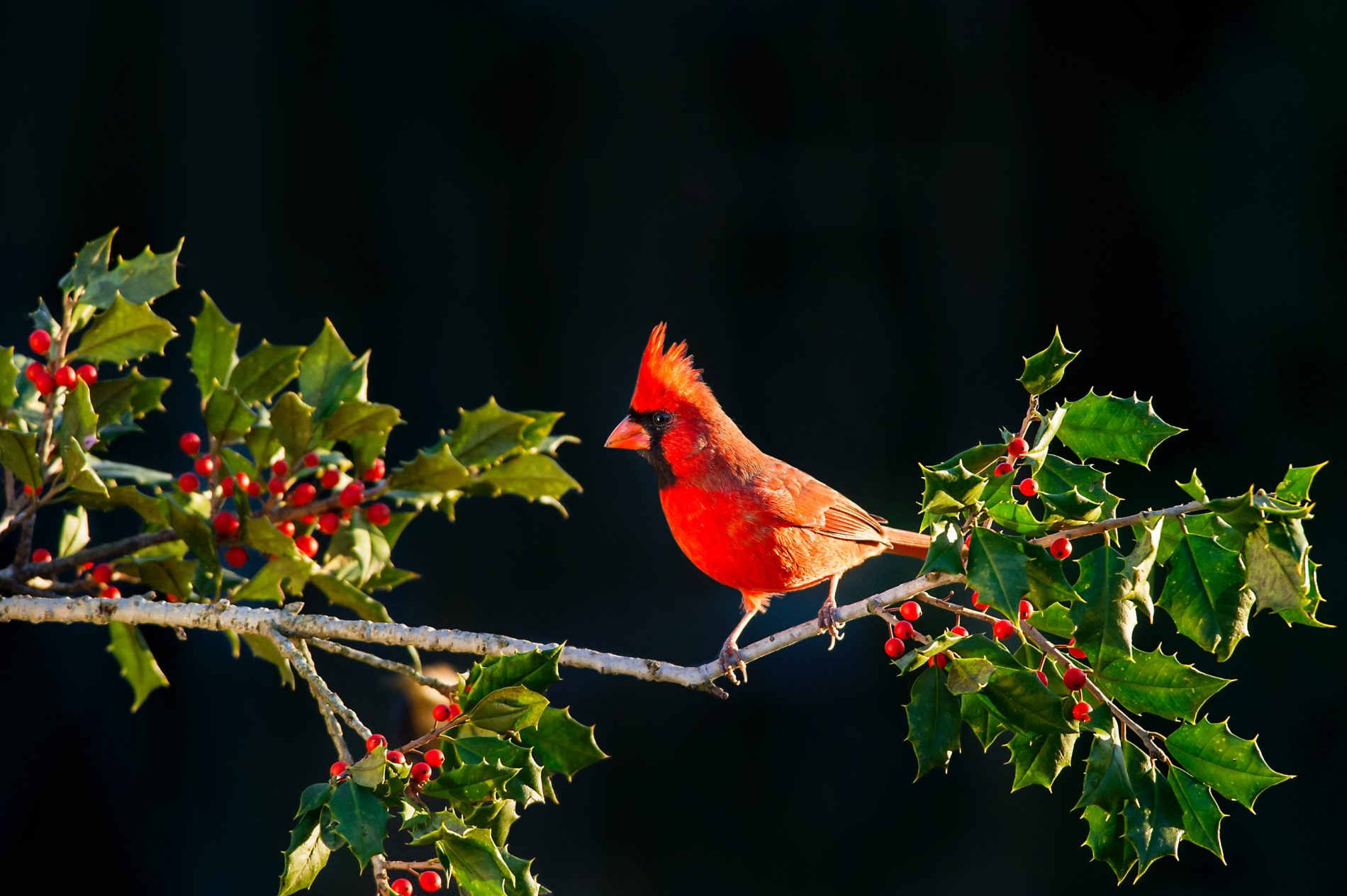
In the photo: “The bird and the branch it sits on are a joint thing”. Photo Credit: Ray Hennessy
Olivia Vandergriff miraculously survives an electrocution to become an ecowarrior after she begins to hear the voices of the trees. She rallies others to embrace the urgency of activism in fighting the destruction of California’s redwoods and even camps in the canopy of one of the trees to deter the logging. When the ancient tree she has unsuccessfully protected is felled, the sound is “like an artillery shell hitting a cathedral.” Vandergriff weeps for this magnificent thousand-year old tree. So do I. Perhaps the real heroes of this novel are the ancient trees.
In his review of Overstory in The Guardian, Banjamin Markovits wrote, “ There is something exhilarating…in reading a novel whose context is wider than human life. Like Moby-Dick, The Overstory leaves you with a slightly adjusted frame of reference… And I found, while reading, that some of what was happening to his characters passed into my conscience, like alcohol into the bloodstream, and left a feeling behind of grief or guilt, even after I put it down.”
Powers challenges us to champion the forest.
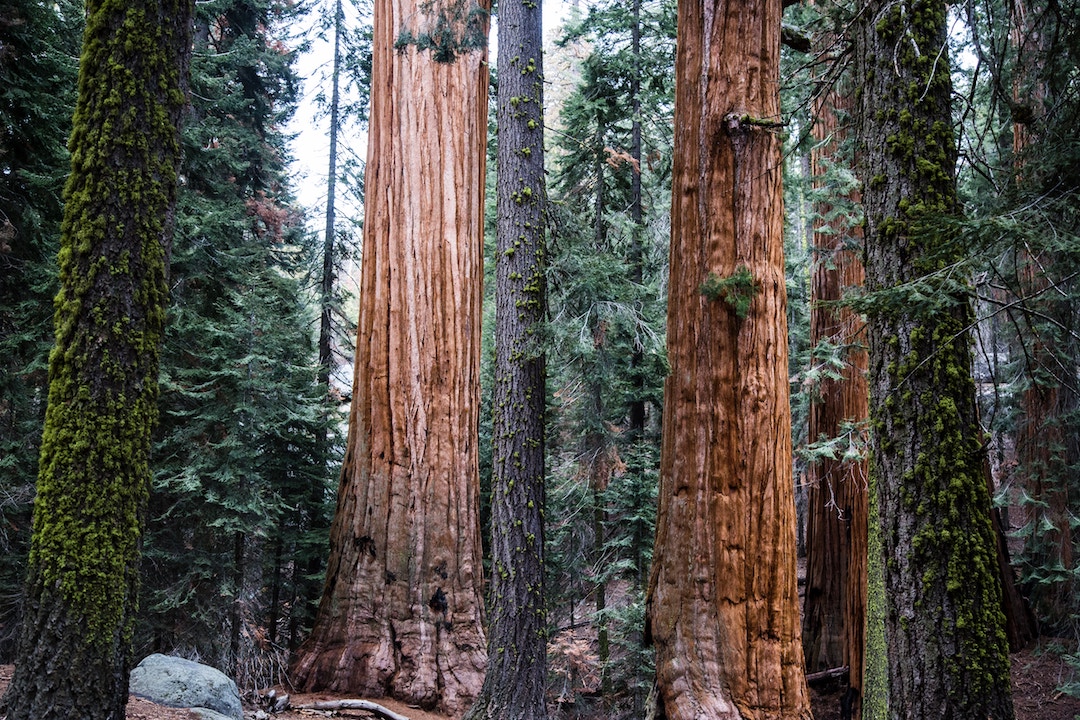
In the photo: California redwoods are amongst the tallest trees in the world. Photo Credit: Josh Carter
The Intellectual Optimism of Annie Proulx
Annie Proulx’s Barkskins chronicles two immigrants who arrive in Canada in 1693 (Rene Sel and Charles Duquet) and their descendants over 300 years of deforestation of North America starting with the arrival of the Europeans to contemporary global warming. “Barkskins” (woodcutters) are, in fact indentured servants who were brought from the Paris slums to the wilds of New France “to clear the land, to subdue this evil wilderness,” says their seigneur. Sel is forced to marry a native woman and their descendants live trapped between two cultures; Duquet runs away to become a fur trader and build a timber empire.
Proulx immerses the reader in rich sensory detail of a place and time, equally comfortable describing a white pine stand in Michigan and logging camp in Upper Gatineau to a Mi’kmaq village on the Nova Scotia coast or the stately Boston home of Charles Duquet. The foreshadowing of doom for the magnificent forests is cast by the shadow of how settlers treat the Mi’kmaq people. The fate of the forests and the Mi’kmaq are inextricably linked through settler disrespect and a fierce hunger for “more.”
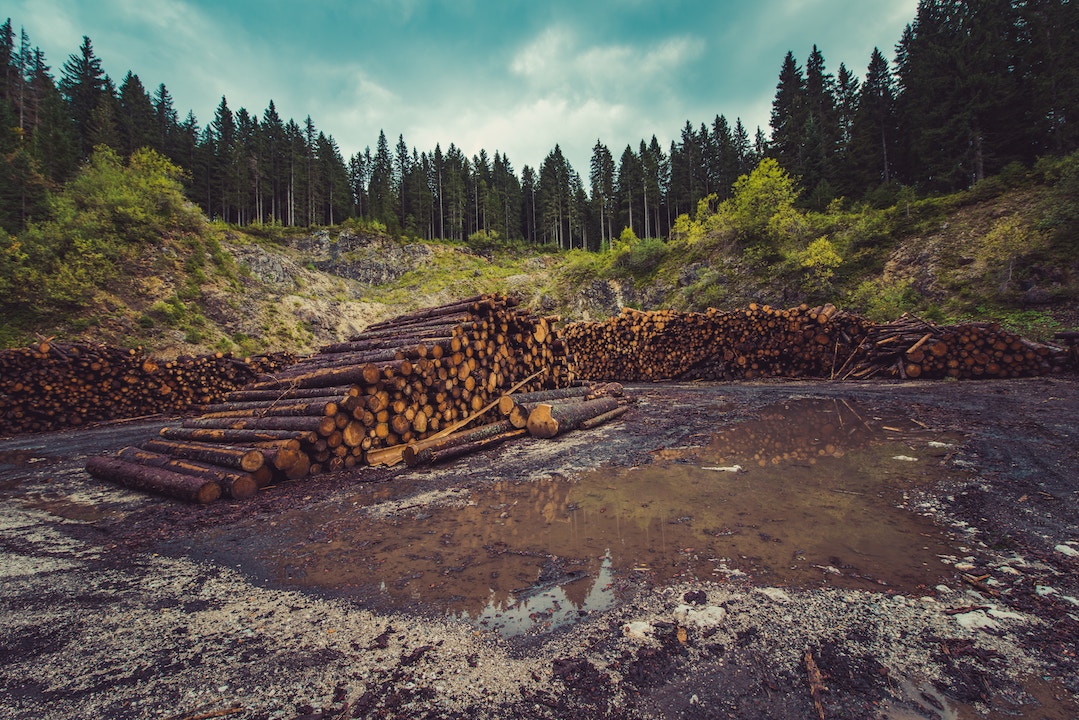
In the Photo: “A fierce hunger for more”. Photo Credit: Ales Krivec
The novel rolls out events in a relentless stream of life and death; no character is safe from the ravages of nature or the notions of that time period. While most of the book flows like a great amoral river—filled with feckless, unheroic and at times miserable characters—there are moments of emotional shoring. They act like exclamation marks for their rarity. By the 1830s, the character, German forester Armenius Breitsprecher, expresses anger and frustration with his colleagues:
Not for the first time he saw that the acquisitive hunger of Duke & Sons was so great they intended to clear the continent. And he was helping them. He hated the [lumber companies] clear-cut despoliation, the insane wastage of sound valuable wood, the destruction of soil, the gullying and erosion, the ruin of the forest world with no thought for the future—the choppers considered the supply to be endless—there was always another forest.
Proulx’s unsentimental narrative and grand historic set-pieces lure the reader first to passively observe humanity’s struggles with the grand forest; then, once immersed, we are nudged to participate along with the awakening of the human consciousness over the generations of her 300-year long saga—first in the early 1900s through Conrad and Charley who recognize the importance of a functional forest ecosystem then through current day ecologist Sapatisia Sel (descendant of Rene), who responds to a scientist’s claim of “A great crisis is just ahead” with “The forests, the trees, they can change everything!”
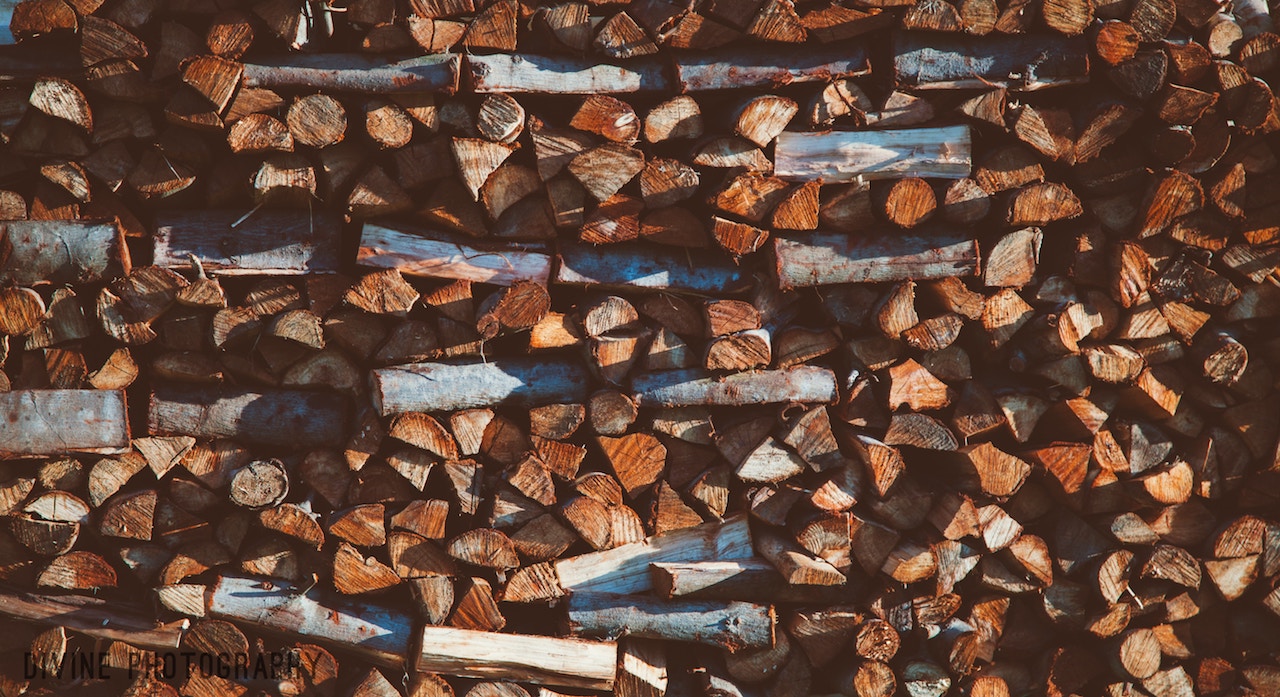
In the photo: Annie Proulx’s characters realise the importance of stopping the destruction of forests. Photo Credit: Louis Smith
The suggestion is that, while we remain inextricably embedded in time and place—we are also progenitors of change to our future generations. Three hundred years ago, our beliefs and knowledge prevented us from acting sustainably. We know better now. The time to save our forests and let them save us is now.
“The reader comes to realise that the novel isn’t really about the human characters so much as it is about the forests,” Gus Powell of The National Post concludes of Barkskins. “As [the forests] disappear, the narrative seems to recede in importance, revealing a crucial interdependence between the human and the natural world previously handled almost entirely as subtext. This is especially true in the novel’s closing, where the anger and despair that have characterised the novel shift into an outspoken environmental advocacy.” This is the essence of optimism…
Proulx dares us to believe in the forest.

In the photo: The Essence of Optimism. Photo Credit: Sergei Akulich
Whether philosophical, pragmatic, existentialist, fierce or intellectual, “Optimism is the faith that leads to achievement…No pessimist ever discovered the secret of the stars, or sailed to an uncharted land, or opened a new doorway for the human spirit,” wrote Helen Keller. In her recent book Breaking Murphy’s Law, Suzanne Segerstrom demonstrates the connection between optimists and their investment in goal setting and achievement. The trick to avoiding the cynicism that may come with complacent optimism (thinking, hoping and wishing for good things to happen) is through the simple action of engagement. “Optimists,” says Segerstrom, “are happy and healthy not because of who they are but because of how they act. Optimism is more what we do than what we are, and thereby can be learned.”
I hope so. If we connect, interact and learn, and be the forest, we may find the strength and passion to champion the forest we believe in.