Climate change, the destruction of biodiversity, and the overall alteration of the environment constitute a major threat to the physical and mental health of the global population. Acting to keep the increase in global average temperature below 2°C compared to pre-industrial levels by 2100, while protecting biodiversity and developing adaptation, is a public health priority widely shared by public health professionals.
Heat is one of the most rapidly changing climate-related health issues. It was perceived as anecdotal before the 2003 heatwave in Europe, which resulted in 70,000 excess deaths, including 15,000 in France. Twenty years later, despite growing investments in heat prevention and warning systems in Europe, the Intergovernmental Panel on Climate Change (IPCC) identified “mortality and morbidity of people and ecosystems disruption due to heat” as a key risk for Europe. The IPCC considers current and planned adaptation measures insufficient to limit the health impacts of heat.
A growing number of epidemiological studies report that heat is associated with an increased mortality risk, starting at mild temperatures. It can also affect pregnancies, mental health, work productivity, and healthcare consumption. While heatwaves – sustained extreme temperatures during several days – represent only a part of the total heat-related health burden (approximately 30% of heat-related deaths occurred during heatwaves in France), they can rapidly disrupt society through impacts on the health care system, energy production, agriculture, and transportation, among others.
Although individual and collective measures to limit the impacts of heatwaves are relatively simple to implement, they are difficult to organize during a crisis. Therefore, efforts tend to be concentrated on the organization of the short-term response during heatwaves.
A heat prevention plan was implemented in France in 2004 in response to the 2003 heatwave. It relies on three complementary actions: (1) recommendations for action for a wide range of stakeholders; (2) a meteorological warning system to anticipate the most dangerous events; and (3) identification of the most vulnerable populations to target dedicated actions at during heatwaves.
Some actions have legal implications (organization of institutions receiving elderly or vulnerable people, cool room setups, registries of vulnerable people in cities, etc.). While the emphasis is on prevention throughout the summer, certain actions are reinforced when a heatwave is anticipated. These include communication with the general public, the mobilization of health professionals, and outreach to people on the registries maintained by social workers.
The French heatwave alert system was one of the first and most innovative in the world thanks to a close collaboration between the French weather service Météo-France, the Santé Publique France, and the Ministry of Health. It also benefits from reactive syndromic surveillance based on emergency room visits and general practitioners’ emergency consultations. Yet, it is challenged by the increase in the frequency and intensity of heatwaves due to climate change.
More than 10,000 excess deaths have already been observed during heatwaves since the implementation of the plan in 2004, making heatwaves the most important extreme events in terms of mortality in France. The largest mortality impacts since 2003 were observed in 2020 and 2022. The overall total health impacts of 2022, when heat was sustained for several months and associated with drought and wildfires, are still to be assessed. Furthermore, this only represents a fraction of the total heat-related mortality and of the total heat-related health impacts.
Related articles: Extreme Heat Makes Pregnancy More Dangerous | Climate Change Is Making Heatwaves at Least 10 Times More Likely | Evidence Keeps Piling Up: Humans Worsen 71% of Extreme Weather Events
Mortality, morbidity, and loss of well-being during heatwaves can also be expressed in terms of socioeconomic costs. Using a societal approach of the tangible and intangible costs, the health impact of heatwaves in France between 2015 and 2019 is estimated at least EUR 25.5 billion in 2017 (EUR 23.3 billion in 2017 for mortality, EUR 0.03 billion in 2017 for emergency care, and EUR 2.3 billion in 2017 for restricted activities).
The impacts of recent years show that short-term responses based on punctual behavioral changes are insufficient. Structural adaptation measures (e.g., reduction of urban heat islands (UHIs) or the modification of work environments) are increasingly being implemented on a small scale in companies or communities. However, they are still poorly coordinated and evaluated on a wider scale, especially from a health perspective.
For instance, the largest cities have started to work on the reduction of UHIs, as several studies suggest a major contribution of UHIs to mortality during heatwaves. Nature-based solutions relying on vegetation are one of the most favored options as they can help to reduce the temperature locally, while answering a societal demand for more nature in the city. They can also result in significant health benefits, as green spaces are associated with a holistic improvement of health and well-being. However, adaptation to heat cannot only rely on vegetation as risk reduction is limited. For example, in the city of Paris, an 18% difference in mortality risk was observed between the greener and the less green neighborhoods.
In addition to greening, every field of activity in the building, planning, and equipment sector, including construction, renovation, design, and research and development, should question its professional practices and solutions to address heat. They should not only consider adaptation to heat but also wider opportunities for mitigation and reduction of inequalities, in order to promote robust, healthy environments that protect against climate disruption.
Apart from the urban environment, other sectors, such as water, agriculture, and forests, need to adapt to heat as well, but the health implications of such adaptations are still unknown and poorly investigated. Stronger investment in interdisciplinary research and a better coordination of the intersectoral adaptation and mitigation strategies are required to develop evidence-based policies.
* * *
This article was written by Dr. Mathilde Pascal from the French National Public Health Institute for Perry World House’s 2023 Global Shifts Colloquium, ‘Living with Extreme Heat: Our Shared Future,’ and made possible in part by a grant from the Carnegie Corporation of New York. The views expressed are solely the author’s and do not reflect those of Perry World House, the University of Pennsylvania, or the Carnegie Corporation of New York.
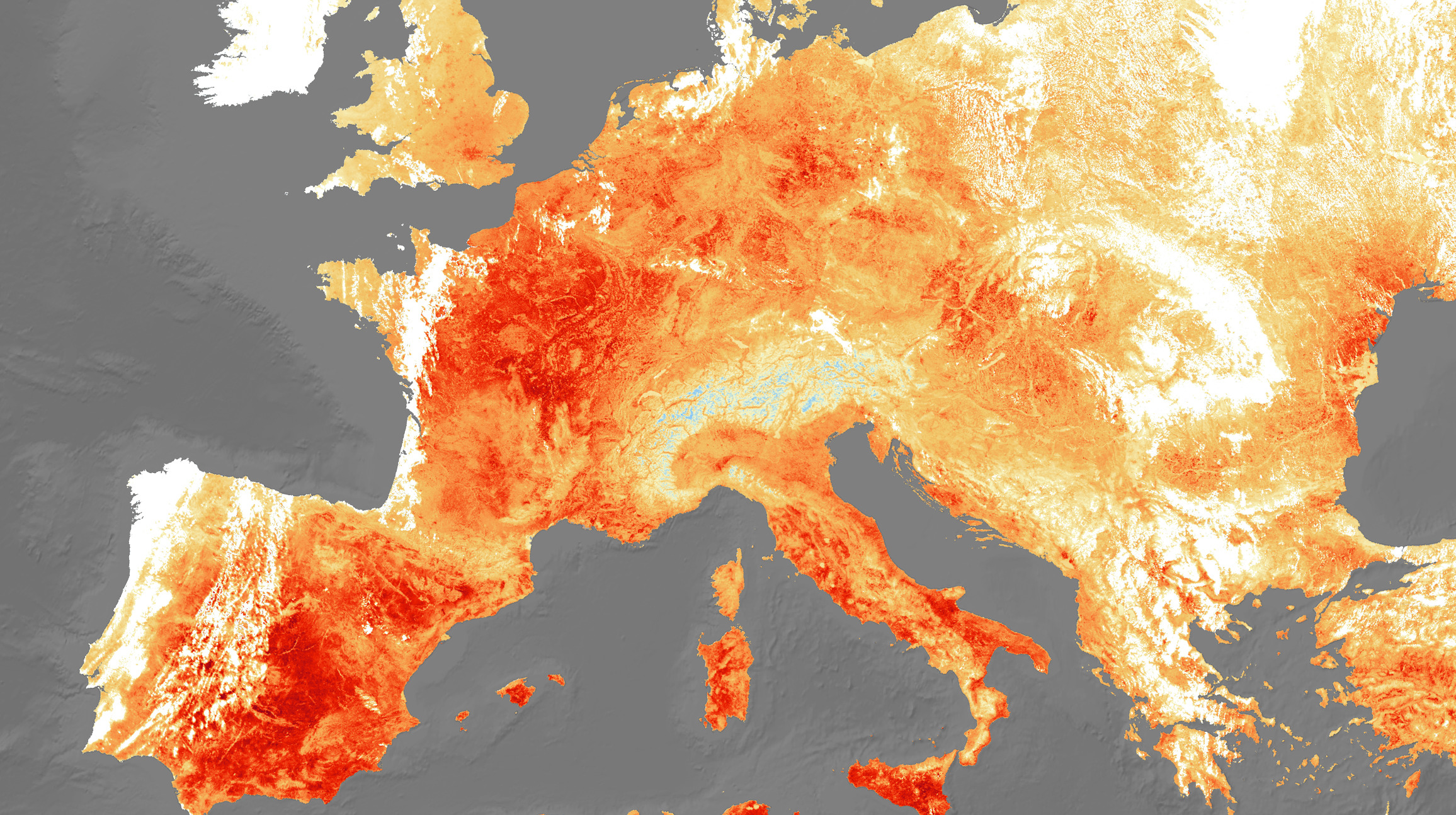
Editor’s Note: The opinions expressed here by the authors are their own, not those of Impakter.com — In the Featured Photo: Heatwave in Europe, 2019. Featured Photo Credit: European Space Agency.