Robert D. Butcher, O.D., says that a search for an eye doctor in Kansas City often comes up when someone hears “glaucoma suspect” and realizes that waiting for symptoms is not a strategy. Glaucoma is a long game, and long games need structure, not panic.
Discover Vision Centers lists glaucoma among the medical eye conditions it treats. That matters because glaucoma care is not a one-time visit. Glaucoma care is monitoring, treatment, and follow-through.
The “silent thief” problem (and what actually prevents it)
Glaucoma can progress without pain. Glaucoma can change peripheral vision first, which is why early disease can feel invisible to the patient. A quiet disease deserves a loud plan.
Baseline testing turns worry into data
Baseline tests create a starting point. Baseline tests make future change measurable. Baseline tests turn uncertainty into trend tracking. Baselines turn fear into data, and data protects decisions.
Macular OCT and visual fields tell a clearer story together
OCT shows structure. Visual fields show function. An article describes macular OCT as “nearly indispensable” in glaucoma clinical practice and notes its usefulness for examining retinal ganglion cells and axons affected by glaucoma. [1]
A peer-reviewed review also explains that OCT aids detection and monitoring of glaucomatous structural damage and emphasizes that early detection and monitoring are critical because glaucoma can cause irreversible blindness. [2]
Structure shows what is changing, and function shows what it is costing.
Treatments that match the stage, not the panic
Glaucoma treatment lowers intraocular pressure to reduce the risk of optic nerve damage. Treatments can include drops, laser procedures, or surgery, depending on the stage and patient factors.
Follow-up is treatment (and why it’s easy to miss)
Follow-up is hard because glaucoma can feel like “nothing is happening.” Dove Press reviews on adherence highlight that improving persistence can involve reminders, installation aids, and communication strategies that make the plan doable. [3]
Follow-up is treatment because monitoring is how glaucoma care works.
Medication routines that real people can keep
Medication routines work when the routine matches real life. A plan works better when the “why” is clear, the schedule is realistic, and the patient has tools that support consistency.
The best medication plan is the one you can actually follow.
The next step that protects independence
Independence depends on consistency. The procedure attributes framework makes that practical by keeping recovery, postoperative care, risks, and technology inside the same plan rather than scattered across multiple conversations.
References:
[1] Lynda Charters “Macular OCT: A must for treating glaucoma patients.” Jan 8, 2020;
[2] Alexi Geevarghese, Gadi Wollstein, Hiroshi Ishikawa, Joel S Schuman: “Optical Coherence Tomography and Glaucoma”, Peer-reviewed review (NIH/PMC) on OCT and glaucoma detection/monitoring, Jul 9, 2021;
[3] Tapply I, Broadway DC: “Improving Adherence to Topical Medication in Patients with Glaucoma”, a review on improving adherence to topical glaucoma medication, Jul 2, 2021;
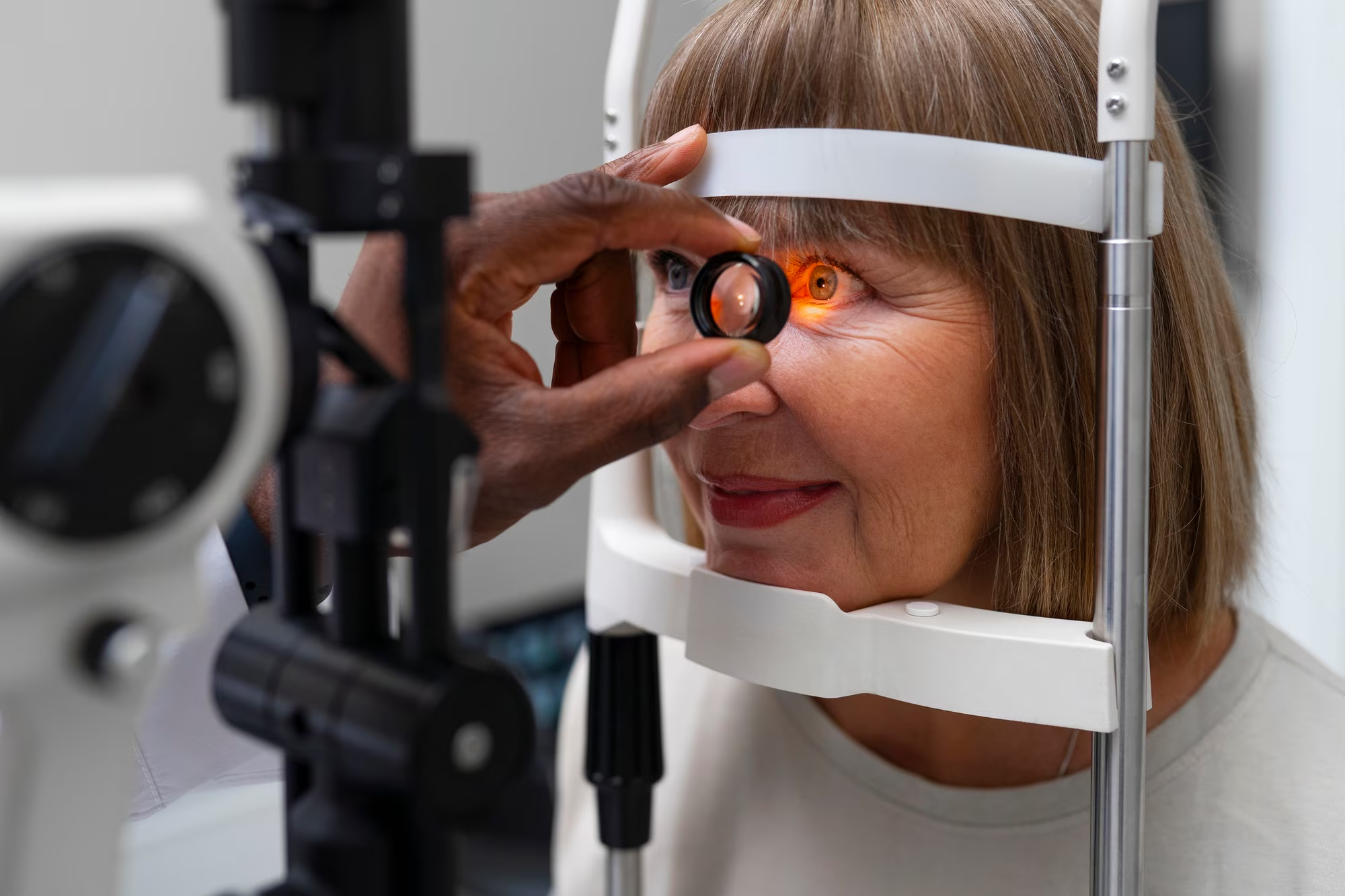
Editor’s Note: The opinions expressed here by the authors are their own, not those of impakter.com — In the Cover Photo: Glaucoma is a grout of asymptomatic eye diseases. They damage the optic nerve, often due to elevated intraocular pressure. Cover Photo Credit: