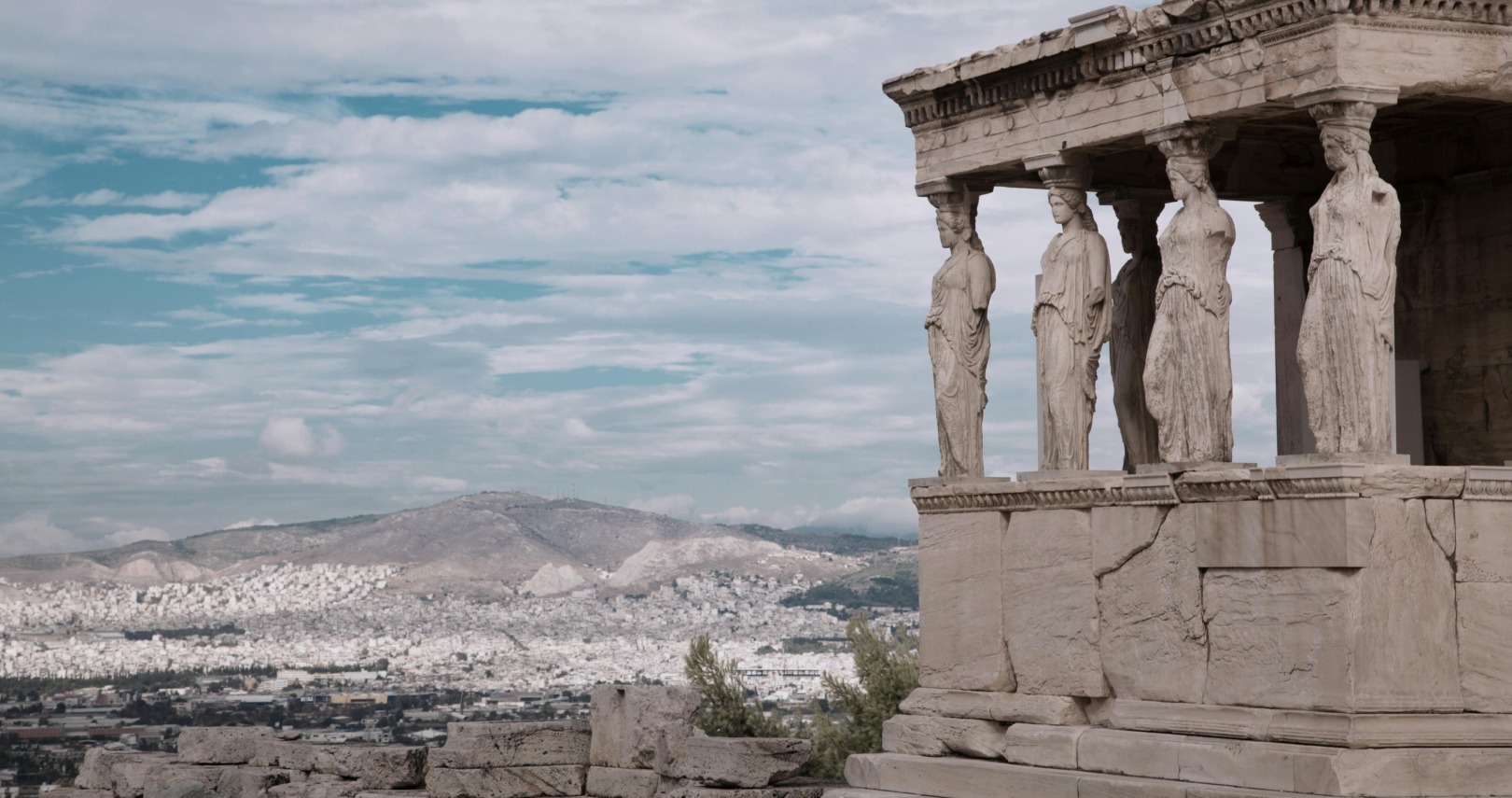
Editor’s note: Following a trip to Greece, our Columnist Richard Seifman was reminded of how much we owe today to the Ancient Greeks, and he shared his thoughts with us, which we are happy to publish.
As he told us, “While many Western democracies, such as Germany, France, and Italy, are now experiencing resurgent right-wing political parties, most concerning is the United States, where it is conceivable that a democratic election is threatened to be overturned by a presidential candidate, Donald Trump, and his fanatic followers. They tried once on January 6, 2020, but the danger is even greater today. Given that these and other democratic countries were built on brilliant ideas conceived in Ancient Greece, it is worth recalling their contributions for us, however imperfectly applied then and now.”
Many consider the Greek civilization to be the founder of Western civilization. It originated some 4,000 years ago. Over centuries, its history of wars and treachery was fraught with successes and failures, but the work of its great thinkers survived long after.
Much of the most valuable thing that has survived today is the contribution to understanding humanity and civil society, not the hard sciences. This contrasts with the focus of much of education today, more concentrated on STEM, which, while very important, nevertheless is at the cost of an educated public in the humanities and social studies and, therefore, the challenges to civility and freedom.
Why is this troubling? Because the threats we now face to countries and planetary survival, are terrifying. Revisiting basic ideas might lead to a more promising future. The ancient Greeks left us a treasure of literature, philosophy, religion, law, and governance thoughts that are relevant to us today. (Their influence on the arts and architecture was equally significant, but for another day.)
Literature and Poetry
Ancient Greek literature, epic poetry, lyric poetry, and drama.
Epic Poetry: Homer’s “The Iliad” and “The Odyssey,” are foundational texts that explore themes of heroism, fate, and human experience. These narratives shaped Greek culture and laid the groundwork for storytelling and literature throughout the ages. Their influence can be seen in our modern epics, novels, and storytelling techniques.
Tragedy and Comedy: Greek theater introduced genres that are still vital today. Aeschylus, known as the “father of Tragedy,” most famous plays are the trilogy “Agamemnon,” “The Libation Bearers,” and “The Eumenides.” Other ancient playwriters, including Sophocles and Euripides, wrote tragedies that examined moral dilemmas, human suffering, and the gods’ influence on human affairs.
Comedians like Aristophanes used satire to critique society and politics. These dramatic forms introduced concepts of plot development, character arcs, and complex narratives that remain central to contemporary film and theater.
Philosophy and secular thinking: The dialogues of Plato and the works of Aristotle revolutionized literature by merging storytelling with philosophical inquiry. Plato’s “The Republic” tackled justice, governance, and the ideal state, while Aristotle’s “Poetics” analyzed dramatic structure. Their ideas fostered critical thinking and debate, encouraging a culture of inquiry that persists in modern philosophical discourse.
Ancient Greek philosophy represents a shift from mythological explanations of the world to rational thought and inquiry.
Presocratic Philosophers: Thinkers like Heraclitus thought that “life is flux” and that change was not only necessary but was the nature of the universe, and concepts like fire and opposites were examples of how change was natural. Others, such as Pythagoras, challenged traditional beliefs, seeking natural explanations for phenomena. This laid the groundwork for scientific thinking, encouraging a quest for knowledge fundamental to modern science.
Socratic Method: Socrates introduced a method of questioning that promoted critical analysis and self-reflection. His approach emphasized dialogue over debate, influencing educational practices and philosophical discussions today.
Ethics and Morality: Philosophers such as Plato and Aristotle explored ethics, virtue, and the nature of the good life. Their ideas about ethics and moral reasoning inform contemporary discussions about morality, justice, and human rights.
Hellenistic Philosophy: Schools such as Epicureanism and Stoicism offered practical approaches to well-being and happiness, emphasizing reason, self-control, and the pursuit of pleasure, respectively. The Stoics cared about virtuous behavior and living according to nature, while the Epicureans avoided pain and sought natural and necessary pleasure.
These philosophies contributed to modern psychological thought and approaches to personal fulfillment.
Medical Ethics: Hippocrates, a Greek physician born in 460 BCE, is considered the father of medicine. The most famous promise of the Hippocratic Oath requires new physicians to swear to “first, do no harm.”
In 2017, the World Medical Association (WMA) adopted a revised version that emphasizes patient self-determination and physician well-being.
Religion and Beliefs
Religion was intertwined with daily life and governance in ancient Greece, but it was also characterized by a degree of skepticism and rationalism.
Pantheon of Gods: The Greeks worshiped various gods and heroes, representing different aspects of life. The “Twelve Olympians” were Zeus, Hera, Poseidon, Demeter, Athena, Apollo, Artemis, Ares, Aphrodite, Hephaestus, Hermes, and Hestia or Dionysus. Some of the most prominent Greek heroes include Hercules (Heracles), Achilles, Odysseus, Perseus, Jason, Bellerophon, Orpheus, and Cadmus. The mythology around these Hellenic figures provided narratives that explained natural phenomena and human behavior, which we can readily relate to.
Religious Practices: Rituals and festivals were vital to community identity and cohesion. Games such as the Pythian, Olympic, and Isthmian Games were religious festivals that included sacrifices to the gods. Importantly, they were safe havens from existing conflicts, celebrating individual human achievement and competition, a concept that persists in theory, today.
Philosophical Critiques: The philosopher Xenophon stressed unity rather than diversity and viewed the separate existences of material things as apparent rather than real. He criticized anthropomorphic representations of the gods, promoting a more abstract understanding of divinity. This paved the way for more monotheistic and rational approaches to religion.
Impact on Christianity: Many early Christian thinkers were influenced by Greek philosophy. Clement of Alexandria and Origen are considered to be most significantly influenced by Greek philosophy, particularly Plato’s ideas, because they were exposed to Hellenistic philosophy in Alexandria, where they blended Jewish thought with Greek concepts.
Related Articles: The Mystery of Egypt: A Theocratic Whodunit | Genetic Knowledge From Past Diseases: How It Could Help Address Present Health Issues
Laws and Governance
The political structures developed in Ancient Greece have profoundly influenced modern governance systems.
Democratic Ideals: The city-state of Athens is considered the birthplace of democracy, the first known civilization to implement a system of government in which citizens had direct participation in decision-making. Reforms introduced by Athenian leader Cleisthenes around 507 BC allowed all free male citizens to vote in the Assembly and actively participate in government affairs.
This system, albeit limited to a small portion of the population, laid the foundation for modern democratic systems around the world. Pericles extolled the values of open debate and tolerance of social dissent, that “Freedom is the sure possession of those alone who have the courage to defend it.”
Modern democracies draw from these principles, valuing representation, individual rights, and participatory governance.
Legal Frameworks: Solonic reforms, known as the “shaking off of burdens,” provided that all debts were canceled, enslaved debtors were freed, and borrowing on the security of the person was forbidden. They codified laws and introduced a concept of fair governance, influencing the development of legal systems globally. (Parenthetically, the Socratic method is taught in many Western law schools.)
Political Philosophy: Plato’s writings on politics explored concepts of justice, governance, and the state’s role. Plato’s ideal society would be established in three waves to eliminate corruption and introduce new principles and ideals.
The three waves are as follows: a ruling class consisting exclusively of Philosopher-Kings, who would be a mixture of men and women, living communally, without private property ownership. Plato’s ideas, and later Aristotle’s, continue to inform political theory in contemporary societies.
Influence on Constitutions: Aristotle was probably the most influential ancient Greek in contributing to various national constitutions, based on his treatise, the “Politeia., e.g., “The Politics” or “The Republic.” It encompassed citizenship, civic life, commonwealth, and statesmanship.
Principles of checks and balances and the accountability of rulers derived from Greek philosophy are foundational to modern constitutions. They promote the idea that power should be distributed to prevent tyranny.
We inherited much — we should be able to do much better with it
Ancient Greece provided a treasure trove of remarkable contributions in literature, philosophy, religion, law, and governance that are highly relevant to us now.
We must revisit these gifts of human understanding, insights into ethical considerations, and civic responsibility to find ways to work for more just and enlightened societies everywhere.
Editor’s Note: The opinions expressed here by the authors are their own, not those of Impakter.com — In the Cover Photo: Cover Photo Credit: Jimmy Teoh.