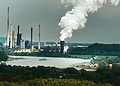
There is much positive to be said about life in this twenty-first century; we live longer and have multiple technologies that improve our lives in various ways. Our prehistoric ancestors had far less, but in some respects, they did better. Comparing Neanderthals and modern homo sapiens, in terms of what is known of critical aspects of their existence, provides perspective on our past, and a window to our future.
Indeed, we are at a critical point in human history. How well we deal with the environmental challenges, many of them of our own creation, will bear on future survival, and not just humankind. And of course there are many potential crises, such as a nuclear catastrophe, but the environment in and of itself is clearly high on the list.
The United Nations Framework Convention on Climate Change (UNFCC) was adopted in 1992, which led to the initial climate meeting, titled the Conference of the Parties (COP) in 1995. This has been ongoing for 30 years, so on November 10, the 30th COP will kick off in Brazil, but without much promise for global consensus.
Thousands will come from governments, academia, research institutes, nonprofits, and the private sector, but signs are grim with the United States having announced it will not be sending high-level governmental representatives to the Conference.
The Neanderthals vs. Modern Humans on the Environment
Neanderthals inhabited Europe and parts of western Asia from approximately 400,000 to 40,000 years ago. They lived during the last ice age and coexisted with the first anatomically modern Homo sapiens in Europe for about 10,000 years, before becoming extinct.
Neanderthals were primarily hunter-gatherers, adapting to cold and varied climates, as well as the natural resources available to them. Their lives depended on the interface between animals, plants, and their environment — the very essence of what is now called “One Health.”
The Neanderthals: Key Comparative Features
Fossil Fuels
Neanderthals had no access to fossil fuels such as coal, oil, or natural gas. Their energy needs were met through wood and animal fats for fire, which they used for warmth, cooking, and protection. This reliance on renewable, locally sourced biomass meant their environmental impact was limited and sustainable within their ecosystems.
Plastics
The concept and production of plastics are entirely modern phenomena. Neanderthals had no synthetic materials but instead used natural resources such as stone, bone, and wood for tools, shelter, and animal skins for clothing. Thus, there was no plastic pollution, and the risks from micro- and nano-plastics were nonexistent.
Food Additives and Processing
Neanderthals primarily consumed hunted animals and gathered plants, which they cooked over open fires. There were no chemical additives or preservatives; food was consumed fresh or preserved through natural means such as drying or smoking. This natural diet had negligible impact beyond localized hunting and gathering.
Population Density
Neanderthal populations were small and scattered, with estimates suggesting that there were only a few thousand individuals at any given time. This low population density reduced pressure on local resources, allowed ecosystems to regenerate naturally, and reduced prospects for epidemics or pandemics.
Other Aspects and Recent Research
Some Neanderthals were talented artists who provided insight into their world, principally through cave paintings and portable artwork.
The consistency of paintings of subject matter across many caves is remarkable, albeit with minimal instances of human stick figures or facial likenesses, in many ways similar to the strictures of Islam or Orthodox Judaism, in not replicating people in houses of worship. However, carvings and other small statues depicted people, including examples of pregnant women.
Recent research has led to the determination of lead exposure in the teeth of our pre-historic ancestors. We now know lead is highly toxic, particularly in brain development. Neanderthal exposure was not from gasoline emissions, or wall paint. Rather, pre-historic lead came from the soil, volcanic dust, and/or water flowing through mineral-rich caves.
Related Articles
Here is a list of articles selected by our Editorial Board that have gained significant interest from the public:
The Modern Homo Sapiens Comparison
Modern humans have undergone significant technological transformations, particularly since the Industrial Revolution, accompanied by new forms of mobility, each with profound environmental consequences.
Fossil Fuels
Fossil fuels have been central to modern industrial society. Coal, oil, and natural gas have been the primary energy sources for transportation, manufacturing, heating, and electrical generation, most recently to satisfy vast needs for artificial intelligence data processing. This has resulted in significant greenhouse gas emissions, contributing to global climate change, air pollution, and habitat degradation.
Plastics
Plastics came into commercial use after World War II and have since become essential to modern life. Principally derived from petrochemicals, because of their durability and low cost, they are now extensively used in packaging, construction, consumer goods, automobiles, coaxial cables, and much more. As an offshoot, plastic pollution has become a critical health and environmental issue, contaminating oceans, soil, and wildlife habitats, and posing long-term ecological risks due to its non-biodegradable nature.
Food Additives and Processing
Modern food systems rely heavily on industrial processing and chemical additives to enhance flavor, preservation, and appearance. These additives include preservatives, colorants, flavor enhancers, and emulsifiers. While these technologies have improved food availability and shelf life, they have also contributed to environmental degradation through energy-intensive production, packaging waste, and chemical runoff. And their effects on health are increasingly recognized and becoming a priority.
Population Density
The global human population has grown exponentially, reaching over eight billion people. High population densities, especially in urban areas, have intensified resource consumption, waste generation, and habitat encroachment. This demographic pressure exacerbates environmental challenges and heightens potential impact of epidemic and pandemic health crises.
Why Bother?
Simply put, some understanding of the pre-historic ancestor environment provides perspective on the present and gives pause to step back and reassess what we are doing. It offers a window to look at the benefits and costs of technology and economic growth when applied without assessment of unanticipated consequences. At the very least, it is sobering.
** **
Author’s note: I was fortunate to visit multiple ancient caves in Southern France and Spain, and do so with the guidance of a superb travel director Celine Pechmajou-Auvray (celinepechmajou@hotmail.com), and an outstanding Smithsonian Journeys paleoanthropologist, Dr. Melanie Chang (mlchang@pdx.edu), both of whom shared their knowledge about what is known, and how much remains unknown.
Editor’s Note: The opinions expressed here by the authors are their own, not those of impakter.com — Cover Photo Credit: Picryl.