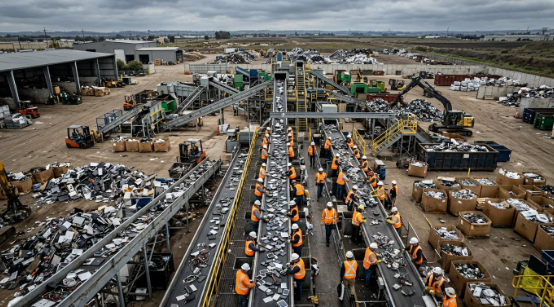
The electronics industry has a loop problem. Not a supply chain problem, not a recycling problem – a loop problem. The industry has optimized brilliantly for the first half of a product’s life: design, manufacture, sell. It has been far less serious about the second half: reuse, refurbish, recover. The result is a system that creates enormous value at one end and destroys it – along with significant environmental damage – at the other.
In 2022, the world generated 62 million tonnes of e-waste, according to the Global E-Waste Monitor 2024, published by the UN and ITU. Only 22.3% of that was formally collected and recycled. The rest – old phones, discarded laptops, broken circuit boards, obsolete servers – ended up landfilled, incinerated, or processed through informal recycling channels with serious public health consequences. By 2030, the UN projects that annual e-waste generation will hit 82 million tonnes.
The conversation about fixing this usually centers on recycling. But recycling is the last resort, not the solution. The real leverage points sit much earlier: in how electronics are assembled, what materials are chosen, and how thoroughly the second-life market is developed. Closing the electronics loop requires rethinking both ends simultaneously – manufacturing and recovery – not just adding more recycling bins.
The Manufacturing Stage Sets the Lifecycle Clock
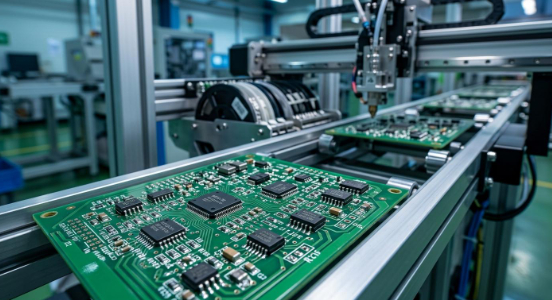
Electronics sustainability doesn’t start when a device gets thrown away. It starts when the first component is placed on a board. The materials selected, the tolerances set, the architecture chosen – these decisions lock in most of a product’s environmental footprint before anyone ever turns it on.
The numbers on manufacturing impact are striking. IDTechEx’s 2025 report on sustainable semiconductor manufacturing projects that energy consumption for chip fabrication will triple between 2025 and 2035, growing at a CAGR of 12%. Water consumption is projected to double over the same period. The input cost of building electronics keeps rising, environmentally speaking, even as device prices stay flat or drop.
Specialist providers of circuit board assembly services are increasingly integrating sustainability checkpoints into build standards – specifying halogen-free laminates, lead-free solder alloys, and modular component layouts that make boards easier to diagnose and repair in the field. This isn’t purely altruistic. It’s also a response to tightening regulatory requirements and to customers who are asking harder questions about supply chain sustainability.
The upstream case for this approach is compelling. Research published in 2026 in npj Materials Sustainability – a Nature portfolio journal – found that Design-for-Recycling approaches in printed circuit board manufacturing can cut environmental impact by up to 90% compared to conventional FR4-based assembly. That’s not incremental. A device built with end-of-life in mind from the start can be meaningfully refurbished, parted out, or recycled. One that wasn’t built that way largely can’t.
The E-Waste Numbers Are Getting Harder to Ignore

The 62 million tonne figure is big enough to be hard to visualize. It helps to put it in economic terms. The World Economic Forum calculated in April 2024 that the raw materials locked inside that year’s e-waste were worth USD 91 billion. Only USD 19 billion was recovered through formal recycling. The remaining USD 72 billion simply disappeared into landfills and informal processing operations – taking with it the gold, copper, palladium, and rare earth elements that manufacturers will then mine again to make the next generation of devices.
This is the linear economy working exactly as designed, and the design is bad. UNEP has documented how e-waste is surging globally while formal recycling infrastructure grows far more slowly, creating a widening gap between what’s discarded and what’s responsibly processed. That gap has real consequences – toxic chemicals including lead, mercury, and cadmium leach into soil and water at informal dump sites across Southeast Asia and West Africa, affecting communities that had nothing to do with consuming the products being processed.
The deeper problem is that the hidden costs of throwaway electronics culture rarely appear in the price of a new device. As Impakter has reported on the true costs of e-waste, when manufacturers can externalize disposal costs onto communities and governments, they face no financial incentive to build products that last or that can be economically recovered at end of life.
The Case for Refurbished: More Than Just a Cheaper Option
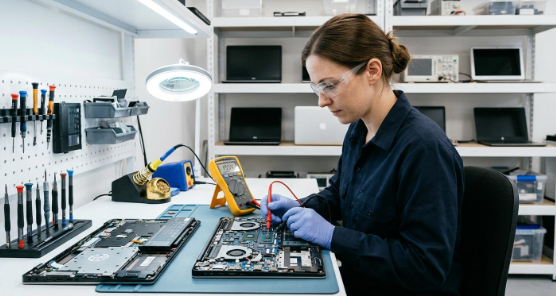
Refurbished electronics have a branding problem. They’re sold as the budget option, the compromise choice, the thing you buy when you can’t afford new. The data tells a different story.
The global refurbished electronics market reached USD 141 billion in 2025, according to Market Research Future, and is projected to grow to USD 487 billion by 2035 at a CAGR of 13.2%. That’s not a niche. It’s a parallel market of considerable scale, driven partly by price sensitivity and partly by a growing consumer awareness that buying new isn’t neutral. Dimension Market Research, cited in a 2025 OpenPR analysis, found that extending a phone’s life by just one year cuts its total lifetime CO2 emissions by one-third – because manufacturing accounts for roughly 95% of a smartphone’s lifetime environmental impact. The device itself isn’t the problem. Making it is.
But not all second-life electronics are equal, and this is where the terminology actually matters. Understanding the distinction between pre owned vs refurbished hardware is the first step toward purchasing decisions that actually reduce environmental footprint rather than just feeling like they do. A “pre-owned” device may have been cleaned and repackaged. A properly refurbished device has been tested to functional standards, had failed components replaced, and often carries a warranty. The environmental and financial outcomes for buyers are very different.
The innovation being showcased at events like CES confirms that the tech sector takes this seriously – green technology at CES 2024 included multiple manufacturers announcing longer software support windows and modular repair-friendly designs, both of which directly extend the viable life of devices in the refurbished market.
Closing the Loop: What a True Circular Electronics Economy Looks Like
The circular economy in electronics isn’t a single policy fix. It’s a chain of decisions – from component selection at the assembly stage, through consumer purchasing choices, to how end-of-life hardware gets processed and which materials get recovered. Every link in that chain either tightens the loop or leaves it open.
On the regulatory side, the EU’s Right to Repair directive is the most aggressive move yet to restructure incentives. It requires manufacturers of certain product categories to make spare parts and repair information available for up to ten years after sale. The EU’s Circular Economy Action Plan goes further, targeting product design standards that would prohibit certain design choices that currently make electronics unrepairable. The US is moving more slowly, but 27 states had active right-to-repair legislation under consideration by early 2026.
Extended Producer Responsibility programs take a different approach. Rather than regulating design directly, they make manufacturers financially liable for what happens to products at end of life – which, in practice, creates strong incentives to build products that can be economically recovered. The World Economic Forum’s 2024 analysis found that proper investment in collection and recycling infrastructure could generate USD 38 billion in annual economic benefits by 2030, turning what is currently a cost into a revenue stream.
The IDTechEx 2025 report on sustainable semiconductor manufacturing makes the case that the industry needs to treat sustainability as an engineering discipline, not a communications exercise. Metrics for repairability, recyclability, and material toxicity need to sit alongside performance specs in product development – not as afterthoughts addressed during regulatory compliance reviews.
As Impakter has argued in its coverage of how manufacturing can lead the green transition, the manufacturing sector’s leverage isn’t just in its own operations – it’s in the products it sends into the world and the standards it normalizes across supply chains.
The Loop Is Still Open
The electronics industry has made real, documented progress on individual sustainability metrics. Lead-free solder is now standard across most markets. Average power consumption per computation unit has dropped dramatically. Recycled content in packaging is up. These are genuine wins.
But the overall loop remains open. Products are still overwhelmingly designed for performance and cost, not longevity or recoverability. Refurbished markets are growing but still reach only a fraction of the consumers who could benefit from them. Formal recycling handles less than a quarter of the e-waste generated globally, and that fraction isn’t growing fast enough to keep pace with production volumes.
The leverage points are known. Build things that can last. Make refurbishment economically viable by designing for it. Use Extended Producer Responsibility to close the gap between private profit and public cost. Support the refurbished market not as a fallback for budget shoppers, but as a structural part of how the electronics economy works. None of these require waiting for a technological breakthrough. They require decisions by manufacturers, procurement teams, policymakers, and consumers to treat the full lifecycle of a device as a shared responsibility rather than someone else’s problem.
Editor’s Note: The opinions expressed here by the authors are their own, not those of impakter.com — In the Cover Photo: Discarded electronics at a recycling facility . Cover Photo Credit: Wikimedia Commons.