
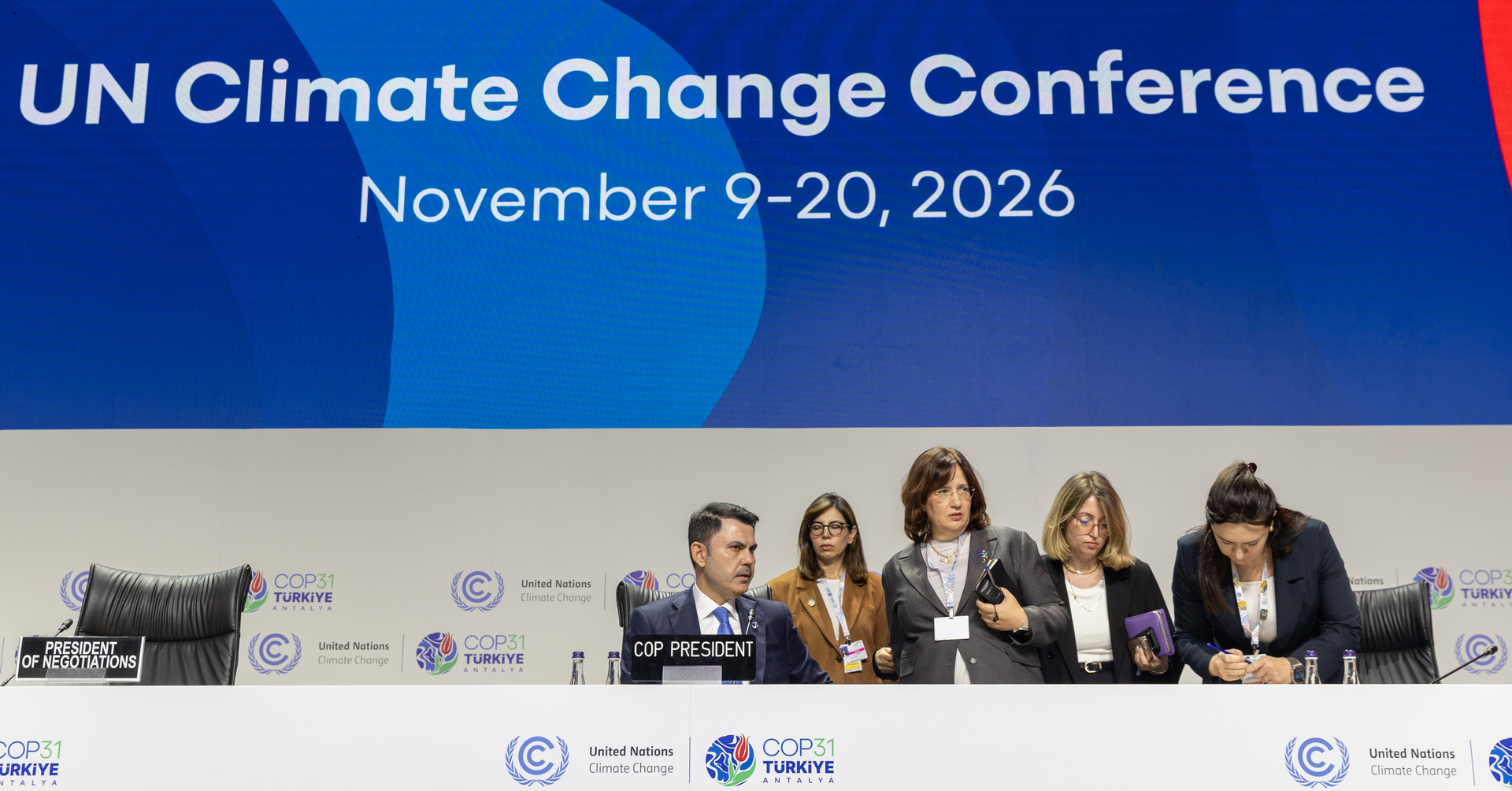
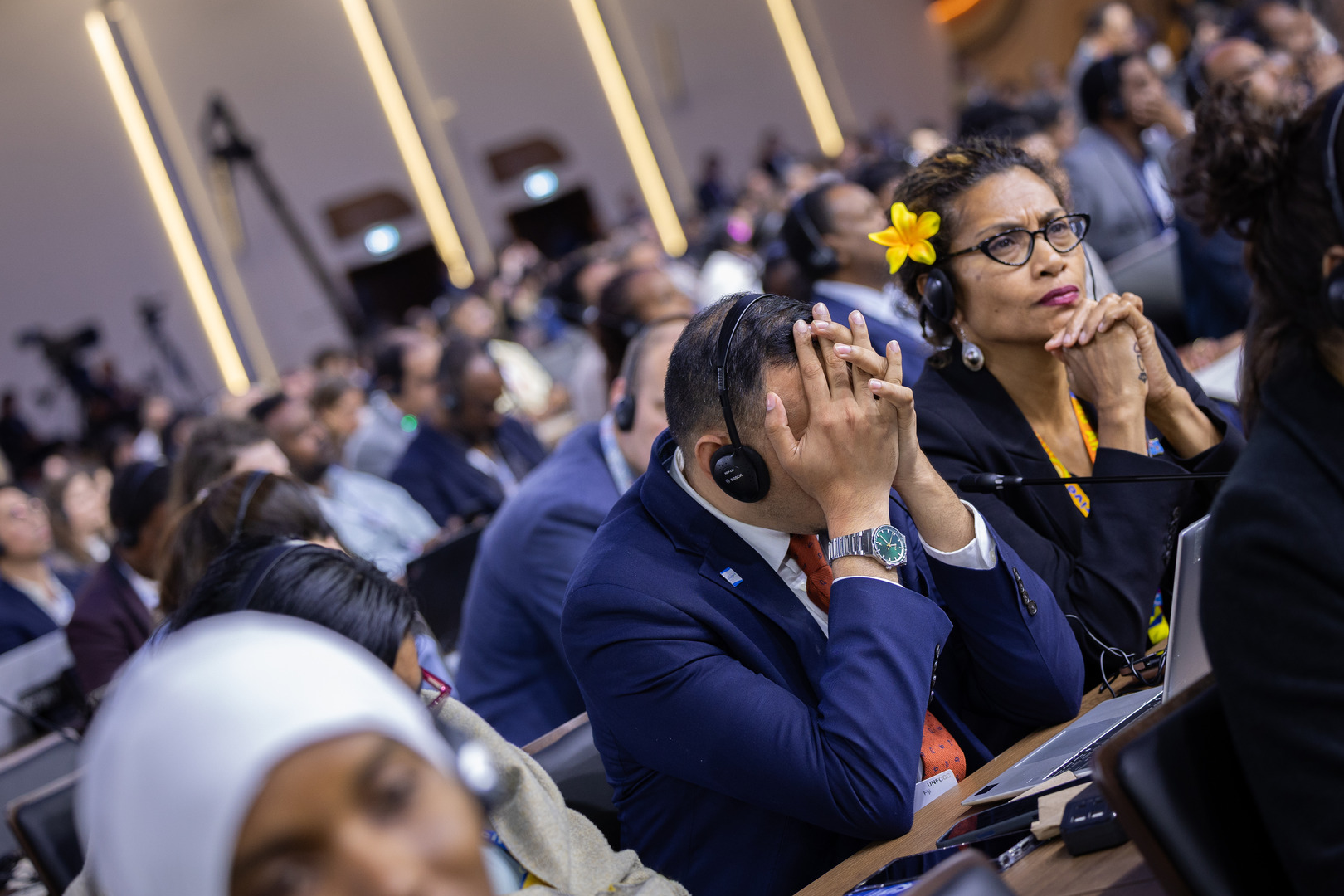
Countries remained divided over how to respond to this reality in what became the longest-running UN climate conference in history. While adopting decisions on several key issues, Parties failed to reach consensus on the proposed Antalya Pact, with disagreements on critical topics proving impossible to bridge, including the transition away from fossil fuels.
Climate finance was another major point of contention, with countries divided over who should provide funding for climate action, how to mobilize it, and how to ensure existing commitments are delivered.
“The failure to reach consensus at COP31 reflects the broader challenges facing multilateralism in an increasingly fragmented world. Major powers have proven either unwilling or unable to promote unity in the face of escalating global crises. Yet in Antalya, we also saw encouraging examples of countries coming together to meet the moment,” said IISD’s President and CEO, Patricia Fuller.
Beyond the negotiating rooms, countries continued to advance the energy transition through first-mover initiatives, such as the Coalition on Phasing Out Fossil Fuel Incentives including Subsidies (COFFIS), Beyond Oil and Gas Alliance, and the process on transitioning away from fossil fuels that began in Santa Marta, with more countries announcing their roadmaps to transition.
“While these efforts are encouraging, they cannot substitute for an effective multilateral process. If all countries are to have a meaningful voice in shaping the global response to climate change, work must begin now to restore confidence in the UN process and its ability to deliver on the goals of the Paris Agreement,” Fuller added.
Energy transition
COP31 was an opportunity to turn the COP28 commitment to transition away from fossil fuels into the next steps toward delivering it. The Brazilian COP30 Presidency’s global roadmap provided a foundation.
But COP31 failed to build on that commitment: negotiations towards a cover decision, drafts of which included a global electrification target and a commitment to accelerate the transition away from fossil fuels, ultimately broke down.
The European Union, Panama, the Marshall Islands, Vanuatu, and Belize rejected the final proposed text as it failed to address the urgency of climate change.
The disagreement stemmed not only from division around fossil fuels but also the 35% by 2035 electrification target and an abruptly proposed target for carbon capture utilization and storage (CCUS) — an expensive technology, unproven at scale, that if adopted would have provided a licence for continued fossil fuel expansion.
“The final text’s proposed target to scale up CCUS was particularly concerning, as developing this technology risks wasting precious time and diverting public resources towards technologies that could prolong fossil fuel production and use, rather than addressing emissions at their source. With affordable, proven clean energy solutions already available, governments must focus on accelerating their deployment and delivering on the commitment to transition away from fossil fuels,” said Natalie Jones, Senior Policy Advisor at IISD.
Parties also failed to reach consensus on the mitigation work programme, the mandate of which was due to be renewed at COP31, with Russia and Saudi Arabia objecting to the draft decision. This failure means that, at least for now, there is no dedicated process on mitigation under the Paris Agreement — although countries could agree to renew the programme at COP32 in 2027.
Beyond the negotiations, political momentum on energy transition continued to build. More than ten countries have published or committed to national fossil fuel transition roadmaps, bringing the total number of jurisdictions taking this vital step up to 27.
Tuvalu and Vanuatu also joined COFFIS, strengthening cooperation to phase out fossil fuel subsidies. This momentum must now drive practical action, including through the process on transitioning away from fossil fuels begun in Santa Marta. In addition, findings from national roadmaps can inform the second global stocktake launched in Antalya.
Adaptation
Against a backdrop of intensifying climate impacts and a super El Niño underway, the urgency of adaptation was widely recognized. Adaptation discussions in Antalya were characterized by a list of long-standing divergences between countries, leading to mixed outcomes.
Adaptation finance is a particularly contentious issue, with developing countries pressing for greater clarity on how the commitment to triple adaptation finance by 2035 would be delivered. They called for a clear baseline, stronger accountability, and a way to track progress. COP31 failed to address these concerns with no further indication on how to address the tripling of adaptation finance in the Global Goal on Adaptation (GGA) and Climate Finance Work Programme texts.
Also related to adaptation finance, Parties agreed on arrangements for the Adaptation Fund to serve the Paris Agreement exclusively once the first share of proceeds under Article 6.4 is converted into revenue. The Fund remains underfunded, and securing predictable, long-term funding is critical to its ability to support adaptation in developing countries.
At COP30, countries agreed on 59 indicators to track progress on adapting to climate change, but disagreements over how they were adopted, and their technical readiness remained unresolved. At COP31, countries reached a compromise, agreeing to set up a task force of national experts to refine the indicators and develop guidance for their use by October 2027. However, with limited direction on next steps from countries and few opportunities to meet, questions remain over how much progress can be made in that time.
Finally, discussions on the national adaptation plans also exposed divergences between developed and developing countries over whether and how to refer to resource mobilization, access, predictability, and the responsibilities of developed countries to provide support. All countries deplored the lack of time given to these discussions, which advanced only incrementally, and will continue next June.
Related Articles
Here is a list of articles selected by our Editorial Board that have gained significant interest from the public:
Just transition
Just transition negotiations at COP31 focused on operationalizing the Just Transition Mechanism agreed at COP30. Despite extensive discussions, Parties remained divided over its governance, institutional arrangements and whether it should provide dedicated implementation support or primarily coordinate existing initiatives. Ultimately, decisions on the mechanism’s functions and operational arrangements were postponed until COP32 in 2027.
More positively, Parties agreed to extend the existing Just Transition Work Programme for another three years, with improvements to make its dialogues more inclusive and practical.
Gender
COP31 provided an opportunity to advance implementation of the Belém Gender Action Plan (GAP) agreed at COP30, with attention on translating commitments into gender-responsive climate action at the national level.
The negotiations were difficult, exposing the divisions that persist even after the adoption of the GAP. In the end, Parties acknowledged the efforts towards implementation in the first year, expressing appreciation for the different actors involved.
Attention now turns to the June talks in Bonn, where countries will need to rebuild trust, bridge their differences, and lay the groundwork for renewed cooperation at COP32 in Addis Ababa.
** **
This article was originally published by the International Institute for Sustainable Development (IISD) and is republished here as part of an editorial collaboration with the IISD.
Editor’s Note: The opinions expressed here by the authors are their own, not those of Impakter.com