
Countries have agreed to accelerate the transition away from fossil fuels, strengthen their resilience to climate change, and mobilize more finance to deliver on these commitments. However, important questions remain about implementation, where the money will come from, and how progress will be measured.
COP 31 marks the beginning of the second global stocktake (GST2) under the Paris Agreement on climate change, a process that will assess our collective progress toward the Paris goals, identifying how to ramp up ambition and secure more support.
Our experts will help identify ways to turn these commitments into ambitious, just, and equitable climate action. Our Earth Negotiations Bulletin team will be on the ground providing daily updates on the talks.
Daily Updates
Throughout COP 31, we will publish daily updates on this page, drawing on reporting from IISD’s Earth Negotiations Bulletin (ENB) to keep you informed of key developments in the negotiations.
For more detailed coverage, you can follow ENB’s reporting directly or subscribe to receive daily updates in your inbox.
November 10
Following the late finish of the opening plenary on Monday, Parties delved straight into formal negotiations on Tuesday morning. Finance negotiations convened all day and into the evening, covering a variety of agenda items. In discussions on the mitigation work programme and Global Goal on Adaptation, Parties reiterated their long-standing positions.
As promised during the opening plenary on Monday, the Presidency convened a meeting with Heads of Delegation to discuss the contents of a possible cover decision. Delegates were invited to reflect on recent progress, current global challenges, and ways to accelerate implementation, but some questioned why the discussions appear to assume there will be a cover decision. The Presidency may therefore have to negotiate not only the decision’s contents, but also its purpose and scope.
For developing countries, means of implementation is the thread stitching together the different strands of climate action, from mitigation to loss and damage. With three hours devoted to technology and five to finance, there was lots of opportunity to discuss the recent decline in support. Reductions in the UK and US contributions to the Green Climate Fund alone represent a loss of USD 5.1 billion to the Fund in a single year. Together with the historically low replenishment of the Global Environment Facility and declining official development assistance, the direction of travel was, as one observer put it, “clearly the wrong one.”
Meanwhile, negotiators in the mitigation work programme and Global Goal on Adaptation rooms experienced flashes of déjà vu as familiar positions resurfaced. Just as the morning’s transport gridlock eventually resolved, however, the negotiations gradually picked up speed as first landing zones and areas of convergence appeared on the horizon.
November 9
Climate change is the lived reality of billions of people. In 2026 alone, glacial lake outburst floods struck Bhutan, Nepal, and the US; glaciers collapsed in Antarctica and the Himalayas; and numerous other extreme weather events devastated lives and livelihoods around the world. Against this backdrop of intensifying climate impacts, participants at the 31st session of the Conference of the Parties (COP 31) to the UN Framework Convention on Climate Change (UNFCCC) called on governments to limit the inevitable overshoot of 1.5°C, make finance more accessible, and deliver on commitments already made.
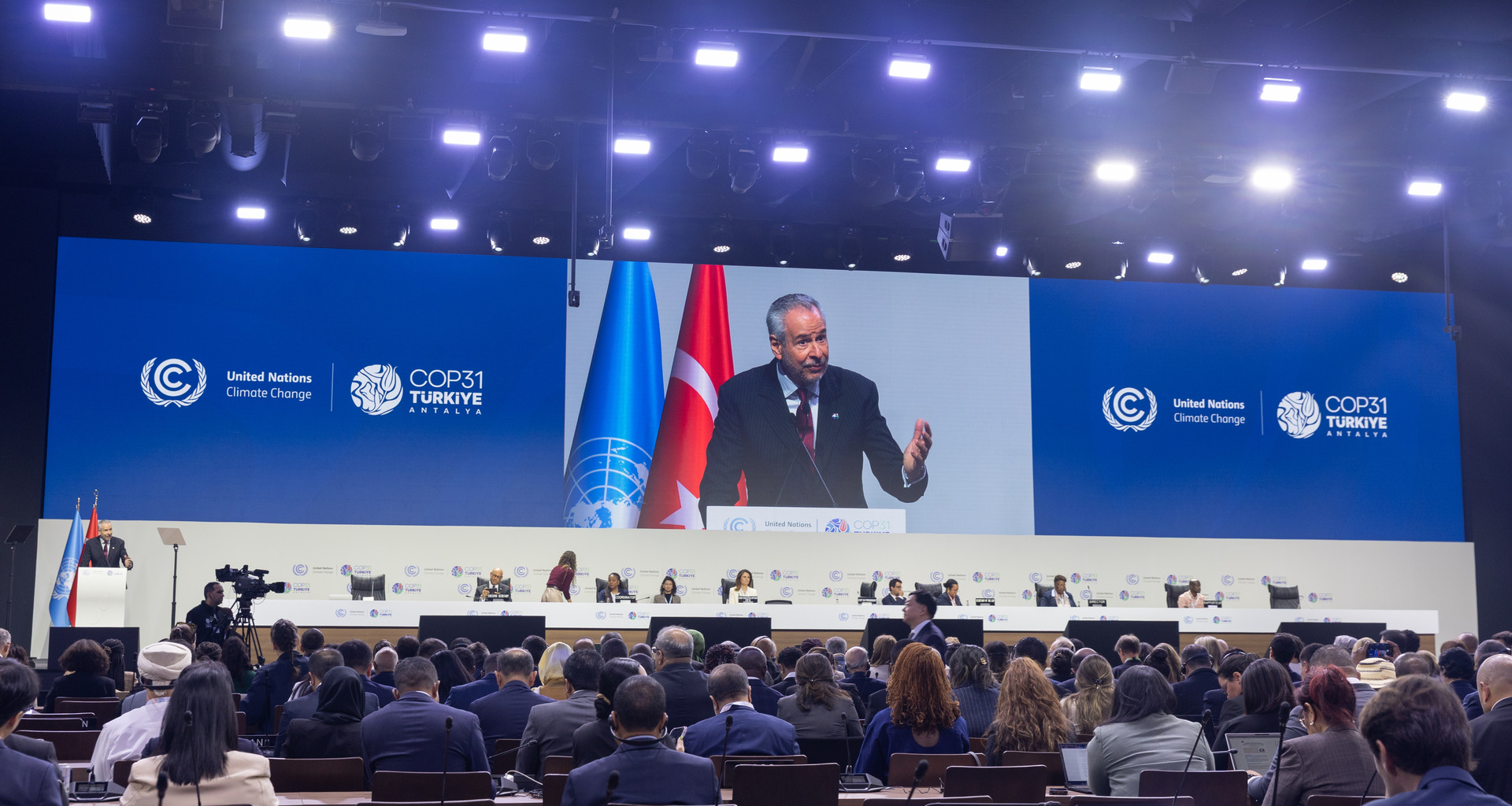
Opening the Conference, André Corrêa do Lago, COP 30 President, stressed the role of the Action Agenda as an implementation mechanism. He drew attention to the COP 30 Presidency roadmaps on transitioning away from fossil fuels and on halting and reversing deforestation and forest degradation, as well as a report on implementing the Baku to Belém Roadmap to 1.3T.
COP 31 President Murat Kurum underscored COP 31 as another opportunity to foster discussion, build trust, and close the gap between promises made and peoples’ lives to ensure this COP will be one of implementation. He highlighted the need for “İmece”, the Turkish cultural tradition of collective mutual aid, calling on countries to share both the hope and burden of climate action.
Key Issues to Watch at COP 31
How can COP 31 advance the transition away from fossil fuels?
At COP 28, countries agreed for the first time on the need to transition away from fossil fuels in energy systems. Two years later, the Brazilian COP 30 Presidency launched a process to develop an international roadmap for transitioning away from fossil fuels—set to be released right before COP 31 begins. The roadmap aims to help countries plan their transitions, cooperate more, and track progress via nationally determined contributions and future global stocktakes.
At COP 31, a key question will be whether governments can build on this commitment and accelerate implementation, including through national transition roadmaps.
The launch of GST2 will provide an opportunity to ensure that progress on global climate action is measured, among other factors, by how effectively countries are transitioning away from fossil fuels.
While the Türkiye Presidency’s spotlight has largely been on the proposed electrification target of 35% by 2035, it remains unclear how the need to transition away from fossil fuels will be embedded in this goal.
Fossil fuel subsidy reform will also be an important part of the discussion. Government support for fossil fuels can undermine climate objectives and slow investment in cleaner alternatives. Redirecting public finance toward clean energy can help countries strengthen energy security, affordability, and economic resilience.
Lastly, COP 31 needs to see progress on the reform of investment and trade agreements that allow fossil fuel firms to launch investor-state suits against climate policies, known as ISDS. At the first international conference on transitioning away from fossil fuels in Santa Marta, governments identified ISDS as a key legal barrier to the transition. COP 31 is an opportunity to build on this momentum. Countries should commit to reviewing their agreements containing ISDS clauses that protect fossil fuel investments and set out an ambitious reform roadmap.
Will countries agree on how to put the Just Transition Mechanism into practice?
Moving away from fossil fuels and transforming economic systems will affect workers, communities, and entire industries. A just transition means helping workers access new jobs, supporting fossil fuel-dependent communities in developing new economic opportunities, and ensuring everyone benefits from clean energy. Making this transition people centred, fair, inclusive, and supported by appropriate policies is essential to achieving the goals of the Paris Agreement.
At COP 30 in Belém, governments agreed to develop a Just Transition Mechanism to strengthen international cooperation, technical assistance, capacity building, and knowledge-sharing. The agreement marked an important step forward, but the mechanism’s practical arrangements remain undecided.
At COP 31, negotiators will consider how the mechanism should operate, how it should be governed, and what support it should provide to countries and communities. They will also undertake the first review of the Just Transition Work Programme, established in 2022.
The key test will be whether countries can move beyond dialogue and establish a mechanism that helps governments turn just transition commitments and policies into concrete action and implementation—from protecting workers’ livelihoods and creating decent jobs to supporting economic diversification while giving affected communities a voice in decisions that shape their futures.
Can countries make progress on measuring adaptation?
As climate impacts intensify, robust and inclusive approaches to monitoring, evaluating, and learning from adaptation progress, alongside adequate finance to support implementation, remain central to international climate negotiations.
At COP 30, governments adopted 59 indicators to track progress toward the Global Goal on Adaptation. However, concerns remain about how best to operationalize and use them to assess collective progress on adaptation. Negotiations in Bonn in June 2026 ended without agreement on how to establish a task force responsible for refining the indicators.
COP 31 will provide another opportunity to bridge these differences and agree on a process for improving the indicators, including potential guidance and methodologies that can be applied across various national contexts and that can support capturing differences in adaptation outcomes for women and marginalized groups.
A meaningful outcome at COP 31 would help countries establish credible ways to assess adaptation progress while addressing the resources needed to turn adaptation plans into action.
The start of GST2 will offer an important opportunity to examine these issues and identify practical steps toward accelerated adaptation action.
How will countries put the new Gender Action Plan into action?
Climate change does not affect everyone equally. Women and marginalized groups often face greater risks and barriers to accessing the resources, technologies, and decision-making processes needed to respond.
At COP 30, governments adopted the Belém Gender Action Plan (GAP) for 2026–2034, establishing a framework to integrate gender equality into climate policies and action. The plan includes 27 activities and 98 deliverables, covering areas such as participation, finance, technology, and data.COP 31 brings parties and other actors together to advance implementation of the GAP.
The task now is for countries to translate their commitments into gender-responsive climate action at the national level, including through national adaptation plans, recognizing that gender intersects with other social, economic, and political factors to shape climate risks and access to resources and opportunities.
Can countries better connect action on climate change, biodiversity, and land degradation?
Climate change, biodiversity loss, and land degradation are closely connected, yet governments often address them through separate international agreements, policies, and funding arrangements.
The three Rio Conventions on climate change, biological diversity, and desertification provide opportunities for greater cooperation. Better coordination could help countries avoid duplication, use limited resources more effectively, and design policies that deliver benefits for climate, nature, and communities.
At COP 31, an important question will be how to strengthen cooperation between the conventions and translate it into national action.
This could include closer alignment between countries’ nationally determined contributions, national adaptation plans, National Biodiversity Strategies and Action Plans, and voluntary land degradation neutrality targets, as well as improved information-sharing, reporting, and joint implementation.
The challenge will be to move from recognizing the importance of cooperation to establishing practical arrangements that help governments deliver more coherent and effective action.
Will countries strengthen climate action on agriculture and food systems?
Climate change affects both agriculture and food systems, and both are central to efforts to reduce emissions and build resilience. At the same time, the policies and financial incentives that shape agricultural production can either support or undermine climate objectives.
Under the Sharm el-Sheikh Joint Work on Agriculture and Food Security, established at COP 27, countries have been examining how to strengthen climate action in agriculture while safeguarding food security.
Discussions have focused on practical challenges, including how countries can access finance, technology, and other forms of support to implement climate solutions across food systems. At the in-session workshop under the Sharm-el-Sheikh Joint Work at SB 64 in Bonn in June, discussions also addressed agricultural subsidy reform and its potential to redirect public resources toward more sustainable, climate-resilient agricultural practices, while safeguarding food security and farmer livelihoods.
At COP 31, the 4-year work programme is set to conclude, with negotiations focusing on its outcomes and the future of agriculture and food security under the United Nations Framework Convention on Climate Change. Key questions will include how to build on the work undertaken and strengthen access to finance and technical support, with a greater focus on implementation through national climate plans and policies.
Discussions to date indicate broad support for agreeing on a successor programme to the Sharm-el-Sheikh Joint Work beyond 2026; however, the mandate and priorities for future work are likely to be contested. The key test at COP 31 will be whether countries can overcome persistent disagreements on finance, technology, and implementation to agree an ambitious mandate for future work.
Can countries find common ground on trade and climate policies?
Trade and climate policies are increasingly interconnected. Measures designed to reduce emissions, support clean industries, or prevent deforestation can have effects beyond national borders, raising concerns about competitiveness, fairness, and impacts on developing countries.
At COP 30, governments agreed to establish a 3-year technical dialogue on trade and climate. Brazil also launched the Integrated Forum on Climate Change and Trade, a platform intended to strengthen cooperation and build trust between countries.
These initiatives reflect a growing recognition of the need to discuss the role of trade in the global green transition, aiming to ensure it supports climate ambition rather than fragmenting emerging green markets.
At COP 31, governments will have an opportunity to advance discussions on issues such as carbon border adjustment measures, green industrial policies, and the relationship between trade rules and climate objectives.
The challenge will be to build greater understanding of these policies and find a way to have a constructive conversation on those issues, aiming to identify areas for cooperation.** **This article was originally published by the International Institute for Sustainable Development (IISD) and is republished here as part of an editorial collaboration with the IISD.
Editor’s Note: The opinions expressed here by the authors are their own, not those of Impakter.com