
Today’s ESG Updates
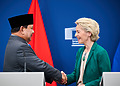
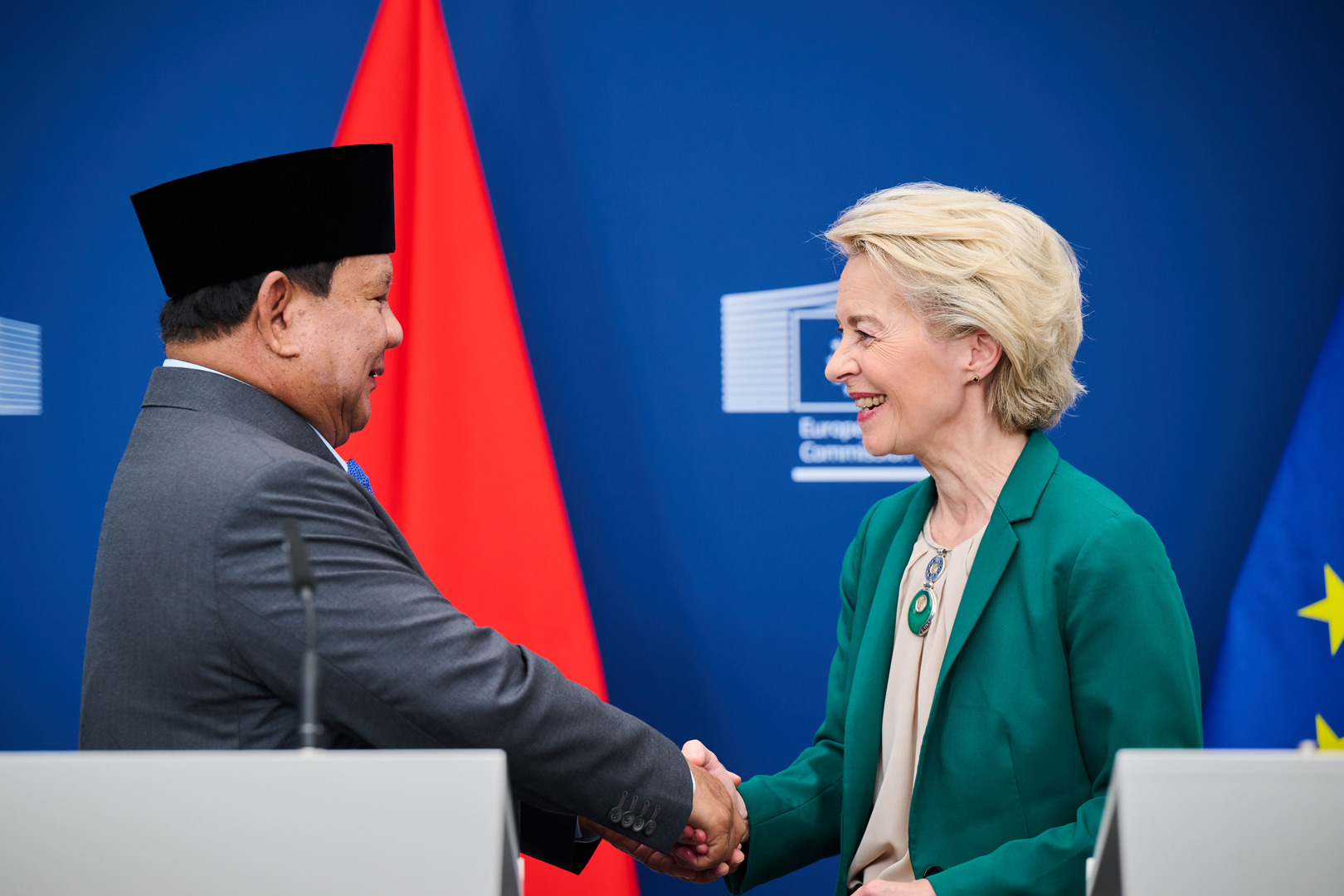
- EU and Indonesia Sign Trade and Investment Agreement: The agreement links market access and critical mineral security with climate commitments, making its success a test of whether commercial growth can deliver environmental progress.
- COP31 Falters Over the Future of Fossil Fuels: Disputes over carbon capture expose a deeper divide over whether the energy transition should replace fossil fuels or manage their emissions.
- Electrification Alone Won’t Power Europe’s Energy Transition, Green Groups Say: Delayed efficiency rules risk undermining the EU’s ambitions, exposing a gap between headline targets and the policies needed to deliver them.
- Johor’s Data Centre Water Footprint Masks Bigger Demand: Current allocations remain modest, but rejected requests reveal the pressure that future growth could place on water supplies.
EU and Indonesia sign trade and investment agreement
The EU and Indonesia signed their Comprehensive Economic Partnership Agreement (CEPA) on November 21, 2026, opening the way for more trade and investment in sectors including renewable energy, electric vehicles, and raw materials. For the EU, the appeal goes beyond selling more goods to Indonesia. The country’s nickel and cobalt offer an opportunity to diversify supplies of minerals needed for the green transition.
The agreements could support closer links between Indonesia’s mineral production and European clean-energy industries. But easier access to raw materials is not, by itself, an environmental achievement; how those materials are extracted matters just as much as where they end up.
CEPA includes environmental impact assessments for mining projects, climate commitments and a role for civil society in monitoring implementation. It also makes the Paris Agreement an essential element of the deal. These provisions matter because they give both sides a basis for holding each other accountable as trade expands. Still, the Commission’s announcements describe commitments, not results. The environmental case for CEPA will become more convincing when evidence shows those commitments are shaping investment and mining decisions.
The agreement provides an export duty-free quota for crude palm and palm kernel oil, identified as strategic inputs for EU industries, alongside a dedicated protocol promoting sustainable trade practices. Pairing market access with sustainability cooperation creates a framework for addressing competing priorities. However, neither Commission document establishes what environmental outcomes that framework will deliver, making it premature to treat the protocol as proof of sustainable production.
Indonesia will remove import duties on 98.5% of tariff lines, with annual savings for EU exporters exceeding €600 million. Machinery, vehicles, services and agriculture stand to benefit, while 221 EU geographical indications receive protection. The Commission projects EU exports to Indonesia to rise almost 40% over 15 years, and Indonesian exports of goods and services to the EU to increase by more than 14%. These are projected gains, not guaranteed outcomes.
Ultimately, the CEPA is both a trade-opening agreement and a framework for managing the resource demands of the green transition. Its success should therefore be assessed against investment, supply-chain resilience and environmental delivery, not export growth alone. Signature is also not implementation, as parliamentary consent and domestic procedures remain outstanding, with provisional application expected in early 2027.
Klimado – Navigating climate complexity just got easier. Klimado offers a user-friendly platform for tracking local and global environmental shifts, making it an essential tool for climate-aware individuals and organizations.
COP31 falters over the future of fossil fuels

COP31’s collapse exposes a fundamental disagreement over whether climate action means replacing fossil fuels or managing their emissions. The proposed expansion of carbon capture, alongside the omission of fossil fuels, made technological ambition look like political cover for continued production.
Yet rejecting that compromise also sacrificed progress on electrification and adaptation finance, illustrating the costs of defending stronger principles within consensus negotiations.
Support from over 80 countries for electrification offers a potential route forward, but without an adopted agreement, implementation remains uncertain. Antalya’s central lesson is that ambitious targets cannot bridge unresolved conflicts over whose economic interests the transition threatens.
Related Articles
Here is a list of articles selected by our Editorial Board that have gained significant interest from the public:
Electrification alone won’t power Europe’s energy transition, green groups say
The EU’s electrification ambition exposes a gap between setting targets and delivering the regulations needed to achieve them. Raising electricity’s share of energy consumption to 46% by 2040 promises substantial savings on fossil fuel imports, but delayed efficiency standards risk weakening that transition.
Ecodesign and labeling are not peripheral measures; they help consumers identify efficient products and support technologies such as heat pumps. ECOS’s (Environmental Coalition on Standards) warning of nearly 10 million tonnes of additional annual emissions by 2030 highlights the potential cost of inaction.
The central challenge is policy coherence: electrification, efficiency and flexibility must advance together, not as disconnected priorities.

Johor’s data centre water footprint masks bigger demand
Johor’s 1.05% figure offers reassurance, but the stronger story is regulatory restraint: authorities approved 21.277 million liters daily against requests for 73.088 million. This suggests today’s modest footprint reflects constrained allocations, not necessarily modest industry demand.
The distinction between river supplies and depleted dams also challenges claims that data centres caused those specific declines. However, approved supply is not the same as measured consumption, a distinction the article leaves unresolved.
Future credibility therefore depends on showing that cooling requirements and approval controls protect household supplies as demand grows, rather than relying solely on a reassuring statewide percentage for now.
Editor’s Note: The opinions expressed here by the authors are their own, not those of impakter.com — Cover Photo Credit: Wikimedia Commons