Air pollution is a well-known problem that leads to a drastic reduction in the quality of life. It doesn’t only cause chronic diseases: according to a recent UN report, air pollution is the cause of between six and seven million premature deaths and an estimated US$5 trillion in welfare losses each year.
Though clean air is a basic human right, a lot of people are deprived of it. Two thirds of the cities in the world with adequate air quality data are suffering from dangerous levels of pollution.
Today I have the pleasure of speaking with David Lu, co-founder and CEO of Clarity Movement Co — a team of passionate engineers and scientists focused on making a positive impact in the world by tackling the global air pollution crisis.
What is your background? What made you decide to run your own business?
David Lu: I have been an environmental activist for a very long time. I was disappointed by the traditional protest and the lobby model that most environmental organizations deploy and wanted to see if we could leverage capital to make a positive social impact. Having lived in China for 18 years, I generally think that air pollution is one of the most pressing environmental issues we face today. Clarity is the result of this thought process, founded to leverage technology to help reduce air pollution.

In which kind of activities is Clarity involved?
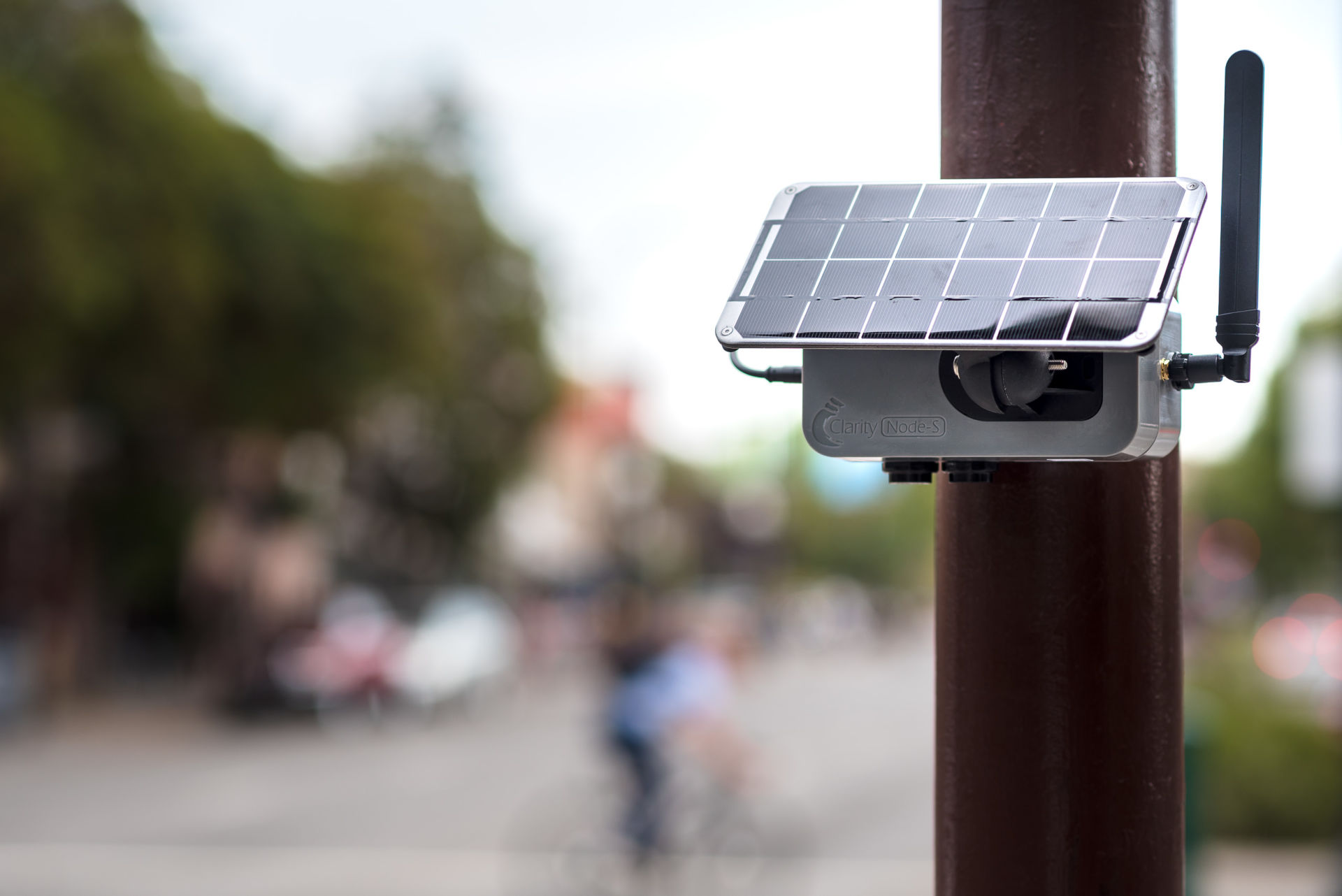
D. L. : Clarity is a mission driven company committed to solving air pollution. We believe in using technology to push for a movement. Currently, Clarity’s focus is on our air monitoring solution for cities that combines state-of-the-art hardware and software to help cities expand their current monitoring efforts by 100-fold. It provides the most actionable hyper-local information for government officials and citizens to understand and act on air pollution.
Editor’s Picks — Related Articles:

“Molekule’s Air Pollutants Destroyer”

“Copenhagen wants to inspire cities to take climate action”
Why should we need more IoT — Internet of Things — solutions like the ones offered by Clarity?
D. L. : Currently, monitoring equipment used by governments is expensive, bulky, and labor intensive to operate. This limits the number of data points a city can manage, making them blind to the high temporal and spatial variation of air quality within a block-to-block level. Limited information results in limited action. Leveraging IoT technology allows Clarity to provide cities with affordable and accessible air quality monitoring solutions that gather high-resolution data not previously achievable with traditional technologies.

How many clients have you had so far?
D. L. : Since launching in the end of 2017, we are now deployed in 50+ cities in 30 countries across 6 continents. This rapid global growth in just a little over a year has allowed Clarity to work successfully with the diverse range of municipalities, NGOs, research institutes, and the private sector that make up our customer and partner portfolio.

What are you planning to do in the next five years?
D. L. : Continuing to help cities and individuals tackle the environmental crisis. Number wise, this means being deployed in thousands of cities, garnering insights and helping enable data-informed policy to impact citizens in an inclusive and sustainable way. I don’t know how long it will take to eliminate the air pollution threat to our health and the environment, but we are committed to this issue and won’t stop until then.
What kind of impact do you have on your community and the environment?
D. L. : Clarity Air Monitoring equips decision-makers and other civic stakeholders with actionable real-time air quality data that help identify pollution hot spots and sources, target interventions, and quantitatively evaluate the effectiveness of clean air policies including electrifying fleets, restricting vehicle flows, or encouraging public transit use.
With air pollution disproportionately affecting low-income communities of color, localized air quality data is revolutionary in understanding personal exposure. The data paints a picture that goes beyond political and economic boundaries to help communities understand the immediate air we’re breathing and take action to protect our health.
When the toxic levels of pollution we see today are a direct result of anthropocentric actions, we have a responsibility, a duty, to practice environmental stewardship.
There’s a huge information gap in current environmental management practices where policymakers simply do not understand air pollution enough to effectively mitigate it. This is a gap that Clarity is actively working to fill. It is one thing to say, “The air is polluted and we need to clean it.” It becomes much more difficult to answer the question, “How do we clean it?” when coupled with the environmental, social, and economic externalities that come with any decision.
Clarity is working to change how we understand our environment through data that supports the health of our planet and its inhabitants.
What are your thoughts about the Sustainable Development Goals (SDGs)? How do you think Clarity can give a positive contribution in that sense?
D. L. : Going back to the idea of turning the goals into action, air quality data serves as an important metric in evaluating outcomes, whether that be clean air goals or broader SDGs. Clarity has been fortunate to be recognized by the international bodies leading SDG efforts as a leader in the air quality space, contributing to the forefront of defining how technology and data fits into the proposed framework. I’m a strong believer in the power of data in aligning and assessing sustainability goals.
What is your view on climate change?
D. L. : Climate Change is the most pressing challenge that we are facing in the 21st century. However, we are not doing enough to reach the current 2°C target (not to mention 1.5°C target). Most efforts we are taking so far focus on mitigation of greenhouse gas emissions in order to stop CO2 concentration growth by 2050, but this is simply not enough. More aggressive efforts, such as negative emission technologies (NBTs) will inevitably be necessary to save our planet.
Air pollution, in the meantime, is closely related to climate change. Since the major sources of air pollution are almost the same as greenhouse gas emissions, developing air pollution mitigation policies usually result in greenhouse gas emissions reduction, as in China, for example. In addition, air pollution action can be used to raise awareness around the global environmental crisis since it has a much more tangible effect on people’s daily lives while, at the moment, climate change can sometimes be seen as far too distant an issue for the majority of population.
Featured Photo Credit: Clarity
Editors Note: The opinions expressed here by Impakter.com columnists are their own, not those of Impakter.com.