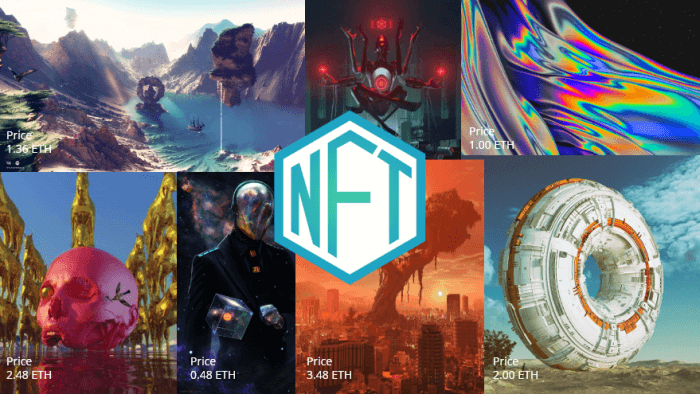
NFTs are booming and becoming an increasingly popular way to buy and sell digital artworks, though they can also be used for other tangible or intangible items such as GIFs, collectibles, designer sneakers or even music.
Artists are amongst those entering the CryptoArt or NFTs market — it’s “the next big thing” and, unsurprisingly, there is also an enormous amount of money to be made.
Between a gif of A Nyan Cat being sold for $587,000 in mid-February or Damien Hirst’s recent NFT initiative, “The Currency”, generating more than $25 million — it is fair to say: there are millions to be made from buying and selling NFTs.
But their environmental impact is unprecedented and should not be downplayed.
What are NFTs?
NFT, a Non-Fungible Token, is a digital asset bought and sold online, frequently with cryptocurrency and generally encoded with the same underlying software as many cryptos. They are one of a kind, or very limited, with each NFT having a unique string of code and stored on a virtual ledger called a blockchain.
NFTs and cryptocurrencies’ only similarity is that they use the same kind of programming. Cryptocurrencies are “fungible,” meaning they can be traded for one another and are equal in value. However, each NFT has a digital signature, serving as proof of ownership – thus making it impossible for them to be exchanged for, or equal to one another, and therefore they can fluctuate in value.
Most NFTs are part of the Ethereum blockchain, which currently functions using a Proof of Work (POW) model. But what is this?
In simplistic terms, when an artist wants to create an NFT they must “mint” or mine the artwork for it to become a part of the Ethereum blockchain. Minting or mining is the process whereby an asset is added to this blockchain. To do this, miners must compete to solve a cryptographic puzzle. Using trial and error, miners rapidly generate random numbers checking each one to test if it is the solution. The miner who arrives at the right answer first is the winner and gets their asset added to the blockchain.
Once the NFT is successfully added to the blockchain, it can officially be sold to a customer.
The Environmental Impact of NFTs
Crypto mining is a huge contributor to greenhouse gas emissions and climate change because the mining process requires immeasurable computing power and a lot of energy for the blockchain and the algorithm to exist.
According to researchers, the key reason for this is that most mining takes place in China or the United States, countries that get most of their electricity by burning coal and fossil fuels. They are also the leading countries in e-waste worldwide.
Every single aspect of an NFT essentially produces carbon emissions, from minting the token, mining the coins to buy it, to resales. Every subsequent transaction after the CryptoArt has been uploaded follows the same series of events, which consumes the same amounts of CO2 (in kg):
- Every bid creates 23kg
- Every sale weigh 51kg
- Every transfer 30kg
The blockchain does not become more energy efficient as it grows in popularity. On the contrary, as the puzzle becomes more competitive and difficult, the blockchain grows and more people engage in the mining activity. The process is a never-ending worsening cycle for the environment.
Related Articles: How Blockchain could promote global sustainability | Can Cryptocurrencies Ever Become Reliable Means of Exchange?
Several artists, including Chris Precht, an Architectural designer, have spoken out about the reasons behind their refusals to engage with NFTs:
“To create one token through the block chain equals out the same amount of electricity I usually use in one month of electricity…and I didn’t want to create just one token I wanted to create 300 tokens because I had three art pieces and I wanted to make each one an edition of 100. So this one drop would have used the amount of electricity I usually use in two decades.”
Ethereum’s annual energy use is pretty bleak too. De Vries’ calculation shows it represents roughly the equivalent to Ireland’s entire annual energy consumption.
The Blockchain must go Green
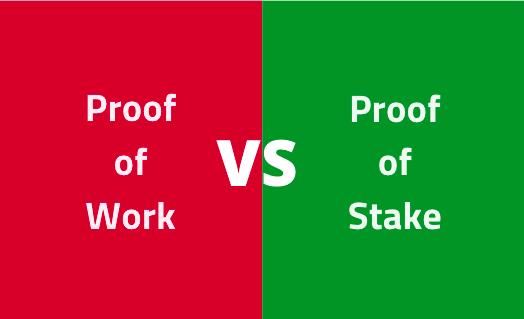
For cryptocurrencies and NFTs to be more sustainable, the blockchain’s energy consumption must be reduced. The environmental impact of the Proof of Work (PoW) model has been contested in the past, especially from its proponents.
A report was published in June 2019 which claimed that 74% of Bitcoin mining (using PoW) is done through renewable sources. Such a figure remains questionable considering Bitcoin is such a decentralised currency whose miners are largely anonymous. With this in mind, it is impossible to trace the percentage of Bitcoin mining that uses renewable energy. A miner located in China or the United States will be burning fossil fuels until their country transitions completely to renewable energy.
The Cambridge Centre for Alternative Finance at the University of Cambridge created the Bitcoin Electricity Consumption Index which sees a significant rise in cumulative electricity consumption since 2019.

Consequently, many have argued that for NFTs to have less of an environmental impact a shift must occur at the blockchain level – shifting from a Proof of Work (PoW) model to a Proof of Stake (PoS) one. The latter significantly reduces energy consumption since miners do not need to competitively binge through electricity to gain access to the blockchain. Instead, it attributes mining power to the proportion of coins held by a miner rather than being bound to the number of computations.
Understandably, there has been pushback against this idea from its very inception because of the implicit, built-in inequality bias: Miners with most coins are automatically the winners. But the environmental impact considerations are now winning that particular argument.
Ethereum is currently moving in that direction. With the ETH2 full upgrade in 2022, Ethereum will see a shift from the PoW model to the PoS one. This would cut their energy consumption by 99% and massively reduce waste. Understandably this comes with, as Ethereum themselves claim, “big technical challenges”, and takes a while before the blockchain can switch to the PoS model.
Although Ethereum is the most widely used blockchain, the ecosystem has been expanding with greener blockchains such as Solana or Tezos.
With this shift, the CryptoArt and NFT market could become more sustainable than it currently is.
Other Green Initiatives Beyond the Blockchain
To tackle the environmental harm caused by this proliferating market, it is undeniable that a shift must occur at the blockchain level. Yet, NFTs have found other new ways of giving back to the planet.
Platforms such as World of Waves (WoW) have been created solely to support non-profit organisations using NFTs. WoW has created a space dedicated to protect and preserve the oceans. It aims to support projects by helping them find new ways of fundraising through NFTs and blockchain, for charitable donations to gain momentum.
https://twitter.com/World_Of_Waves/status/1453028778335096839
Blockchains, cryptocurrencies, and NFTs are difficult to get your head around, but they are showing us the way our future may look like. It is important that we all understand what they are and how we can make them more sustainable. There could be an enormous environmental cost in forgetting about their impact.
Editor’s Note: The opinions expressed here by Impakter.com columnists are their own, not those of Impakter.com. — In the Featured Photo: NFTs grouped together and sold online on Ethereum’s blockchain. Featured Photo Credit: Wikimedia Commons.