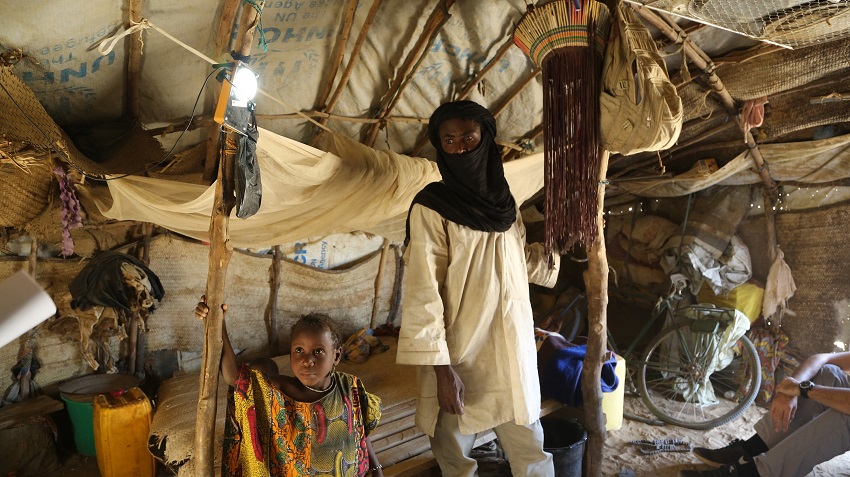
Many of the world’s 80 million refugees and displaced people have little or no access to energy. Without energy, their lives are colder, darker, and more isolated. Sustainable energy helps refugees and displaced people work towards a better future – making their homes warmer and safer, creating chances to study and earn a living, improving health, and connecting them with loved ones.
In the midst of a global pandemic, these opportunities are more important than ever. UN High Commissioner for Refugees Filippo Grandi has warned: “For people who fled wars and persecution, the impact [of coronavirus] on their mostly hand-to-mouth existence, and on their hosts, has been devastating.”
The need for solutions that help refugees survive and rebuild is greater than ever. Two outstanding initiatives, finalists in the 2020 Ashden Humanitarian Energy Award, highlight the vital role clean energy can play.

Powering schools, uniting communities
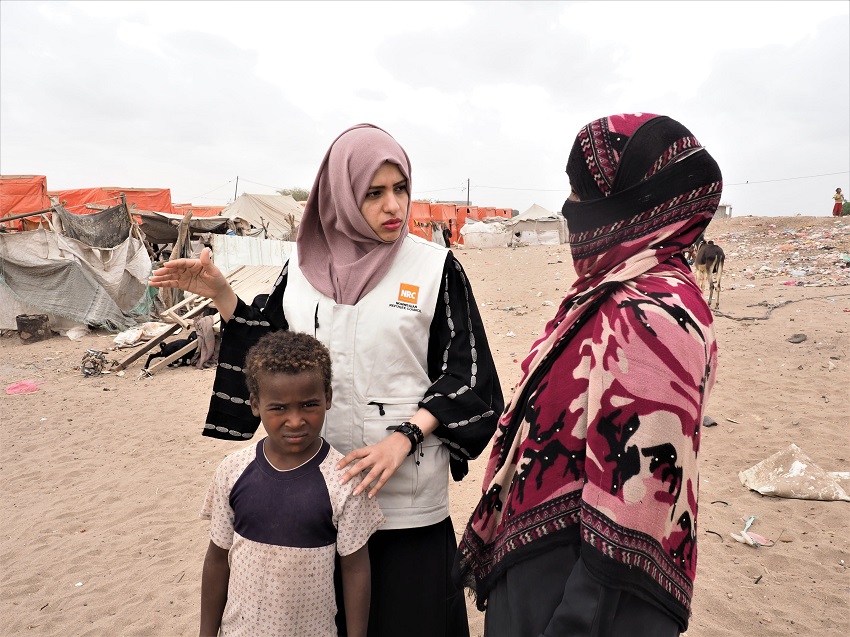
Jordan hosts about 1.5 million Syrian refugees – which means they make up more than one in ten of the population. An initiative by the Norwegian Refugee Council is using clean energy to support refugees and Jordanian families living side-by-side in the northern area of Irbid. This situation is common in neighborhoods around the world. Although tent camps are the environment most often associated with refugees, the majority live in urban areas – often in crowded, low-quality buildings.
In response, the NRC’s work creates benefits for refugees and Jordanians – helping to ease community tensions in an area where families find themselves under increased pressure because of the refugee crisis.
The scheme has created change on four fronts. First, it supports schools struggling to educate refugee children alongside those from the host community. The NRC has funded solar panels for schools, and trained government employees to maintain them. This creates reliable power and big savings for an overstretched education system – lowering some school electricity bills by up to 90%. The NRC has also carried out energy efficiency upgrades, such as boosting insulation, in more than 140 classrooms.
The project has also fitted thousands of refugee-rented homes with solar water heaters, bringing reliable hot water and more big savings. In a ground-breaking approach, landlords were given the heaters in exchange for agreeing to lower rents for an agreed period of time. Lower fuel bills create even more financial relief for refugees.
The NRC has runs courses giving young adults the skills to join Jordan’s emerging solar industry – training them in everything from using design software and installing panels, to setting up a business. And, finally, the organization has lobbied the Jordanian government to put clean energy at the heart of its efforts to support refugees.
RELATED ARTICLES: From Brazil to Cameroon, Forest Communities Fight Climate Change |Shape Your Future with Harriet Lamb, CEO of Ashden |Electrifying Africa: New Research Shows Gender Focus Is Crucial |The Cubans Who Taught Us About Clean Energy |Smashing the urban myths: how clean energy builds new cities
Women-owned microgrid sparks radical change
Yemen’s conflict has laid waste to the country’s economy, school, and health system. Work is scarce – for many people, essentials such as food and medicine could be available but are punishingly expensive. With limited grid connections, communities often rely on diesel generators for electricity, but diesel prices have also been pushed up by the violence.
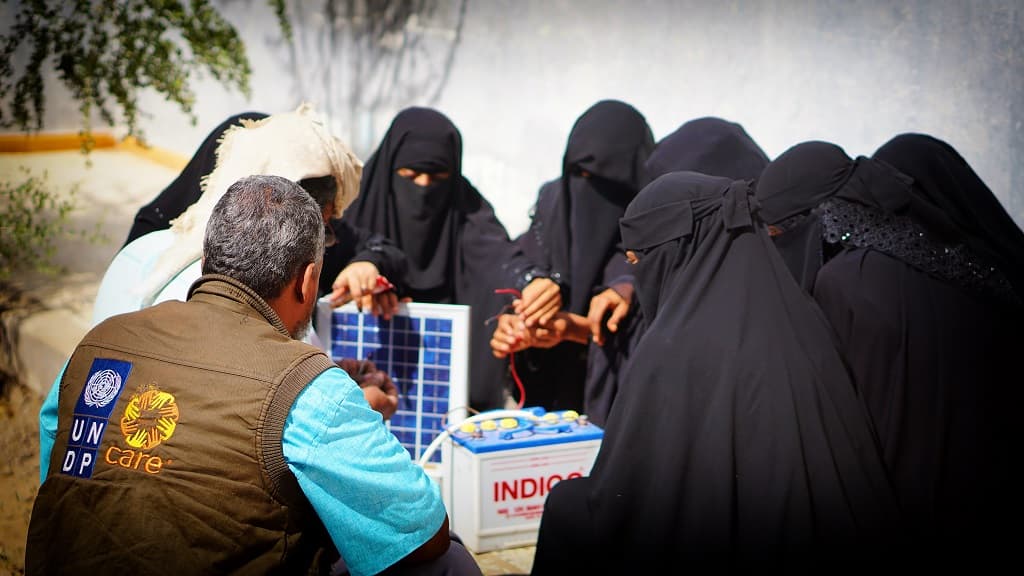
That’s one reason the United Nations Development Programme has helped people come together to set up community-owned solar microgrids. These are creating much-needed incomes for grid owners, and much cheaper electricity for their neighbors – bills are cut by more than 50%. Owners were given training and a grant to get their business off the ground, and since then all three grids, operating in different parts of the country, have been self-sustaining, The profits are even allowing owners to open up new grids.
One grid in the Abbs district is owned and run entirely by women, a radical act in a country with strict gender restrictions. It has been a long road, with the grid owners facing skepticism and even mockery from some in the community. Tasks such as negotiating with tribal leaders and recruiting security guards saw the women breakthrough local gender barriers. Now the whole community benefits and the women who made it happen are role models. The scheme has created other benefits for women too – as well as improving security by lighting settlements at night, the reduced financial pressure lessens the risk of families agreeing to under-age marriage for girls.

Yemen is still hard-hit by conflict, but none of the microgrids have been attacked or stolen. UNDP explains that this is because they are recognized by the whole community as important assets to be protected. After the success of the scheme, hundreds more community-owned microgrids are set to be deployed in Yemen. United Nations agencies will use them to power schools, hospitals, and other vital facilities – delivering reliable income and energy where they are needed most.
Around the world refugees and displaced people are impoverished and excluded, living without the rights and resources every one of us deserves. As the initiatives above show, this doesn’t have to be the case. Our green recovery from coronavirus can help create a new future for refugees.
The winner of the Ashden Humanitarian Energy Award will be announced on 2 July. Register to watch the virtual celebration now.
Editor’s Note: The opinions expressed here by Impakter.com contributors are their own, not those of Impakter.com