The problem with the upcoming American presidential elections: Male candidates that are too old and women candidates that apparently still don’t “make the cut.”
Seven months before the next election the two parties have flawed candidates albeit for both similar and different reasons. Similar in that two men are “senior” citizens, neither of whom enjoys high polling numbers. And what is likely true in any U.S. election is that visceral reaction to the candidate weighs significantly on a voter’s perception than most specific issues.
Niki Haley, a Republican woman candidate, has been driving home concerns about the overwhelming frontrunner, Republican President Trump as to his mental competency, the age factor, and implicitly, gender.
On the Democratic side, there are those who are looking at others than its frontrunner, President Joe Biden, such as Vice-President Kamala Harris, along with minor rumblings about Michelle Obama and even the return of Hillary Clinton, or perhaps a talented Governor such as Gretchen Whitmer from Michigan.
But on both sides of the political aisle, there is a high likelihood that two older men will be the choice in November 2024, and if so, a missed opportunity for this country to follow the example set by others, past and present.
Past and present women Heads of State
There are many examples of formidable women leaders in years past such as Golda Meir, Margaret Thatcher, Angela Merkel, Indira Gandi, Benazir Bhutto, Gro Harlem Brundtland, and Jacinda Ardern, to name just a few. According to the United Nations’ UN Women division, 30 women were serving as Heads of State and/or Government in 28 countries as of September 19, 2022.
Today among developed countries both Italy and Estonia are led by women.
And, at the recent gathering of NATO Heads of State (not necessarily the prime ministers who wield power), there were four women represented as Heads of State.
What is highly significant is that currently women are heads of major international organizations and have ascended to these positions because of track records of competency. They are all in one form or another appointed, as opposed to elected by popular vote or political parties.
Whether European Central Bank, EU Commission, World Trade Organization, World Food Programme, UNICEF, and no doubt other organizations, women manage the complex tasks of leading institutions that have competing constituencies, large staff, and important communication tasks to multiple audiences.
Obstacles women face in accessing Heads of State positions
Many nations have had or still have governance structures dominated by male leaders, which affect whether women enter in the running or pursue the highest offices of leadership. The obstacles are many and span across several areas, briefly listed below.
Socio-cultural norms and gender bias: Not all but many societies have implicit or explicit biases about women rising to leadership positions. It may have been built and perpetuated by the notion that men were hunters and gatherers, breadwinners, while women were left to tend to the hearth and care for children.
Such deep-seated attitudes that see women as less suitable for high-level political roles are hard to overcome, even if the prevailing rhetoric tells us something different. It manifests itself in undermining women’s abilities to handle complex decision-making and manage national and international affairs.
Such biases crossover and affect electorate perceptions and choices, resulting in the overall underrepresentation of women in top leadership positions.
Related Articles: Looking for Women Leaders in all the Wrong Places | SDG 5: Achieving Gender Equality | Leaving No Woman Behind: Delivering on the Global Goals for Marginalised Women Survivors of War | Connections That Matter: Climate Change and Gender Equality
Political structures and institutional barriers: Similarly government frameworks can present obstacles to women accessing head-of-state positions.
Often there is male dominance of power and financial levers within established political parties, limiting women’s access to political networks and resources, and entrenched hierarchies that favor male incumbents.
The electoral systems and campaign finance dynamics pose another potential challenge for women candidates, affecting their ability to compete on equal footing with their male counterparts.
Global perspectives and regional variances
Perspectives on gender and leadership roles vary across nations and regions. Factors such as cultural traditions, regional disparities in economic development, and varying degrees of commitment to gender-inclusive policies contribute to diverse global perspectives on women in leadership. And in truth, there is no easy way to describe regions, ethnic groups, or other identifiers to categorize attitudes.
Role of the international community
International advocacy efforts by public, not-for-profit and other organizations have increasingly become a factor in pressing a gender agenda, with active advocacy, funding, sharing best practices, and promoting gender-inclusive governance models.
International organizations, faith-based organizations, non-profits, and other civil society instruments, along with the media, can bring to bear their platforms to support gender diversity in governance and support efforts to eliminate barriers to women’s political leadership.
Returning full circle to the United States
The United States has long held itself out as an exemplar of individual rights and “equal treatment” under its laws. One would think that the societal norms would mean that women would not find harsher barriers to running for and winning the highest position in the land.
Such has not been the case to date. Possible reasons the U.S. has lagged behind Europe and other places are difficult to pinpoint but some can be intuited, even if solid evidence is yet to be made available (although some Pew Research polls do provide insights).
Among the reasons are structural differences in the way political campaigns are conducted in America compared to Europe. The American political system tends to be more of a popularity contest than parliamentary systems in other countries, particularly Germany, the U.K., or Finland.
Also, in the U.S., the focus on personal charisma and likability can overshadow qualifications and policy expertise, placing women at a disadvantage.
Moreover, the American political scene has undoubtedly been affected to some degree by deep-seated, “frontier-like” cultural perceptions of leadership, and pre-defined roles for women, translating into macho attitudes, that become especially strong when the country is engaged in conflict or at war.
But “things they are achangin”, and while maybe not this time around, or maybe in four years, but a qualified woman will be a serious candidate for the Presidency, and who knows, even win?
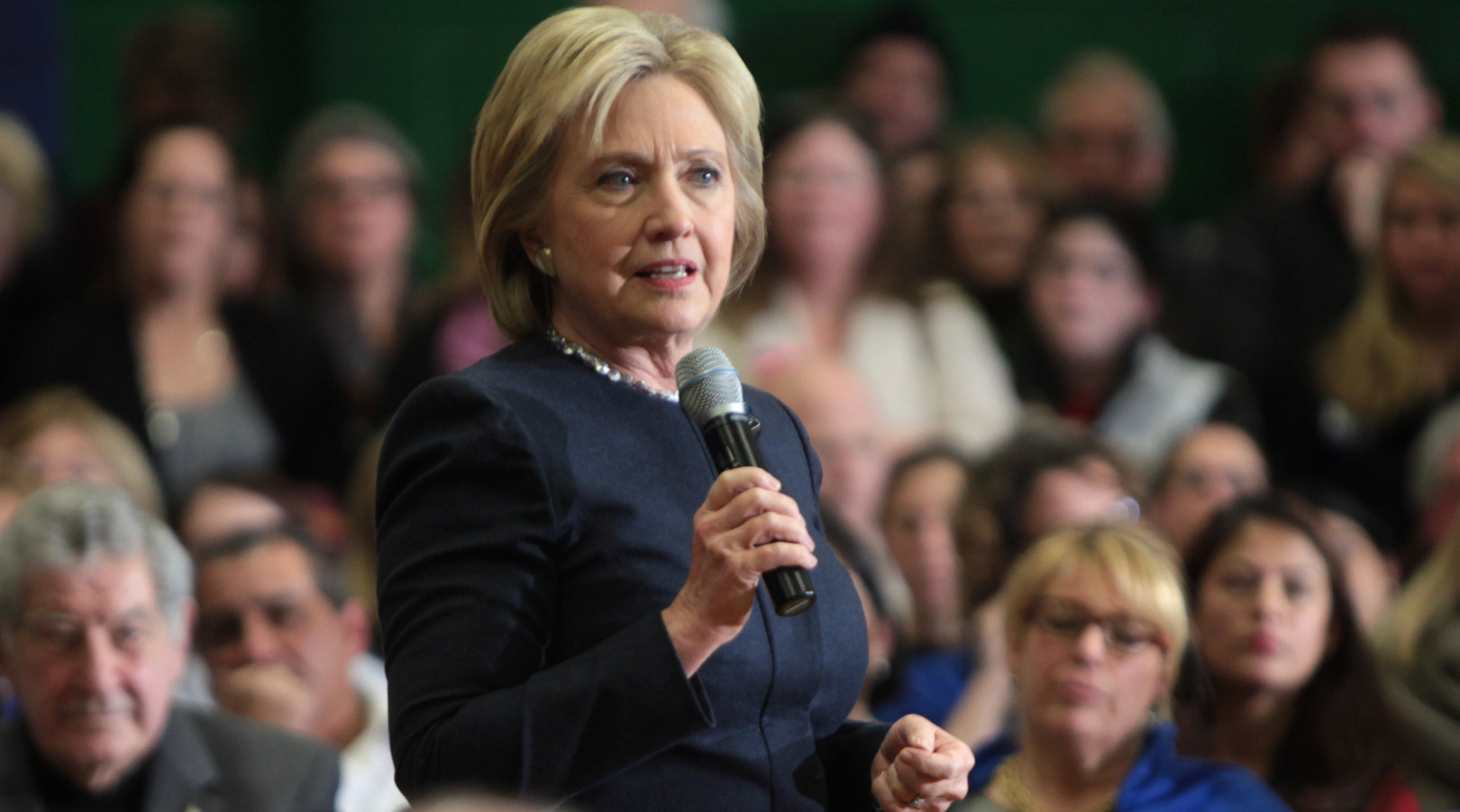
Editor’s Note: The opinions expressed here by the authors are their own, not those of Impakter.com — In the Cover Photo: Hillary Clinton speaking with supporters at a town hall meeting at Hillside Middle School in Manchester, New Hampshire. Cover Photo Credit: Gage Skidmore.