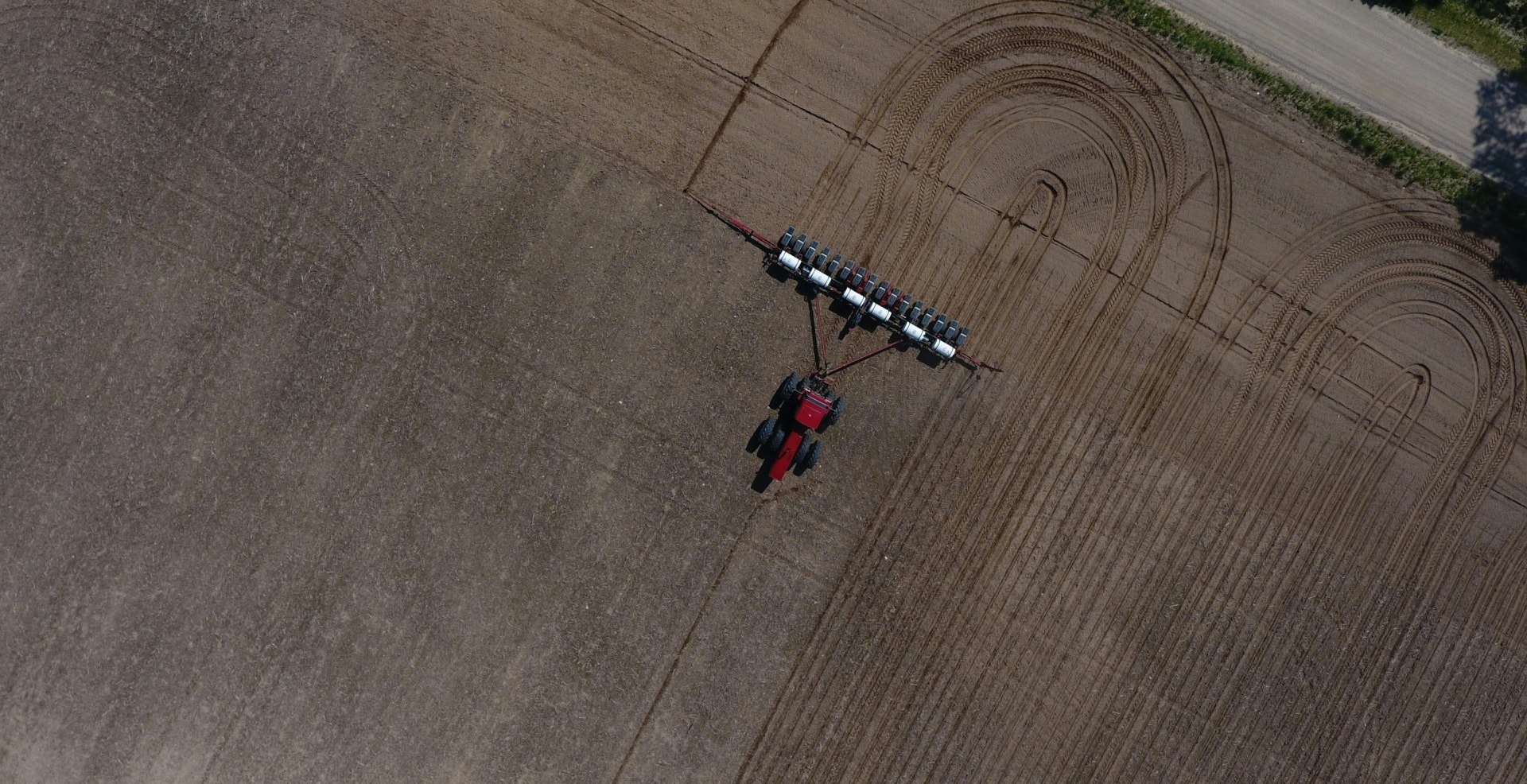


New analysis shows that just seven agricultural commodities — cattle, oil palm, soy, cocoa, rubber, coffee and plantation wood fiber — accounted for 26% of global tree cover loss from 2001 to 2015. These agricultural commodities replaced 71.9 million hectares of forest during that period, an area of land more than twice the size of Germany.
The results, now available on WRI’s Global Forest Review, underscore the outsized role a handful of commodities play in global deforestation.

What Is Agriculture’s Role in Deforestation?
As demand for food and other resources continues to grow, forests are often cleared to make way for new fields and plantations. Scientists estimate that over a quarter of tropical forests and just under half of temperate forests have been converted to production in human history.
Today, the majority of tree cover loss associated with the expansion of farms and plantations happens in the tropics, a troubling trend considering the vast carbon stocks and biodiversity held in rainforests. While we have a general understanding of where agribusiness has replaced forests, until now the world lacked information about the impact of specific products.
Our analysis compares the current extent of seven commodities with annual tree cover loss data from 2001 to 2015 to map where each commodity replaced forests over that time span.

Cattle Ranching Replaced More Forests than Any Other Commodity
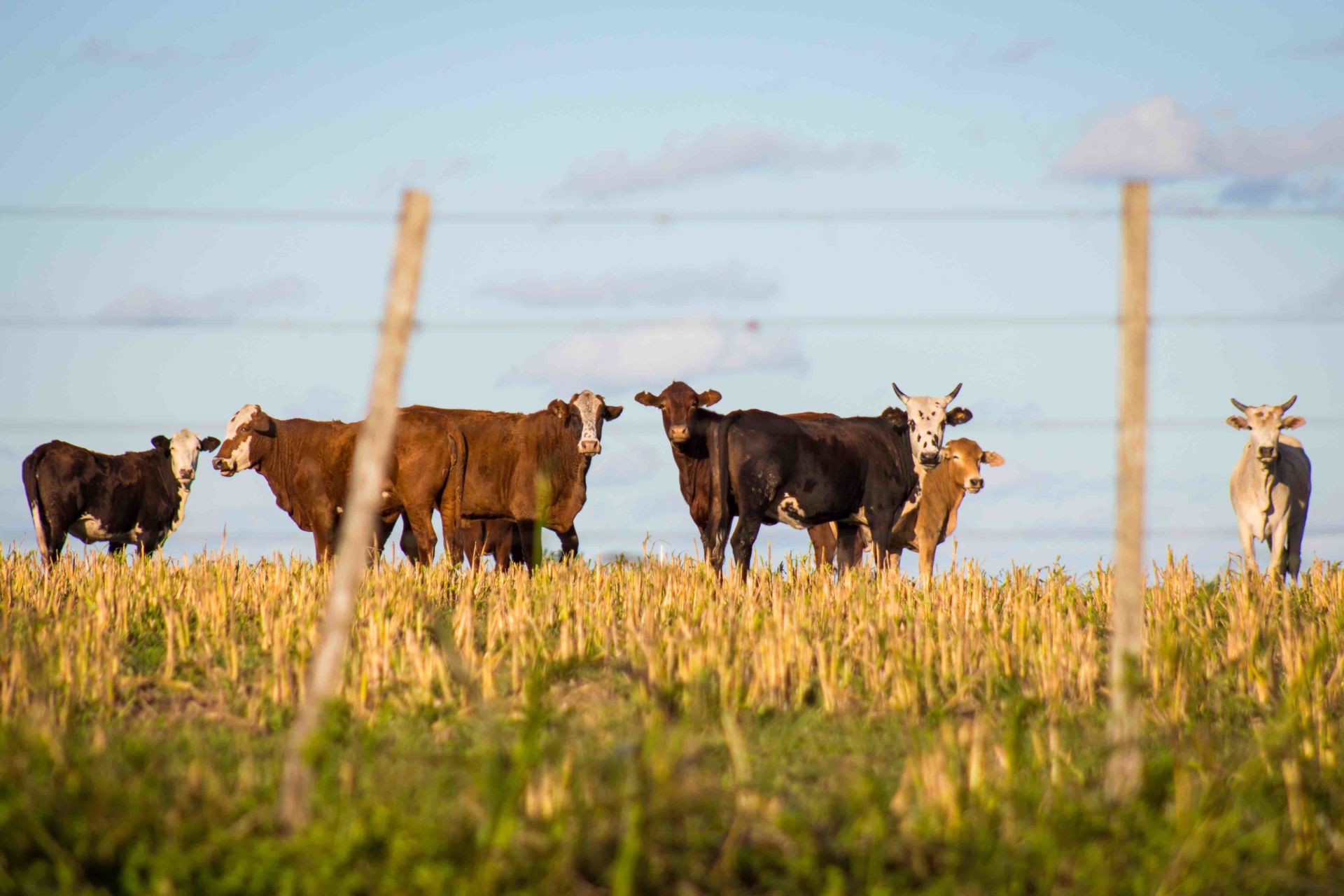
Of the seven agricultural commodities, cattle pasture replaced the most forest by far — 45.1 million hectares, or an area of land the size of Sweden. Cattle are responsible for 16% of total tree cover loss.
Oil palm is a distant second, replacing 10.5 million hectares from 2001 to 2015, while soy accounted for 7.9 million hectares.
Cocoa, plantation rubber, plantation wood fiber and coffee each replaced around 2 million hectares of forest from 2001 to 2015, though the analyses for rubber and wood fiber cover only a subset of countries because of data availability.
Related Articles: 10 Major Companies Responsible for Deforestation | The War Against Deforestation
Oil palm replaced forests mostly in Indonesia and Malaysia, while soy replaced forests mainly in South American countries like Brazil and Argentina. The conversion of forests to cattle pasture was more widely distributed across the globe, but hotspots exist in South and Central America.
Cocoa, rubber, wood fiber and coffee played a big role in replacing forests in some countries, despite their smaller global impacts. In Ghana, for example, conversion of forests to cocoa represents a third of the country’s total tree cover loss.
The seven commodities analyzed represent 57% of agriculture-related tree cover loss from 2001-2015.
Soy and Oil Palm Replaced Less Forests in Recent Years
The analysis also helps identify areas where deforestation rates are coming down. In recent years, soy and oil palm, the commodities most notorious for deforestation, replaced less forests than they have historically.
The rate at which oil palm plantations replaced forests dropped sharply after 2012. Other studies attributed this to drops in palm oil prices, national policies intended to curb forest clearing and corporate zero-deforestation commitments. Although the study period ends in 2015, Indonesia — the country accounting for two-thirds of forests replaced by oil palm — saw three consecutive years of reductions in primary forest loss from 2017-2019.
The rate at which soy replaced forests dropped dramatically after a spike in 2004. As with oil palm, the drop coincided with lower prices, new national policies and deforestation-free supply chain initiatives. Since then, the rate at which soy replaced forests rebounded in Brazil’s Cerrado through 2012, but then declined slightly from 2013-2015. With primary forest loss increasing since 2015 in Brazil, the country where soy has replaced the most forest, it remains to be seen whether those declines will continue.
Although data on plantation wood fiber and rubber is more limited than other commodities, the analysis also shows some recent declines in the rate at which such plantations replaced forests. These correspond with a decline in prices for rubber and zero-deforestation commitments for most large wood fiber companies.
Cattle, Cocoa and Coffee Continue to Overtake Forests
We did not see any noticeable changes in the rate at which cattle pasture replaced forestssince 2001, despite a number of zero-deforestation commitments. Deforestation from cattle is much harder to tackle from within supply chains, because pasture expansion happens in some places despite very low or even negative profit margins. In those cases, landholders may convert forests to pasture as a form of land speculation, to secure land tenure, or for social and cultural reasons rather than for profit. Beef consumption also tends to be more domestic; only around a quarter of beef produced in Brazil is exported. This makes beef supply chains less responsive to international pressure around reducing deforestation.
Other agricultural commodities showing limited progress in reducing deforestation are cocoa and coffee, though detailed maps of cocoa and coffee are difficult to produce, as these commodities are often grown under canopy cover and are hard to see in satellite imagery. We’ve seen fluctuations in recent years in the rates of primary forest loss in the big cocoa-producing countries of Ghana and Cote d’Ivoire. Better data sets on the footprint of cocoa production could greatly improve our understanding of how much those fluctuations are related to cocoa.
Untangling Commodities’ Impacts on Forests
We are still a long way from fully understanding the complex dynamics between agricultural commodity production and deforestation. For example, the analysis can’t prove that land was deforested because of any one crop, only that the crop was planted in an area that was deforested. We also aren’t able to account for the indirect impacts that commodities may have on each other and the world’s forests, such as when the expansion of one crop displaces another into forests or drives up land values.
However, this analysis represents an important step towards understanding the impact of agricultural commodities on forests, giving us a starting point to estimate trends and map direct impacts. Detailed maps of where each commodity has replaced forests will better inform research as we continue to tease out these complex interactions, and help us evaluate the effectiveness of efforts to slow commodity-driven deforestation.
— —
About the Authors: Mikaela Weisse is a Project Manager with Global Forest Watch (GFW), where she leads GFW’s strategy and partnerships around satellite-based forest monitoring. Elizabeth Dow Goldman is a GIS Research Manager for Global Forest Watch (GFW). She conducts geospatial analysis on global forest change data and supports the creation of new GFW data, maps, and research publications.
Editor’s Note: The opinions expressed here by Impakter.com columnists are their own, not those of Impakter.com. — In the Featured Photo: Cattle roaming a field in Argentina. Cattle are responsible for 16% of total tree cover loss. Featured Photo Credit: Geronimo Giqueaux.