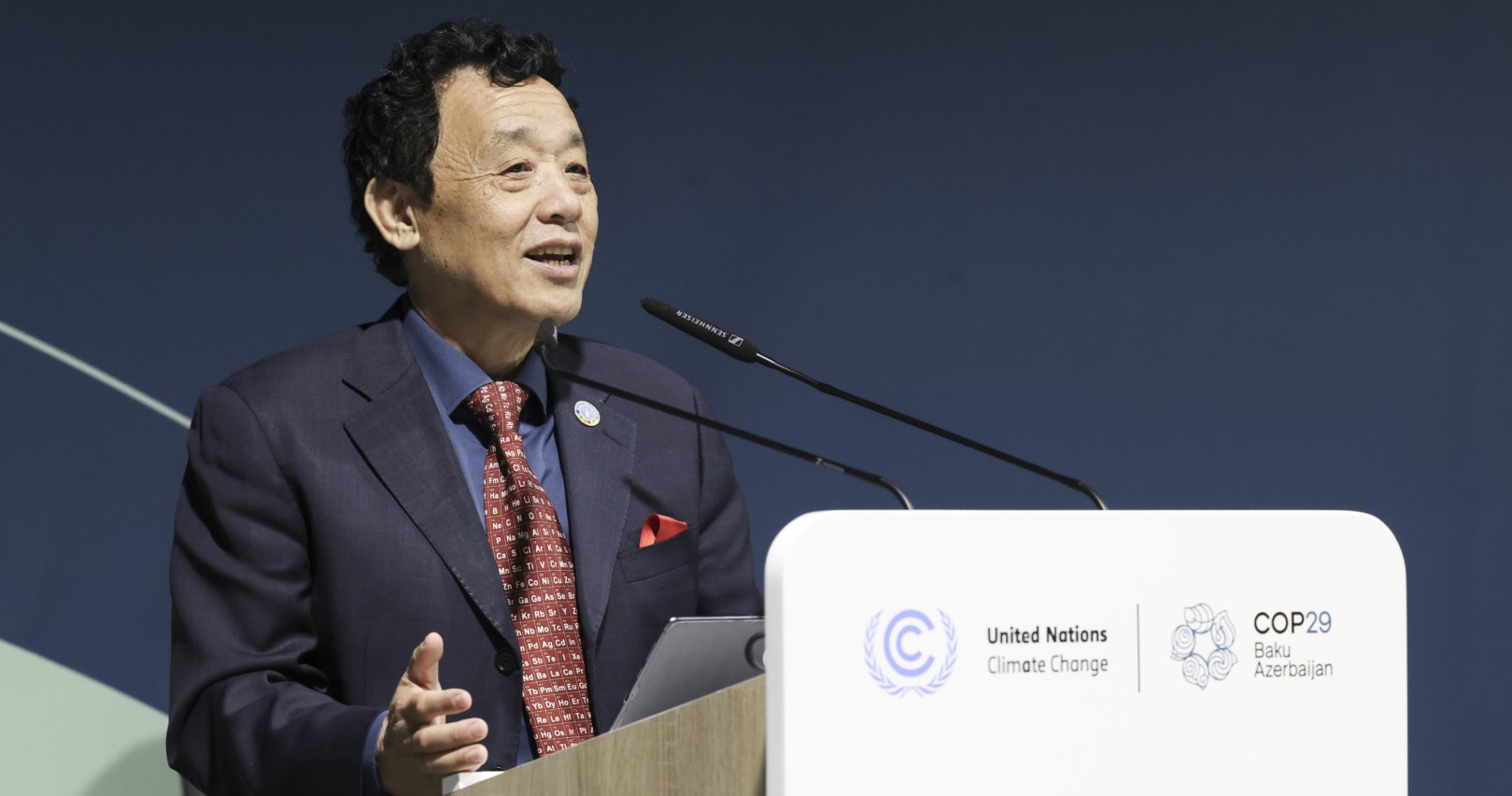

The only way to reduce carbon emissions and restore nature on the path to limiting global warming to 1.5 degrees Celsius is to transform our agrifood systems, the Director-General of the Food and Agriculture Organization of the United Nations (FAO), QU Dongyu, yesterday told the UN Climate Change Conference (COP29) in Baku, Azerbaijan.
This transformation to more efficient, more inclusive, more resilient and more sustainable global agrifood systems is increasingly recognised as essential for achieving the Paris Agreement and the Sustainable Development Goals. The shift “holds solutions for the climate crisis and the interlinked challenges of food, water, land and biodiversity,” Qu told a High-Level Party Event entitled “Cutting Carbon, Adapting Food Systems and Restoring Nature on the Path to 1.5C.”
Every year, countries participating in the climate convention inform FAO about how the climate crisis is severely affecting their agrifood systems. Farmers, herders, fisherfolk, and producers rely on these systems for their income, food, and nutrition. They are on the frontlines of the climate crisis, and all too often, are among the 730 million people facing hunger today.
Transforming agrifood systems requires more financing and investments that reach agricultural communities, leveraging private investments, and help in repurposing agricultural investments, the Director-General said.
Qu stressed that agrifood systems must be integrated into national plans and prioritised in multilateral environmental agreements. Every Nationally Determined Contribution should reflect the full potential of climate action from agrifood system transformation.
Looking ahead, FAO proposes to reconvene at COP30 to discuss how to accelerate efforts to combat deforestation, which is a critical aspect of the climate action needed for transforming agrifood systems, the Director-General said.
Climate financing
COP29 has been coined the Finance COP and not without good reason, as a major focus of the negotiations is climate finance. Financing and investment are insufficient for agrifood systems transformation. Directing finance to agrifood systems and ensuring this finance effectively reaches agricultural communities is critical.
For this reason the Director-General spoke at several FAO-led events on climate finance. In a separate High-Level Party Event in Baku focused on “Accelerating climate finance for resilient agrifood systems in fragile and conflict-affected countries,” the Director-General highlighted that conflict, along with climate and economic crises, pushed the number of people facing hunger to 733 million in 2023, with one in five residing in Africa. Additionally, 135 million people are experiencing acute food insecurity in 20 conflict-affected countries or territories.
“Building and financing resilient agrifood systems in fragile and conflict-affected areas addresses climate and food crises, and saves the lives and livelihoods of millions of people,” Qu said. “Yet, not enough is being invested in these win-win solutions.”
The Director-General noted that in 2022, agrifood systems received $29 billion — just 23% of total climate-related development finance. To meet net-zero targets, agrifood systems require approximately $1 trillion annually until 2030. It is countries in fragile settings that feel this funding gap the most, he said.
“We must scale up support and financing urgently to enhance adaptation and build resilience in fragile and conflict-affected countries,” Qu said. Climate action is possible and “can help promote development and build peace.”
From declaration to action
The Director-General also highlighted the signing a year ago at COP28 of the Declaration on Climate, Relief, Recovery and Peace, in which 70 governments and 39 organizations called for bolder collective action to build climate resilience in countries in fragile and conflict-affected settings.
FAO, in partnership with the Green Climate Fund (GCF), has answered this call and welcomes the GCF decision to grant $169 million to fund landmark projects in Somalia and Iraq, which FAO will implement, as well as a third project in Burundi with the One Acre Fund.
“These projects will support adaptation and enhance the climate resilience of rural communities affected by conflict, poverty and weather’s disasters. We firmly believe that building resilient and sustainable agrifood systems will help these communities to survive, recover and thrive,” Qu said.
Related Articles: Inside COP29 | Finance and Equity Should Be the Core of COP29 Talks | Will COP29 Reach Consensus on More Funds for Climate Finance? | How Does Climate Change Affect Agriculture? | Regenerative Agriculture as a Carbon Solution Powerhouse | Informed Farmers Are Successful Farmers
FAO’s contributions to COP
FAO has worked closely with the COP Presidencies to convey the message that agrifood systems transformation offers solutions to the climate crisis.
COP27 in Egypt saw the launch of the Food and Agriculture for Sustainable Transformation (FAST) Partnership, designed to increase the quantity and quality of climate finance for food and agriculture. At COP28, 160 Heads of State and Government signed the UAE Declaration on Sustainable Agriculture, Resilient Food Systems and Climate Action.
Today, at COP29, FAO welcomes the Baku Harmoniya Climate Initiative for Farmers. FAO is proud to host the initiative as part of the FAST Partnership, and welcomes Azerbaijan and Egypt as co-chairs, Qu said.
“Together with partners, through our collective expertise and experience, we look forward to working with the COP29 Presidency to achieve the objectives of Harmoniya, which are in line with FAO’s vision for the transformation of global agrifood systems for the Four Betters: better production, better nutrition, a better environment and a better life – leaving no one behind,” Qu said.
** **
This article was originally published by the Food and Agriculture Organization of the United Nations (FAO) and is published here as part of an editorial collaboration with the FAO.
Editor’s Note: The opinions expressed here by the authors are their own, not those of Impakter.com — In the Cover Photo: FAO Director-General QU Dongyu speaks during the UN official high-level side event: Making climate finance work for climate action in agriculture and food security during COP29, Nov. 12, 2024, Baku, Azerbaijan. Cover Photo Credit: ©FAO/Alessandra Benedetti.