Impakter
  • Environment
    • Biodiversity
    • Climate Change
    • Circular Economy
    • Energy
  • FINANCE
    • ESG News
    • Sustainable Finance
    • Business
  • TECH
    • Start-up
    • AI & Machine Learning
    • Green Tech
  • Industry News
    • Entertainment
    • Food and Agriculture
    • Health
    • Politics & Foreign Affairs
    • Philanthropy
    • Science
    • Sport
  • Editorial Series
    • SDGs Series
    • Shape Your Future
    • Sustainable Cities
      • Copenhagen
      • San Francisco
      • Seattle
      • Sydney
  • About us
    • Company
    • Team
    • Global Leaders
    • Partners
    • Write for Impakter
    • Contact Us
    • Privacy Policy
No Result
View All Result
Impakter logo
No Result
View All Result
Malawi Thel Makaliu

Young Women Leaders in Malawi Build Back Better From COVID-19

UN WomenbyUN Women
May 6, 2021
in Education, Equal Rights, Society, United Nations, Women
0

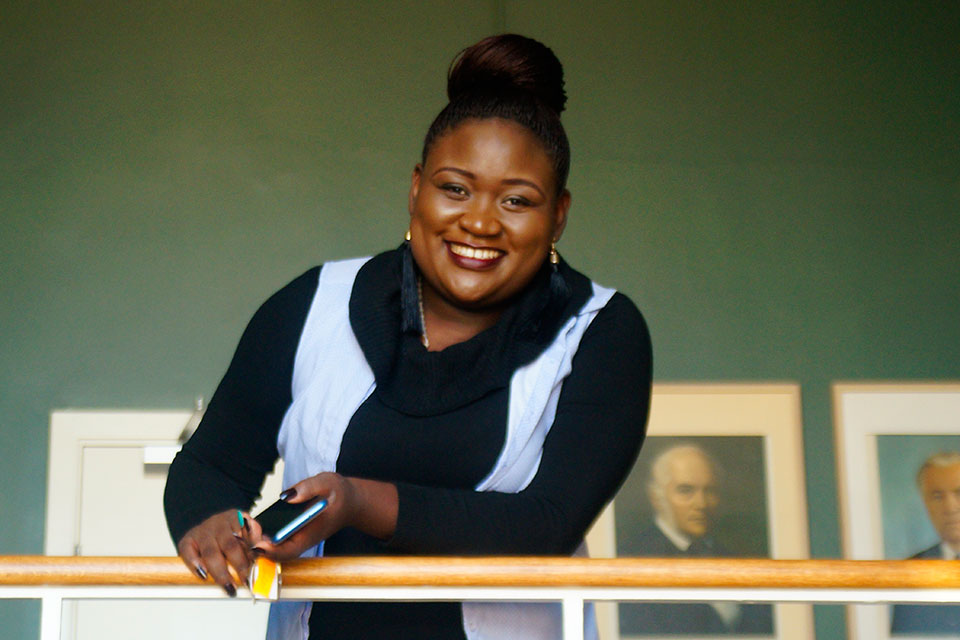
Thelma Kaliu is a young feminist and an active member of the Young Feminist Network of Malawi. She is currently the Project Coordinator of the Spotlight Initiative project under Plan International, Malawi. In 2019, before the COVID-19 pandemic, Thelma attended the launch of the Malawi Chapter of the African Women Leaders Network (AWLN) and was excited about the growth of a movement that was enthusiastically embracing young African women.

Supported by the EU-UN Spotlight Initiative, the largest effort to eliminate violence against women and girls worldwide, the AWLN network comprises over 500 African women across generations and sectors.

COVID-19 related movement restrictions and funding reductions have hampered women’s rights organizations at the exact time they are most needed. AWLN and other such organizations act as essential service providers and advocates and must be immediately strengthened to pave the way for a more equal post-COVID future.

What are the most pressing challenges that young women face in your community?

Young women in Malawi face many challenges that arise from the feminization of poverty and gender discrimination in all areas of development. Cultural practices, beliefs, social norms and gender stereotypes trigger gender discrimination and gender-based violence. The lack of women in leadership positions fuels these challenges.

Despite an increasing number of initiatives to support women’s movements, the participation of young women remains limited in these movements and in other areas of development, due to age, location, socioeconomic status, lack of experience and educational background. To a great extent, most women’s movements have only targeted specific classes in urban areas, leaving out rural areas, where the majority of young women live.
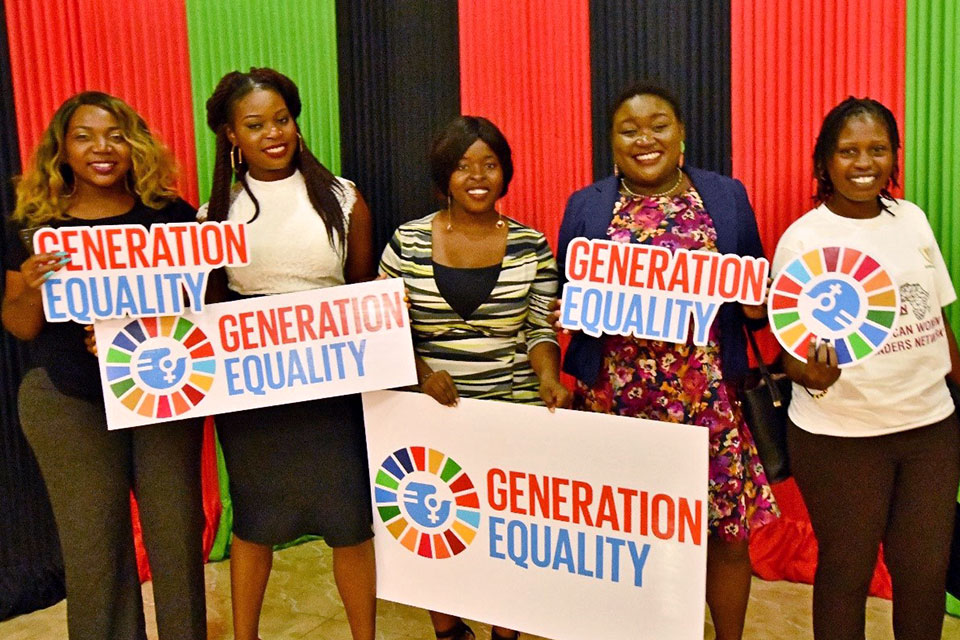
malawi_takefive_generationequalitygroup
In The Photo: Thelma Kaliu and fellow activists celebrate the launch of the Malawi Chapter of the African Women Leaders Network. Photo Credit: UN Women/Faith Mvula

What did you learn from the AWLN launch?

The launch of the network gave me high hopes of a new era where young women can fulfil their passion to be great leaders, and play an active role in changing the country, especially as pertains to ending violence against women and girls.

We need to ensure that our generation of young women can meaningfully contribute to policy changes and economic development. The Malawi chapter can help achieve the objectives of AWLN and strengthen more grass-roots networks through the Spotlight Initiative, to reach remote areas of the country.


Related Articles: Invest in Young Women for the Future of Africa’s Public Leadership  | Time to Unleash Africa’s Greatest Untapped Power: Women

Why is the Malawi chapter of AWLN relevant to young women today?

Establishing sub-country chapters to advance women’s issues paves the way for more meaningful and inclusive participation for both young men and women. This will boost professional and career development for many in response to Africa’s needs. This is what many young women have longed for.

The chapter also harmonizes women’s movements that have for too long worked in segments. This is an opportunity to interact with women advocates who are dedicating their time to ending violence against women and girls in Malawi. In unity, greater things can be achieved.

How has the pandemic impacted the women’s movement in Malawi, and what can be done to address those impacts?

The pandemic has decelerated the efforts of the women’s movement, but there has also been growing violence against women, and an increase in teenage pregnancies and child marriage. With the drastic increase of gender-based violence, growing poverty is increasing women’s vulnerability and limiting their access to essential services – women’s movements have felt the pressure.

More efforts need to be directed to creating intersectional spaces so as to not leave anyone behind.

On the positive side, solidarity among women’s movements has strengthened. With social and mental pressures increasing, digital spaces have encouraged dialogue, peer support, and discussions on feasible solutions to deal with the crisis. Additionally, we have seen women in Malawi coming together to demand justice for victims of sexual and intimate partner violence, which escalated during the pandemic.

However, this approach has excluded women who don’t have access to digital spaces, and there has been limited access to safe spaces, particularly for women in remote and rural areas. More efforts need to be directed to creating intersectional spaces so as to not leave anyone behind.

What can be done to ensure women’s voices are better heard and their issues are better addressed?

There is a need for inclusiveness. It’s time all stakeholders prioritized our voices. Patriarchal societies and male-dominated systems of government need to look closely at how they can include women in decision-making. We can all help raise women’s voices and advance women’s rights through programmes like the Spotlight Initiative. We request civil society to create pathways of collaboration and capacity-building for young women leaders.

And to my fellow young women, may we never feel too small to meaningfully participate, demand our rights and take the lead in all stages of development, from the grassroots to national level. We all have a voice.


EDITOR’S NOTE: The opinions expressed here by Impakter.com columnists are their own, not those of Impakter.com.— In the Featured Photo: Thelma Kaliu is a member of the Malawi Chapter of the African Women Leaders Network. Featured Photo Credit: UNESCO/Aishwarya Sehgal
Tags: African Women Leaders NetworkGender-based ViolenceUN Womenviolence against womenwomen's movement
Previous Post

UN Negotiations to Reform Investor–State Arbitration Resume

Next Post

The Science and Politics of Geoengineering: A Fast Solution to an Intricate Problem

Related Posts

Safe water women
Editors' Picks

Water Is the Way: Empowering Women Through Access to Safe Water

Today, on International Women's Day, I find myself reflecting on the intrinsic link between water and the lives of women...

byVedika Bhandarkar - President & Chief Operating Officer at Water.org
March 8, 2024
gender-based violence
Equal Rights

Here’s How We Can Tackle Gender Violence

Despite decades of commitments from the international community to tackle gender-based violence, it remains staggeringly widespread across the globe. Unless violence against women...

byGrace Jennings-Edquist
December 5, 2023
Tech domestic violence
Society

Can Tech Really Help Tackle Domestic Violence?

The murder of Lilie James in the toilet block of a Sydney school by her former boyfriend in October shocked...

byDr. Abbas Kouzani - Professor of Engineering at Deakin University
November 28, 2023
women abused pornography
Society

Women Abused in 90% of Online Pornography, Report Finds

A report by the Haut Conseil à l'Égalité entre les femmes et les hommes (HCE) — the French High Council...

byElisa Furlan
September 29, 2023
Africa Climate Summit: Diverse Visions for a Resilient Continent
Climate Change

Africa Climate Summit: Diverse Visions for a Resilient Continent

Hosting the Africa Climate Summit is a crucial moment for the continent. However, there is still uncertainty around fund allocation...

byTaida Nando
September 6, 2023
The 67th session of the Commission on the Status of Women (CSW67) successfully closed its two-week long session today (6 to 17 March) with the acknowledgment of the critical role of technology and innovation in achieving gender equality
Equal Rights

UN Commission on the Status of Women Reaffirms the Role of Technology and Innovation in Achieving Gender Equality

The agreed conclusions adopted by Member States provide a blueprint for all stakeholders, including governments, the private sector, civil society...

byUN Women
March 19, 2023
What Are the GDP and Innovation Costs of Excluding Women From the Digital World?
Equal Rights

What Are the GDP and Innovation Costs of Excluding Women From the Digital World?

Today, a persistent gender gap in digital access keeps women from unlocking technology’s full potential. According to recent data, women’s...

byUN Women
March 11, 2023
Women digital skills
Equal Rights

Power On: How We Can Supercharge an Equitable Digital Future

From online learning and digital activism to the rapid expansion of high-paying tech jobs, the digital age has generated unprecedented...

byUN Women
March 8, 2023
Next Post

The Science and Politics of Geoengineering: A Fast Solution to an Intricate Problem

Recent News

ESG News regarding BHP and Rio Tinto are teaming up to expand their iron ore production pipeline

BHP and Rio Tinto to Boost Australian Iron Ore Production

January 15, 2026
ESG News regarding Dimon warning that Trump’s attacks on Fed could raise inflation and rates, Venezuelan oil shipments to China setting to plunge under U.S. blockade, UK awarding offshore wind contracts to power 12m homes, 2025 being the third-hottest year on record as climate science faces political pushback

Dimon Warns Trump’s Attacks on Fed Could Raise Inflation and Rates

January 14, 2026
Billionaires Became Richer Than Ever in 2025: Who Are They and What Drove Their Wealth Growth

Billionaires Became Richer Than Ever in 2025: Who Are They and What Drove Their Wealth Growth

January 14, 2026
  • ESG News
  • Sustainable Finance
  • Business

© 2025 Impakter.com owned by Klimado GmbH

No Result
View All Result
  • Environment
    • Biodiversity
    • Climate Change
    • Circular Economy
    • Energy
  • FINANCE
    • ESG News
    • Sustainable Finance
    • Business
  • TECH
    • Start-up
    • AI & Machine Learning
    • Green Tech
  • Industry News
    • Entertainment
    • Food and Agriculture
    • Health
    • Politics & Foreign Affairs
    • Philanthropy
    • Science
    • Sport
  • Editorial Series
    • SDGs Series
    • Shape Your Future
    • Sustainable Cities
      • Copenhagen
      • San Francisco
      • Seattle
      • Sydney
  • About us
    • Company
    • Team
    • Global Leaders
    • Partners
    • Write for Impakter
    • Contact Us
    • Privacy Policy

© 2025 Impakter.com owned by Klimado GmbH