Climate-smart options in agriculture can only be inclusive if they consider the gender-specific situations of farmers.

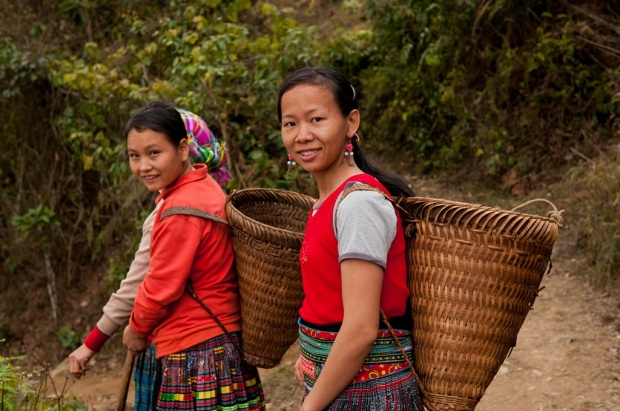
Women farmers encounter a great deal of challenges that constrain their agricultural activities. Differing societal roles, unequal access to and control of resources, and women’s lack of participation in decision-making processes have created a gap between men and women in farming communities. Often the voices of women farmers are not heard and their contributions to the household finances or at the farm are absent from official records. This prevents them from having the chance to address the issues that are negatively affecting their activities.
Related topics: Agriculture, food security and climate change with a gender lens – Women in Agriculture Initiative – These Women Mean Business
Climate change will further widen this gap, and the situation of women farmers will likely worsen. Unless they get enough exposure to climate actions, they will remain vulnerable to the negative impacts of climate change. Several studies conducted in Southeast Asia noted that to improve the adaptive capacity of women against climate change impacts, gender must be embedded at the core of climate actions. For example, gender integration was evident in a climate change project in the Philippines. In this project, women were engaged in climate-smart options that catered to their situation and needs. Included in these options was a low-cost and practical livelihood for women, which not only enhanced their adaptive capacity, but also improved their economic status in their communities.
Therefore, to further explore the potential of gender integration in the research for development (R4D) sector, the CGIAR Research Program on Climate Change, Agriculture and Food Security (CCAFS) published a book on gender studies in Southeast Asia. Titled “Gender dimension of climate change research in agriculture: Case studies in Southeast Asia,” the book aims to guide R4D organizations to develop climate actions that consider the plights of both men and women in agriculture.
Divided into 11 chapters, the book features quantitative and qualitative studies to present various ways on how to integrate gender in R4D efforts. Most of the studies explore the gender-based vulnerabilities of farmers in various settings.
These include three Climate-Smart Villages (CSVs): Tra Hat CSV in Vietnam, Pailom CSV in Laos, and Guinayangan CSV in the Philippines. CSVs serve as platforms for multi-stakeholder collaboration and as field sites for developing climate-smart technologies and practices. Alongside vulnerabilities, the studies identified the gender-specific adaptation strategies of farmers.
Among the gender-based vulnerabilities covered in the studies are the lack of education, low literacy rates, and lack of available financial platforms among women in communities. This means that the less educated they are, the more they are prone to different forms of exploitation. Women can be exploited by informal moneylenders who will enforce high interest rates, pushing them to work harder to pay their debts.
These gendered vulnerabilities can be addressed by giving women access to relevant information and services. Moreover, they should be provided with opportunities to join trainings and livelihood programs that will enhance their adaptive capacity against climate change.
Recommendations for gender-based research
The chapters were compiled and edited by Dr. Thelma Paris, gender advisor for CCAFS Southeast Asia and retired socioeconomic gender specialist at the International Rice Research Institute (IRRI), and Dr. Maria Fay Rola-Rubzen, Associate Professor at the School of Agriculture and Environment at the University of Western Australia (UWA).
“Most of the researchers were locals who went to the fields and gathered first-hand information from the communities” noted Dr. Paris as she discussed the contents of the book. “Those researchers were able to hear the voices of men and women who narrated their experiences on the ground.”
Witnessing and experiencing the situation on the ground allowed the researchers to display the “human” aspect of gender studies, instead of seeing people only through a quantitative lens. Dr. Paris continued: “these experiences are authentic and shared by people themselves. They must be considered in addressing climate change.” Such experiences should not be transformed into mere numbers and statistics only, she emphasized.
The book lists specific recommendations to develop gender-sensitive and socially inclusive CSA portfolios. For instance, the book recommends to apply integrated methodologies in gender-based research. These include mixed methods approach, participatory action research, and action research with emphasis on “co-learning.”
The way forward
The book presents several ways to integrate gender in climate actions. However, the key takeaway is the same in each case: women farmers may be the victims of climate change at the moment, but with the right resources, they can transform into agents of change and become CSA champions. This transformation can be achieved once the disempowering societal roles are challenged, women farmers gain access to information, services, and resources, and they are allowed and encouraged to participate in major decision-making processes.
CCAFS integrates gender and social inclusion into its four flagship programs. The publication of this book will help in implementing CSA options in vulnerable communities all over Southeast Asia. CCAFS partnered with the Southeast Asian Regional Center for Graduate Study and Research in Agriculture (SEARCA) to co-publish the book.
About the author: Renz Louie Celeridad is the Junior Communications Specialist for the World Agroforestry Centre (ICRAF) Philippines and Communications Consultant for CCAFS Southeast Asia.
EDITOR’S NOTE: The opinions expressed here by Impakter.com columnists are their own, not those of Impakter.com. Photo Credit: G. Smith (CCAFS SEA)