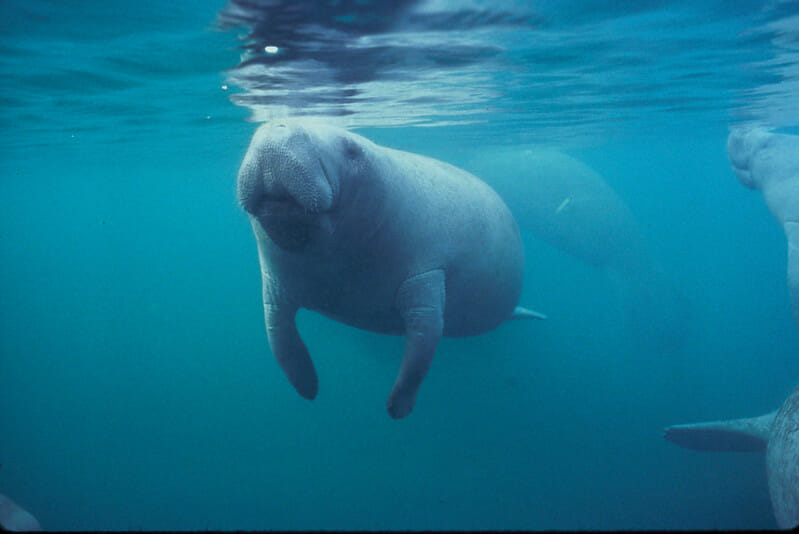
Once filled with a plentiful population, now Florida’s waters are home to a manatee epidemic.
From January 1 to December 31 of 2021, data showed a total of 1,101 manatee deaths in the state of Florida — roughly double the five-year average. With winter already here, state estimates are predicting the death toll could rise to anywhere between 7,500 – 10,200.
Manatees first appeared on the list of endangered species in 1966, but by 2016 they were downgraded to a less threatened category — now manatees could appear on the list yet again.
What is behind this? Starvation — the manatees main source of food, seagrass, is disappearing as a number of factors come into play.
Why are they dying?
Seagrass, manatees’ main source of food in Floridian water is disappearing, leading many manatees to starve; the reason — not so simple.
Water pollution is at the forefront of the issue; and there are many factors contributing to the current state of Floridian waters.
For decades, water pollution has become an increasingly big issue as man-made pollutants continue to infect water quality with oftentimes these pollutants diverted on purpose from Lake Okeechobee to coastal estuaries. Pollutants in the Florida Gulf Coast range from plastic in the ocean and chemical spills from the fossil fuel industry to wastewater discharges and fertilizer runoff.
These man-made pollutants can lead to algal blooms — algal being so thick it prohibits necessary sunlight for seagrass to survive. NBC reported that since 2009 about 58% of seagrass has been lost in the Indian River Lagoon.
Environmentalists are pointing to 2020’s Piney Point water leak, former phosphate mining facility, as a direct cause of manatee deaths — Piney Point dumping millions of gallons of wastewater into Florida’s Gulf of Coast waters, leading to the rise of algal blooms. Many are also blaming the Environmental Protection Agency’s (EPA) inability to adequately protect manatee life.
Nearly 50 years ago, Congress passed The Clean Water Act calling on the EPA to approve the state’s water quality pollution limits. If pollution has the ability to affect marine life, the EPA must consult with the U.S. Fish and Wildlife Service to make sure the water quality limits will protect species from harm.
However in 2013, a mistake was made: The EPA and U.S. Fish and Wildlife Services signed off on Florida’s water quality, even though it contained phosphorus and nitrogen in manatee waters, claiming the chemicals wouldn’t significantly impact the manatee population — years later they would prove to be wrong.
In December of 2021, environmental groups Earthjustice, the Center for Biological Diversity, Save the Manatee Club and Defenders of Wildlife announced their intent to sue the EPA stating they failed to protect the manatee population from water pollution.
Earthjustice attorney Elizabeth Forsyth stated in a press release that the EPA needs to take action now.
“It’s time for the EPA to step in and enforce the Clean Water Act for the sake of the manatees and all the other creatures and people that rely on Florida’s waterways,” Forsyth said. “If watching manatees starve isn’t the tipping point for the EPA to step in, I don’t know what is.”
Manatees are also dying from other factors — including boat strikes, red tide outbreaks and colder weather. Boat strikes kill slow-moving animals like manatees yearly, regardless of no-wake zones that are set to protect manatee habitats. Out of the 1,101 manatee deaths reported last year, 103 of them were watercraft related.
Environmental groups and agencies are taking initiatives to save the manatees now
The Florida Department of Environmental Protection has already initiated a program aimed at reducing harmful chemicals like nitrogen and phosphorus — the chemicals responsible for algal growth — in the Indian River Lagoon by 2035. So far they have reduced the release of these nutrients by 37% of their goal.
State and environmental officials also announced the beginning of an $8 million manatee habitat restoration project approved by Florida legislators. They are also asking for another $7 million to fund seagrass restoration.
Most recently on Friday, Seaworld theme park in Orlando, Florida reported they would open up five new 40-foot pools to accommodate and rescue up to 20 manatees within two weeks. Already, Seaworld has 28 manatees in its care.
As restoration projects are underway many environmental groups are calling on Republican Gov. Ron DeSantis to declare the manatee death toll an emergency in order to speed up and draw more focus to such restoration efforts — especially with colder months ahead, the overpopulation of manatees congregating in warmer water will lead many to starve before both restoration projects can reach their desired impact.
The disappearance of seagrass doesn’t just affect the manatee population. Other species that also depend on seagrass and other safe water conditions to be able to live are affected. With the manatee population dwindling, action is needed from regulatory agencies to protect the manatee species and all marine wildlife for that matter.
Hopefully, with the continued efforts of environmental groups to draw attention to the manatees, they will be able to persuade regulatory agencies to take more necessary steps to protect all marine life as water pollution continues to wreak havoc on the world’s oceans.
Editor’s Note: The opinions expressed here by Impakter.com contributors are their own, not those of Impakter.com. — Featured Photo: Manatees swimming close to the surface on May 7, 2020. Source: U.S. Fish and Wildlife Service, Flickr.