Impakter
  • Environment
    • Biodiversity
    • Climate Change
    • Circular Economy
    • Energy
  • FINANCE
    • ESG News
    • Sustainable Finance
    • Business
  • TECH
    • Start-up
    • AI & Machine Learning
    • Green Tech
  • Industry News
    • Entertainment
    • Food and Agriculture
    • Health
    • Politics & Foreign Affairs
    • Philanthropy
    • Science
    • Sport
  • Editorial Series
    • SDGs Series
    • Shape Your Future
    • Sustainable Cities
      • Copenhagen
      • San Francisco
      • Seattle
      • Sydney
  • About us
    • Company
    • Team
    • Partners
    • Write for Impakter
    • Contact Us
    • Privacy Policy
No Result
View All Result
Impakter logo
No Result
View All Result
recycling

What Is the True State of Recycling Worldwide?

Jacob LeebyJacob Lee
July 2, 2024
in Circular Economy, Environment, ESG News
0

A new comprehensive report, the Global Recycling League Table – Phase One Report, prepared by Eunomia Research & Consulting, has unveiled an intricate and detailed analysis of the recycling rates across 48 countries, highlighting stark differences in data quality, methodology, and recycling effectiveness.

The report, funded by several international institutions including the Can Manufacturers Institute, the International Aluminium Institute, and government bodies like the Welsh Government, was conducted from March to May 2024. It aims to provide a more accurate picture of how different nations manage their waste and to foster global discussions on improving recycling systems.

Inconsistent Data and Adjusted Findings

A key finding from the report is the need for more consistency in how countries report their recycling data. Many countries include non-municipal waste such as construction debris and industrial waste to inflate their statistics. Eunomia’s research created its adjustments to better standardize recycling rates in each country, resulting in lower, yet more accurate numbers. Countries like Singapore, South Korea, and Germany saw substantial declines in recycling rates after Eunomia’s adjustments. 

However, countries like China and South Africa saw increases in adjusted recycling rates, highlighting that certain countries’ efforts have been overlooked. 

The Role of Policy and Infrastructure

The report also explored the impact of policy-making and waste management infrastructure on recycling output. Studies found that countries with rigorous recycling targets and well-developed infrastructure generally reported higher and more accurate recycling rates. The study points to the European Union’s efforts to standardize recycling calculations as a model for creating more comparable and reliable data.

For example, Austria and Germany stand out as leaders in recycling. The two countries’ success directly correlates to their early adoptions of extender producer responsibility (EPR) and other stringent waste management policies that were ratified in the 1990s.  These policies include mandates for recycling specific waste streams, including packaging and electronics, which significantly drive up overall recycling rates.


Related articles: 5 Indian Sustainable Startups to Watch This Fall | Five Sustainable Startups From Bogotà | 4 Ways to Reduce Plastic Pollution | 5 Alternative Protein Startups to Watch | 9 Sustainable Startups From the Baltic Countries to Watch | Why We Need a Transformative Circular Economy | 5 Disruptive Circular Economy Startups to Watch

Waste Generation Concerns

An alarming insight from the study is the high level of waste generation in wealthier countries compared to lower-income nations. This underscores the urgent need for these countries to focus not just on recycling, but also on reducing waste generation and enhancing reuse systems.

High-income countries are shown to generate significantly more waste per capita compared to their lower-income counterparts. For example, the United States and Australia are noted for their high levels of waste generation, often exceeding 700 kilograms per capita annually, compared to less than 200 kilograms in many developing nations.

Furthermore, the study highlights a direct link between high-consumption lifestyles in wealthier regions and increased waste generation. This not only challenges the capacity of existing waste management systems but also raises environmental concerns due to the higher volumes of waste requiring processing.

Global Call to Action

The report has already begun to spark a global conversation about the need for transparency in recycling data and the importance of sustainable waste management practices. As the world continues to grapple with environmental challenges, the insights from the Global Recycling League Table provide crucial guidance for policymakers, industries, and communities aiming to make a meaningful impact on recycling and waste reduction.

As the world progresses through pressing environmental challenges, the findings from this report serve as a warning of the need for concentrated and streamlined efforts to improve our recycling systems. It is evident that some portions of the waste generation are unsustainable, and wealthier nations must curb these unsustainable patterns that currently dominate the globe. 


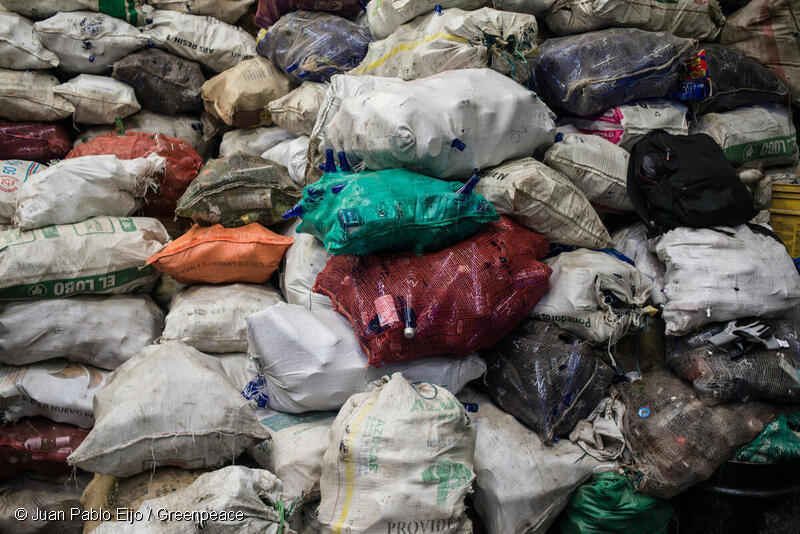
Editor’s Note: The opinions expressed here by the authors are their own, not those of Impakter.com — Cover Photo Credit: © Juan Pablo Eijo / Greenpeace.

Tags: circular economyClimate ChangeEnvironmentenvironmental sustainabilityEuropean Union
Previous Post

How the State of Indiana Is Modernizing its Roads for Motor Vehicle Safety

Next Post

Revolutionising the Marketing Landscape: How Technology is Driving Success for Agencies

Related Posts

ESG news on EU sustainability laws, UK fracking debate, Mediterranean migrant deaths, shareholder climate activism
Business

EU Sustainability Rules Diluted Under Political Pressure

Today’s ESG Updates: EU Weakens Corporate Sustainability Laws: After months of intense negotiation, European Union member states agreed to trim...

byEve Rogers
February 25, 2026
Protests arise against Wall street’s oil deals, Big tech accounts for half of global clean energy, EU proposes stricter standards for corporate vehicles, DHL introduces new portfolio offerings for reducing scope 3 impacts
Energy

Activists Protest Against Wall Street’s Oil Deals

Today’s ESG Updates Protests' Strategies Change Amidst Banks' Inaction: Wall Street fossil fuel deals push climate groups to shift tactics,...

byFedor Sukhoi
February 24, 2026
Trump Admin Weakens Coal Plant Mercury Regulations
Business

Trump Admin Weakens Coal Plant Mercury Regulations

Today’s ESG Updates: Coal Plants Get Reprieve on Mercury Limits: Trump's EPA is rolling back mercury emission limits to cut...

byEge Can Alparslan
February 20, 2026
Migration Policy in Europe: Greece and Spain Take Divergent Paths
Politics & Foreign Affairs

Migration Policy in Europe: Greece and Spain Take Divergent Paths

In the summer of 2025, I traveled to Greece for a research trip and, during a break from the “migration...

byDr. Shepherd Mutsvara - Research Fellow at the University of Münster, Germany
February 20, 2026
How Climate Change Is Reshaping Arctic Geopolitics
Climate Change

How Climate Change Is Reshaping Arctic Geopolitics

Once a remote and largely inaccessible region, the Arctic has become the focus of far-reaching international developments. In recent years, competition among...

byPier Paolo Raimondi - Senior Researcher at the Energy, Climate and Resources (ECR) Program of the Istituto Affari Internazionali (IAI)
February 20, 2026
How an Intersectional Approach Can Help Us Address Vulnerability to Climate Change
Climate Change

How an Intersectional Approach Can Help Us Address Vulnerability to Climate Change

Different forms of discrimination and marginalization — such as racism, ableism, and discrimination on the basis of gender identity —...

byInternational Institute for Sustainable Development (IISD)
February 20, 2026
Underwater Wall to Protect the ‘Doomsday Glacier’: Necessary Intervention or Costly Distraction?
Climate Change

Underwater Wall to Protect the ‘Doomsday Glacier’: Necessary Intervention or Costly Distraction?

Thwaites Glacier in Antarctica earned its dramatic nickname, the “Doomsday Glacier,” because its collapse could trigger a catastrophic rise in...

byBenjamin Clabault
February 19, 2026
biodiversity loss
Biodiversity

The Economics of Biodiversity Loss

In the 1990s, India’s vulture population collapsed due to the unintended knock-on effect of a veterinary drug for cattle, with...

byStefano Giglio - Professor at Yale Universityand2 others
February 19, 2026
Next Post
marketing technology

Revolutionising the Marketing Landscape: How Technology is Driving Success for Agencies

Recent News

Engie UK Power Networks acquisition and power grid infrastructure

Engie Acquires UK Power Networks in $14B Deal to Boost Grid and Decarbonization

February 26, 2026
Scholars Argue for a Pan-European Coalition to Counteract U.S. Aggression

Scholars Argue for a Pan-European Coalition to Counteract U.S. Aggression

February 26, 2026
Who Owns the Ocean’s Genetic Wealth?

Who Owns the Ocean’s Genetic Wealth?

February 26, 2026
  • ESG News
  • Sustainable Finance
  • Business

© 2025 Impakter.com owned by Klimado GmbH

No Result
View All Result
  • Environment
    • Biodiversity
    • Climate Change
    • Circular Economy
    • Energy
  • FINANCE
    • ESG News
    • Sustainable Finance
    • Business
  • TECH
    • Start-up
    • AI & Machine Learning
    • Green Tech
  • Industry News
    • Entertainment
    • Food and Agriculture
    • Health
    • Politics & Foreign Affairs
    • Philanthropy
    • Science
    • Sport
  • Editorial Series
    • SDGs Series
    • Shape Your Future
    • Sustainable Cities
      • Copenhagen
      • San Francisco
      • Seattle
      • Sydney
  • About us
    • Company
    • Team
    • Partners
    • Write for Impakter
    • Contact Us
    • Privacy Policy

© 2025 Impakter.com owned by Klimado GmbH