Impakter
  • Environment
    • Biodiversity
    • Climate Change
    • Circular Economy
    • Energy
  • FINANCE
    • ESG News
    • Sustainable Finance
    • Business
  • TECH
    • Start-up
    • AI & Machine Learning
    • Green Tech
  • Industry News
    • Entertainment
    • Food and Agriculture
    • Health
    • Politics & Foreign Affairs
    • Philanthropy
    • Science
    • Sport
  • Editorial Series
    • SDGs Series
    • Shape Your Future
    • Sustainable Cities
      • Copenhagen
      • San Francisco
      • Seattle
      • Sydney
  • About us
    • Company
    • Team
    • Global Leaders
    • Partners
    • Write for Impakter
    • Contact Us
    • Privacy Policy
No Result
View All Result
Impakter logo
No Result
View All Result
What Germany’s Soon-to-Be Independence of Russian Coal and Oil Means

What Germany’s Soon-to-Be Independence of Russian Coal and Oil Means

According to a federal chancellery official, Germany will completely stop buying Russian coal by mid-summer and oil by year-end

Andrej Pavicevic - Managing EditorbyAndrej Pavicevic - Managing Editor
July 14, 2022
in Future of Europe Series
0

Speaking at the Sydney Energy Forum, co-hosted by the government of Australia and the International Energy Agency, state secretary in the federal chancellery Joerg Kukies revealed that Germany will completely stop buying coal from Russia on August 1, 2022. 

“We will be off Russian coal in a few weeks,” Kukies said in Sydney, reminding the forum that Russian coal accounted for 40% of Germany’s supplies.

By the end of the year, on December 31, the same move is expected with regard to Russian oil, which as Kukies pointed out also previously made up 40% of German oil supplies. 

⚡️Germany will completely stop buying russian coal on August 1 and oil on December 31, said deputy finance minister Joerg Kukies at a conference in Sydney. pic.twitter.com/0IxkuFf4PV

— ZMiST (@ZMiST_Ua) July 13, 2022

“Anyone who knows the history of the Druzhba [oil] pipeline, which was already a tool of the Soviet empire over eastern Europe, ridding yourself of that dependence is not a trivial matter, but it is one that we will achieve in a few months,” Kukies said.

The gas situation is even worse (for Germany), with Russia supplying Germany with roughly 50% of its gas. 

As a result of its reliance on Russian energy, Germany – Europe’s largest and the world’s fourth largest economy – is proving to be among the most vulnerable to the effects of the energy crisis.

At the time of writing, Russian gas supplies through the Nord Stream 1 pipeline, the biggest single gas route to Germany whose volume Russia cut to 40% of capacity in June, are completely cut off due to regular maintenance that normally lasts 10 days. 

Russian energy company Gazprom appeared to cast doubt on the prospects of quickly restoring the flow of natural gas to Western Europe to full capacity.

Gazprom reduced the gas deliveries to Germany by 60% last month, citing technical problems. https://t.co/CHP1rDQpIE

— The Associated Press (@AP) July 13, 2022

Germany, as well as other European countries, are now preparing for the scenario where Russian gas flows do not continue after the maintenance break, which could cost Germany €193 billion in economic damages in the second half of 2022 alone. 

Filling the gap 

More German coal and (non-nuclear) renewables 

In Sydney, Kukies pointed out that Europe’s key challenge lies in replacing Russian gas, which in 2021 accounted for 40% of the EU’s gas imports. For Germany in particular, this challenge now extends to filling the coal and oil gaps as well. 

The options are limited of course and Germany seems to be considering all of them except reactivating some of the three nuclear power plants it closed in 2021 or postponing the closure of the remaining three. Scheduled to close at the end of 2022, these three nuclear reactors currently produce 11% of Germany’s electricity.


Related Articles: Germany, France and Italy Respond to Gas Crisis: More Coal, More Oil, New Suppliers | EU to Cut Reliance on Russian Gas With New Plan

Last week, the German Parliament passed emergency legislation to reactivate some of its coal plants as well as to boost domestic (but not nuclear) renewable energy production.

Where the German Climate Protection and Energy Committee Chair Klaus Ernst sees the decision to reopen coal plants as a “climate policy disaster” that will hit Germany harder than Russia, German Vice Chancellor and Economy and Climate Minister Robert Habeck describes it as a “painful but necessary” short-term crisis management tool.

The measure was also backed by the Green Party, whose Chair Ricarda Lang recognized it as vital to short-term energy security.

New sources and more foreign gas from present suppliers

As to the gas gap, Germany is seeking new foreign sources and is securing more supplies from present suppliers like America, Qatar and Norway, which have agreed to send more liquified natural gas (LNG) to Germany and Europe. 

But even with this (yet another) fossil fuel boost, the gas from Qatar and the US, for instance, will still only account for 18.9% of what Russia would be supplying on a yearly basis. 

“We can’t just imagine this problem away,” Kukies said in Sydney, possibly in hopes of justifying Germany’s decision to increase fossil fuel imports and production. 

Kukies also emphasized that, while Germany is focusing on its net-zero transition – imposing measures to speed up the development of renewable energy – “gas would still be essential to the shift.” 

His comments echoed earlier statements by German Chancellor Olaf Scholz at the G7 Summit in Bavaria in June, where he, alongside Italian Prime Minister Mario Draghi, pushed G7 leaders to water down their earlier pledges to stop financing overseas gas projects, saying that these investments will now “have to be supported.”
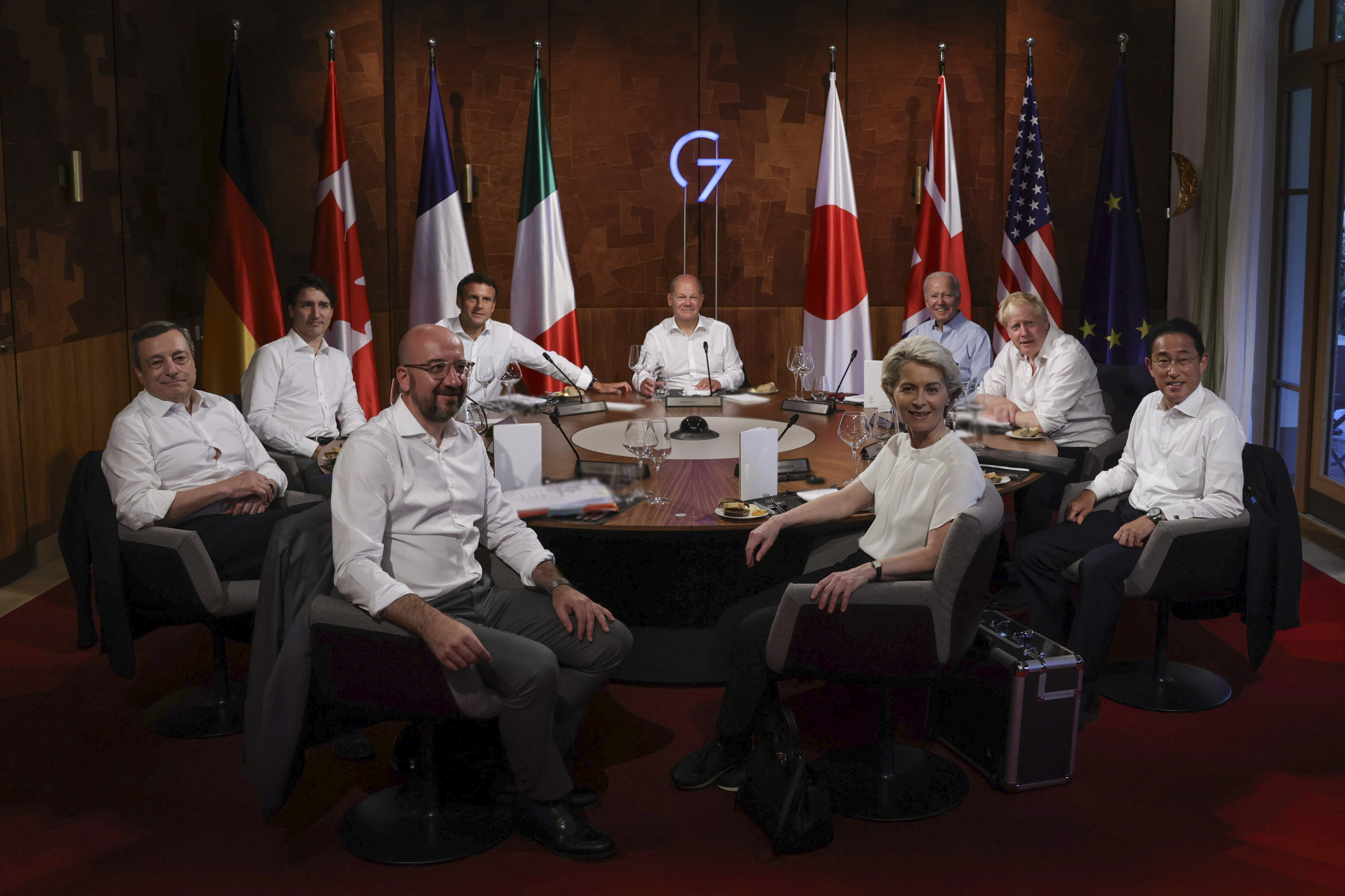
In the Photo: G7 leaders at the G7 Summit in Bavaria, Germany, June 26, 2022. Photo Credit: Number 10.

“When it comes to financing fossil sources of energy, this is something that has to come to an end. The future does not lie in gas,” Scholz said. “In the short-term, gas is going to be necessary and there can be investments in the transitional phase which are going to have to be supported.”


Editor’s Note: The opinions expressed here by the authors are their own, not those of Impakter.com — In the Featured Photo: A coal and oil power plant. Featured Photo Credit: Glenn Beltz.
Tags: Coalenergy crisisFossil FuelsGas CrisisGermanyOilOlaf ScholzRussian gas
Previous Post

How to Develop More Inclusive and Equitable Cities

Next Post

The 10 Best TikTok Accounts To Follow For Entrepreneurs And Startups

Related Posts

ESG News regarding Dimon warning that Trump’s attacks on Fed could raise inflation and rates, Venezuelan oil shipments to China setting to plunge under U.S. blockade, UK awarding offshore wind contracts to power 12m homes, 2025 being the third-hottest year on record as climate science faces political pushback
Business

JPMorgan CEO Warns Trump’s Attacks on Fed Could Raise Inflation and Rates

Today’s ESG Updates Dimon Warns Trump’s Fed Attacks Could Raise Inflation: JPMorgan CEO says Trump’s criticism of the Fed could...

byAnastasiia Barmotina
January 14, 2026
Five Keys to Understanding Venezuela’s Oil History
Energy

Five Keys to Understanding Venezuela’s Oil History

Venezuela’s oil industry has once again returned to the center of international debate. U.S. President Donald Trump announced new actions...

byYale Climate Connections
January 13, 2026
President Donald Trump delivers remarks at a press conference at Mar-a-Lago in Palm Beach, Florida, following Operation Absolute Resolve in Venezuela
Energy

Regime Change in Venezuela and the Crisis of Global Order

The US capture of Venezuela’s President Nicolás Maduro and his wife, Cilia Flores, from their official residence in Caracas in a military...

byCarlos Frederico Pereira da Silva Gama - Author & Assistant Professor at the Shiv Nadar Institution of Eminence
January 12, 2026
ESG News regarding U.S. lifting more sanctions on Venezuela, Egypt securing $1.8 billion renewable energy deals, U.S. pushing G7 allies to reduce reliance on China for critical minerals, richest 1% exceeding annual carbon share in just 10 days.
Business

U.S. Considers Lifting More Venezuela Sanctions

Today’s ESG Updates US May Lift Venezuela Sanctions to Boost Oil & IMF Aid: US could ease sanctions to support...

byAnastasiia Barmotina
January 12, 2026
EU officials respond to the US withdrawal from the UN climate treaty during a press briefing.
Business

US Withdrawal From UN Climate Treaty Raises Global Climate Stability Concerns

Today’s ESG Updates US Retreats From UN Climate Treaty: The EU condemns the United States’ decision to withdraw from the...

byJana Deghidy
January 8, 2026
ESG News regarding critical minerals and Greenland
Business

Greenland’s Melting Ice and the Race for Critical Minerals

Today’s ESG Updates Vast Resources Under Greenland's Ice: Untapped critical and rare-earth mineral deposits emerge, along with questions about mining...

byAriq Haidar
January 8, 2026
coal mine
Business

Can the War on Coal Still Be Won?

Ten years ago, I embedded in the war on coal. I spent a month inside the Sierra Club’s Beyond Coal campaign, watching an organization...

byCanary Media
January 6, 2026
ESG News regarding Trump’s push for Venezuelan oil, the impact of Venezuelan oil on the environment, Kawasaki’s new liquid hydrogen ship, and China’s new reporting requirements
Business

Trump’s Push For Venezuelan Oil

Today’s ESG Updates Trump Pushes U.S. Firms Toward Venezuelan Oil: Trump is urging hesitant oil executives to invest in Venezuela’s...

bySarah Perras
January 6, 2026
Next Post
The 10 Best TikTok Accounts To Follow For Entrepreneurs And Startups

The 10 Best TikTok Accounts To Follow For Entrepreneurs And Startups

Recent News

Marathoners

8 Must-Know Websites for Marathoners

January 16, 2026
Why Glyphosate, the World’s Most Widely Used and Sued Herbicide, Is Under New Scrutiny

Why Glyphosate, the World’s Most Widely Used and Sued Herbicide, Is Under New Scrutiny

January 16, 2026
The Imperative of a Nature-Positive Future

The Imperative of a Nature-Positive Future

January 16, 2026
  • ESG News
  • Sustainable Finance
  • Business

© 2025 Impakter.com owned by Klimado GmbH

No Result
View All Result
  • Environment
    • Biodiversity
    • Climate Change
    • Circular Economy
    • Energy
  • FINANCE
    • ESG News
    • Sustainable Finance
    • Business
  • TECH
    • Start-up
    • AI & Machine Learning
    • Green Tech
  • Industry News
    • Entertainment
    • Food and Agriculture
    • Health
    • Politics & Foreign Affairs
    • Philanthropy
    • Science
    • Sport
  • Editorial Series
    • SDGs Series
    • Shape Your Future
    • Sustainable Cities
      • Copenhagen
      • San Francisco
      • Seattle
      • Sydney
  • About us
    • Company
    • Team
    • Global Leaders
    • Partners
    • Write for Impakter
    • Contact Us
    • Privacy Policy

© 2025 Impakter.com owned by Klimado GmbH