The Ukraine-Russia war has been ongoing for almost five months, a time-period which has seen mass destruction, civilian deaths, huge displacement, global food shortages, and the significant disruption of the global energy system, driving oil and gas prices to their highest levels in almost a decade.
The Russia-Ukraine War has thus had profound geopolitical implications, forcing many countries to reconsider their energy supplies.
The International Energy Agency reports that Russia’s natural gas exports fuel the European economy, supplying around 40% of the European Union’s natural gas, over 25% of its oil, and half of its coal in 2019, with some countries receiving a higher proportion.
Over the last months, the US, UK and EU countries amongst others have tried to sever energy dependence on Russia, imposing economic sanctions and weaning themselves off Russian fuels. But Russian oil and gas did continue to flow to Western nations, even after Putin made this more difficult by signing a decree that changed the payment currency for Russian energy into Roubles, alongside other actions.
Despite sanctions, Russia in fact profited greatly, redirecting fuel elsewhere on the global market and gaining from sky-high fuel prices. Nevertheless, the European Commission has released plans to curb Russian gas imports by around two-thirds by the end of the year, by increasing imports of natural gas from the US and Middle East, redirecting gas from Asia, and accelerating the green energy transition.
Currently, however, many EU countries and the UK still remain reliant on Russian oil for about 1/5 of supplies, says ICIS consultancy, even after obtaining more oil and gas from other sources and despite all the sanctions and renewable transition efforts. This is problematic because it means Russia can constrain gas supply to Europe for political motivations.
Already in June, Russia reduced flows through the Nord Stream 1 pipeline, its main route for shipping gas into western Europe, to 40% of its capacity, driving up gas prices in Europe by 30%.
Further constraints would have severe impacts on European economies which are already facing crisis, and on the environment as they would force countries to resort to more polluting and available fuels that are in direct confrontation with the environmental targets of reaching net zero emissions.
Germany, France, and Italy, who have committed to end their support for overseas fossil fuel projects, have now stated that investment in this sector is necessary as a temporary response to the current crisis.
Speaking to reporters at the G7 summit, German Chancellor Olaf Scholz said that the “future does not lie in gas” but that in the short-term, gas is going to be necessary and that investments in it in the transitional phase “are going to have to be supported.”
Today, less than a month after the initial reduction to 40% of capacity in mid-June that was blamed on Germany’s Siemens Energy delayed maintenance works, Kremlin-backed Gazprom shut down NS1 entirely for maintenance.
Gazprom’s suspension for maintenance is not unusual and takes place annually, but unlike other years, it has raised fears that Russia is starting a wider squeeze on European gas supplies in response to EU sanctions and that NS1 could perhaps not reopen when scheduled to. German Vice-Chancellor Habeck accordingly said that Russia’s reason for reducing gas supplies is a “strategy” to unsettle people and drive-up prices.
Russian natural gas shipments to Europe via the Nord Stream pipeline to Germany are due to stop today, and Western allies fear Russian President Vladimir Putin will use the opportunity to cut off flows for good
Latest updates from the war in Ukraine: https://t.co/aph2JggVdm pic.twitter.com/oiirLTA1QN
— Bloomberg (@business) July 11, 2022
Germany reactivates coal plants: A “climate policy disaster” or a necessary measure for energy security
Impacts of Russian gas disruption are felt particularly acutely in Germany as it relies on Russia for roughly a third of its natural gas and coal and for more than one-third of its oil.
If Russian gas flow through the Nord Stream 1 doesn’t continue at all after the maintenance break, the economic cost of business disruption could reach 193 billion euros in the second half of 2022.
The EU has rules to prevent and respond to a disruption in gas supplies, where member states must have plans in place for managing supply disruption at three levels of crisis: early warning, alert, and emergency.
After the recent curbing of Nord Stream 1, Germany passed emergency legislation in Parliament to reactivate some of its coal power plants to support electricity generation, along with measures to boost the expansion of renewable energy and increase LNG imports from countries such as Argentina.
Habeck sees this as a “painful but necessary” short-term crisis management tool, backed by the Greens in parliament, to help wean Germany off Russian gas and preserve energy supplies before winter, using coal to produce some of the electricity instead of gas (relying on nuclear energy is no longer possible as the last three nuclear stations are scheduled to close this year).
However, the legislation could prevent Germany from meeting its environmental targets. Before the Ukraine war, Germany had planned to phase out coal by 2030, but its move to now use coal again has enraged environmental activists, who believe a potential return to coal puts Germany in danger of missing even its most basic climate targets.
In Parliament on Thursday, Chair of the Climate Protection and Energy committee Klaus Ernst said that the decision to reignite coal-fired plants amounted to a “climate policy disaster” that hits Germany harder than Russia.
The chair of the Greens Ricarda Lang however recognised that the legislation is vital to ensure short-term energy security.
France turns to oil, prepares for energy blackouts
In France, the energy industry has turned to oil instead, with various companies converting their gas boilers to run on oil to avoid disruption in the event any further reduction in Russian gas supplies leads to power outages.
At an economics conference in Aix-en-Provence this weekend, several top executives said they were preparing for possible blackouts. French Finance Minister Bruno Le Maire told corporate executives that it would be irresponsible not to prepare for shortages and consider a switch to oil.
“Let’s prepare for a cut-off of Russian gas,” he told them. “Today it’s the most likely scenario.”
Although France is much less dependent on Russian gas than Germany (France obtains around 70% of its electricity from nuclear power), outages and repairs at ageing power plants mean Electricite de France is also struggling to meet France’s electricity needs, putting the energy sector under increasing strain.
🇷🇺 / 🇪🇺 #Russian gas giant #Gazprom has closed #NordStream1 for maintenance.
While scheduled, the move has raised concerns that the gas pipeline that supplies much of Europe may not be reopened.
FRANCE 24 with economist Hilary Ingham on what this could mean ⤵️ pic.twitter.com/dfppcbxEW7
— FRANCE 24 English (@France24_en) July 11, 2022
The situation in France and analysis from Hilary Ingham illustrate just how complicated Europe’s energy issues are, which among other things include different conditions of alternative energy sources between countries, access to imports, and storage.
Italy, seeking new suppliers and boosting coal and renewables, says it could be independent of Russian gas by 2024
This week, Gazprom also cut gas supplies to Italy by 15%, a significant amount considering that Italy is the second-largest European buyer of Russian gas after Germany, obtaining around 45% of its gas from Russia in 2019.
Gazprom had previously cut gas supplies to Italy for several days in June, which it blamed on problems at its Portovaya plant that feeds the Nord Stream gas pipeline. Since the cut happened just days after Italian Prime Minister Mario Draghi visited Kyiv, Draghi said the squeeze was political retaliation from Moscow.
Italy’s government has repeatedly told of plans to end dependence on Russia for gas supplies following the invasion of Ukraine. It is seeking new sources, as in a recent deal to boost supplies from Algeria, and has reported plans to consider burning more coal to offset reduced gas supplies, also aiming to boost renewable energy production.
Last week, Draghi said the country could be independent of Russian gas by late 2024, telling the Senate; “We must continue to keep up the pressure on Russia through sanctions, because we must bring Moscow to the negotiating table.”
A long-term shutdown of the pipeline would hit Italy hard, deepening an energy crisis just before Europe’s winter.
Draghi’s comments to the press at the G7 Summit echoed this sentiment:
Short summary of responses from other countries:
Austria, which gets around 80% of its gas from Russia, has activated the first step of a three-stage emergency plan, and is examining measures to diversify gas supply and will convert a gas-fired power plant to generate electricity from coal.
Bulgaria, which meets over 90% of its gas needs from Russia, has agreed to purchase US liquefied natural gas (LNG) and has stepped up talks with Azerbaijan to increase gas deliveries.
The Czech Republic has said it has replaced a reduction in gas deliveries from Russia’s Gazprom with volumes from other sources.
Denmark’s energy agency said it has activated the first step of a three-stage emergency gas supply plan, urging consumers and companies to reduce consumption.
Greece has announced that it will ramp up coal mining in the next two years as a temporary measure.
The Netherlands will activate the early warning phase of its energy crisis plan and lift a cap on coal-plant production.
It is difficult to know how EU countries will continue to respond to Russian gas cut offs in the weeks to come. Some, such as Grimm, a co-author of the Leopoldina report, have hope that the Russia-Ukraine war could have beneficial long-term impacts on energy policy and emissions in Europe. However, the energy crisis we currently face is likely to worsen much more before it can get better.
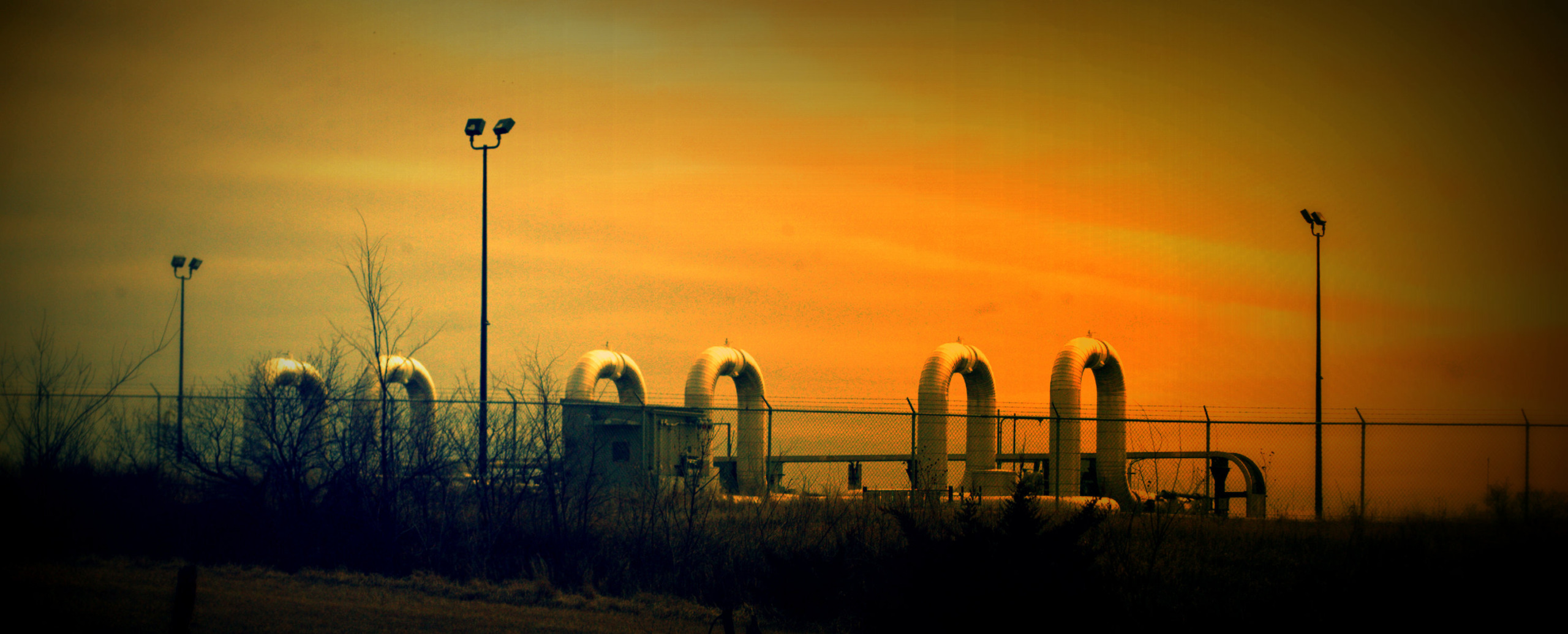
Editor’s Note: The opinions expressed here by Impakter.com columnists are their own, not those of Impakter.com. — In the Featured Photo: An oil pipeline. Featured Photo Credit: Shannonpatrick17/Flickr.