A report released this week by Climate Rights International (CRI) found that many democratic governments are using increasingly harsh punishments and citing vague criminal laws against climate protesters, activists, and even organisations.
The CRI report cited increasing fallout from climate change and frustration with inaction by governments concerning the issue as reasons for why these protests are occurring.
The growing climate crisis has resulted in record-breaking temperatures across the globe, sparking food shortages, mass displacement of populations, economic problems, and more frequent natural disasters — including floods, droughts, wildfires, and cyclones.
The report, titled “On Thin Ice: Disproportionate Responses to Climate Change Protesters in Democratic Countries,” details the increased prosecution of protests in Western democracies, including Australia, New Zealand, Germany, the Netherlands, France, Sweden, the United States and the United Kingdom.
The report also highlights the fact that these crackdowns come at a time when many of these governments are frequently criticising developing countries for not fully respecting the right to peaceful protest.
The UK government, in response to a UN report in July, said: “These rights [to peaceful assembly and protest] are essential to the functioning of society, providing a platform for citizens to advocate for positive change. Nonetheless, civic space is increasingly contested as authoritarian governments and actors, who feel vulnerable to scrutiny and accountability, seek to silence dissent.”
CRI found that by responding to recent climate protests with mass arrests and new, targeted legislation, traditionally democratic governments such as the UK and US are violating their legal duties to protect rights to freedom of expression and assembly.
In the UK for example, five protesters were each sentenced to between four and five years in prison for causing a public nuisance on the M25 motorway around London. Daniel Shaw, Louise Lancaster, Lucia Whittaker De Abreu and Cressida Gethin received what is thought to be the longest-ever sentence given in the UK for a non-violent protest.
So far, over 1,200 artists, athletes, academics, and human rights lawyers have signed an open letter to the Attorney General criticising the punishment.
In Germany, a controversial Bavarian law resulted in protester Christian Bergemann being held in preventative detention for 10 days because of his intention to block a road to peacefully protest during an auto show. Elsewhere, Winfried Lorenz was sentenced to 22 months in prison without parole for participation in a sit-in blockade, the largest punishment ever imposed against a climate protester in Berlin.
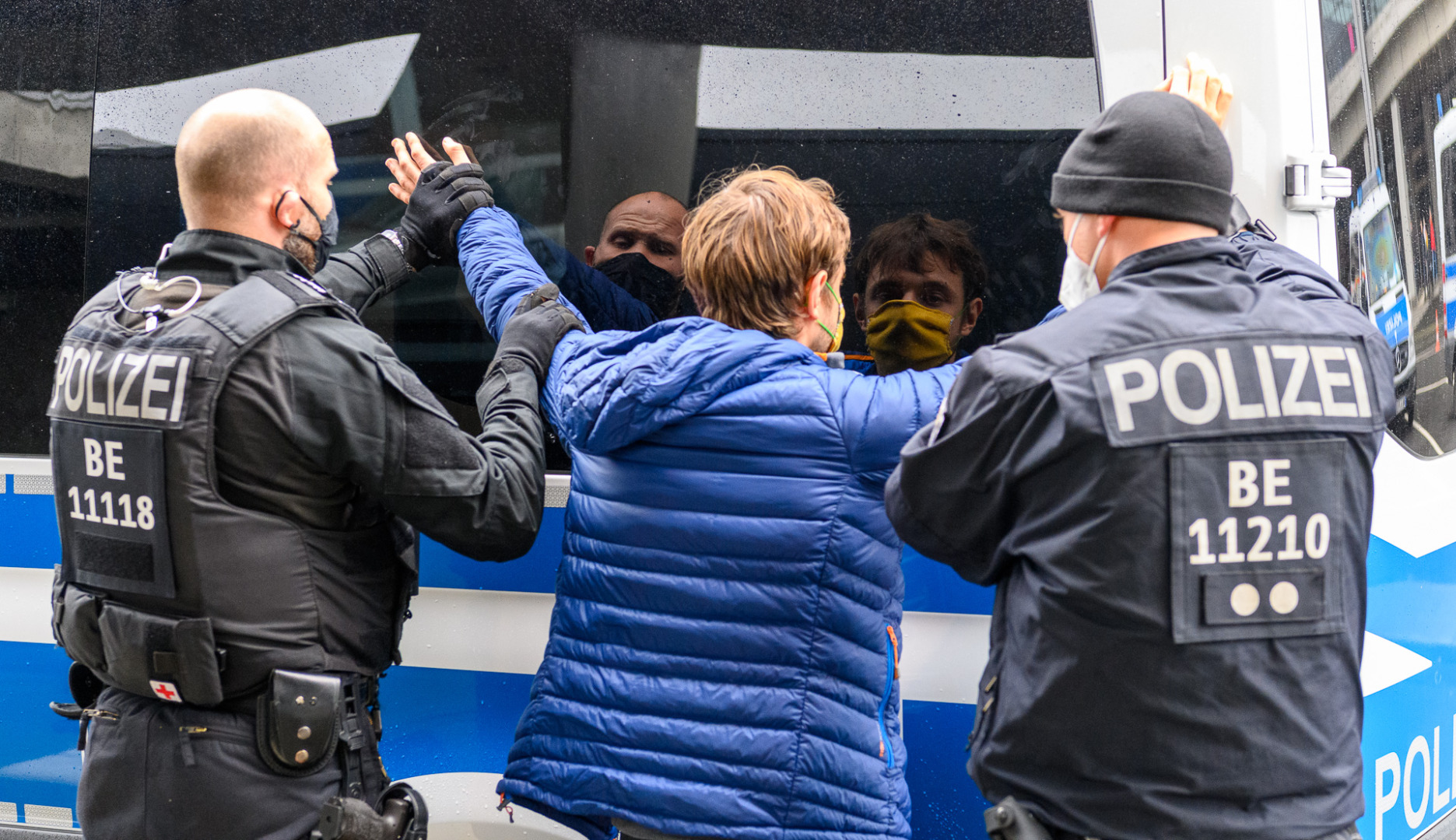
In the Netherlands, actor and activist Sieger Sloot was arrested for the felony of sedition for encouraging his followers to take part in a peaceful protest in the Hague that involved blocking a roadway. He was arrested before the protest took place.
The response by governments to peaceful protesters has been heavily criticised. “You don’t have to agree with the tactics of climate activists to understand the importance of defending their rights to protest and to free speech,” said Brad Adams, Executive Director at CRI. “Instead of jailing climate protesters and undermining civil liberties, governments should heed their call to take urgent action to address the climate crisis.”
Related Articles: Extinction Rebellion Protests Supporting Climate Bill Spark ‘Free Speech’ Controversy | Climate Activism – Are Radical Tactics Damaging the Environmental Cause? | Scenes From a Rebellion | 5 Years of Climate Strikes: How Fridays for Future Changed the World
These crackdowns have not just been limited to Europe. In Australia, activist Deanna Coco was prosecuted with a sentence of up to two years. The Australian government cited a New South Wales law that allows for the arrest of anyone who enters or remains on a bridge or tunnel if it leads to vehicles or pedestrians being redirected or the bridge or tunnel being closed.
In the United States, climate protesters Timothy Martin and Joanna Smith were charged with felonies and up to five years in prison, accompanied by up to $250,000 in fines for dirtying the protective case of a statue with water-soluble paint in the National Gallery in Washington D.C.
Joanna Smith, in an interview with CRI, said: “I interrupted what I love, which is art and culture and all the things we go to museums to celebrate, I interrupted that ever so briefly and delicately to try to help protect it. And to try to help save what we are all about to lose, which is everything that we love if we don’t address the climate crisis.”
In some cases, protesters are being barred from talking about the motivations of their actions. In the UK M25 motorway case, the judge refused to allow expert witness testimony regarding climate science. In a separate 2021 case that also concerned the blocking of a roadway, the defendants were banned from mentioning their motivations in closing statements.
These severe repercussions have repressed the climate movements across some of the most developed countries in the world, and in many cases, the right to a fair trial is seemingly undermined — much to the criticism of CRI and other advocacy groups.
“July 2024 was the 14th month in a row to become the hottest month on record,” Brad Adams said. “Governments should reflect on the absurdity that each new month also seems to include record breaking sentences for climate protesters.”
Still, many continue to protest what they feel is government inaction in dealing with global warming. “The fact is that climate activism is not something you’re born into, but it’s something you stand up to do no matter where you are in your life,” climate activist Luisa Neubauer told CRI. “And I would say from all the years of activism and for all the thousands of people I’ve spoken with, the one really most powerful answer to desperation is action.”
But government prosecution is extending past individuals, with some climate advocacy groups facing charges as well. In June 2023, French group Soulèvements de la Terre was ordered to be dissolved by the French government — a decision later overturned in court.
In May 2024, members of Last Generation in Germany faced charges of “forming a criminal organisation,” under section 129 of Germany’s criminal code — a first for a non-violent protest group.
“These defenders are basically trying to save the planet, and in doing so save humanity,” the UN special rapporteur on human rights defenders, Mary Lawlor, told the Guardian last year. “These are people we should be protecting, but are seen by governments and corporations as a threat to be neutralised. In the end it’s about power and economics.”
The CRI report called on governments to reverse this trend of prosecution, to instead protect the right to peaceful protest and better support safe and responsible demonstrations.
“Governments should see climate protesters and activists as allies in the fight against climate change, not criminals,” said Brad Adams. “The crackdown on peaceful protests is not only a violation of their basic rights, it can also be used by repressive governments as a green light to go after climate, environmental, and human rights defenders in their countries.”
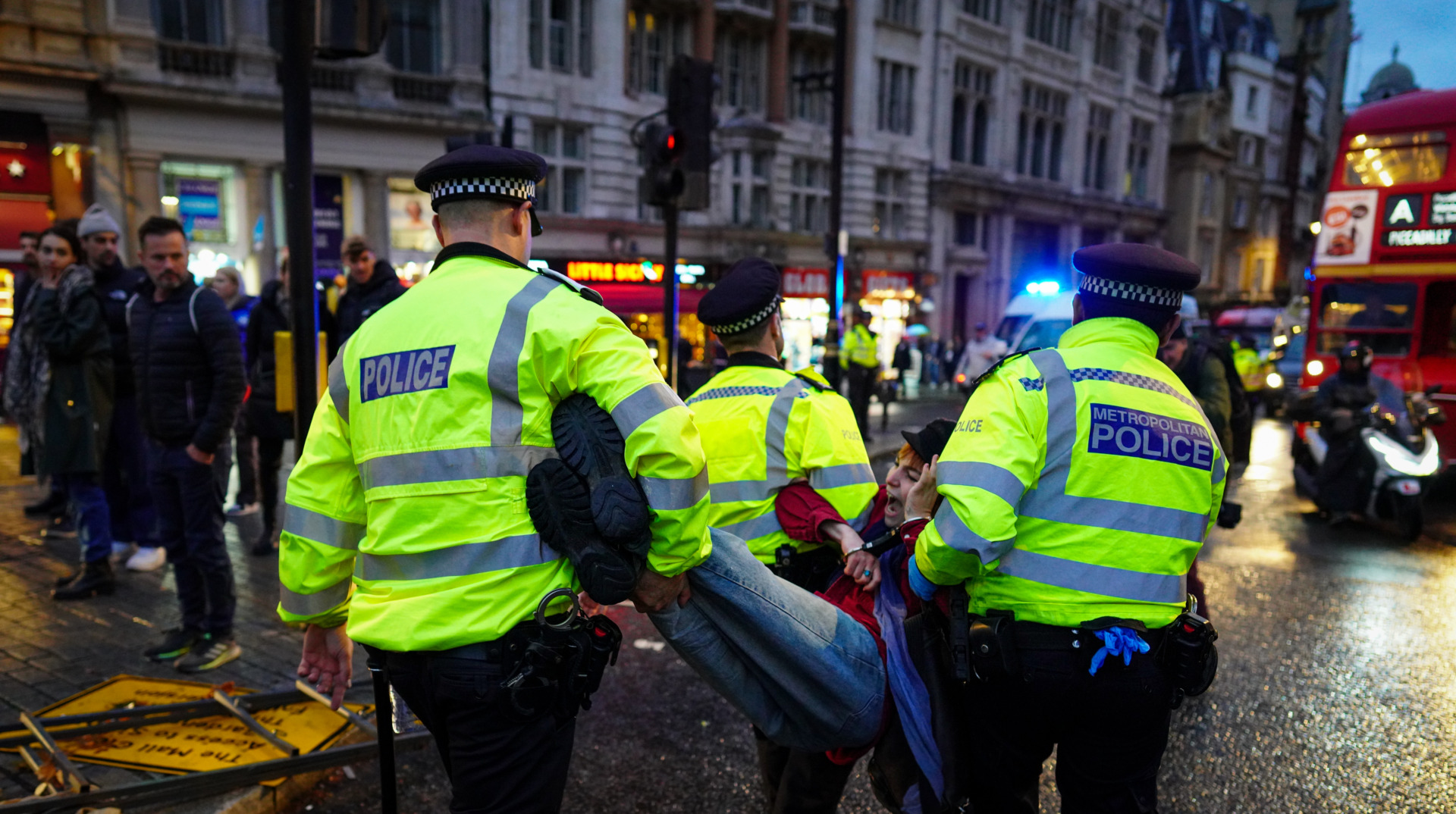
Editor’s Note: The opinions expressed here by the authors are their own, not those of Impakter.com — In the Cover Photo: This brave woman was one of several people arrested in Trafalgar Square for daring to peacefully resist the government’s inaction on the climate and cost of living crisis. She had been participating in a “Just Stop Oil” demo, by sitting on the road, on the south side of the square and had been holding a placard declaring “We will not pay for greed.” Cover Photo Credit: Alisdare Hickson.