
Today’s ESG Updates
- Earth’s Atmosphere Just Hit a Record for Water Vapor, Raising the Risk of Extreme Weather: The planet’s atmosphere held more water vapor in August than any other month on record, according to Europe’s Copernicus Climate Change Service, raising the risk of intensified rainfall and storms.
- Frankfurt Court Says Meta Can’t Dodge Blame for Scam Ads on Its Platforms:A German court ruled Meta liable for fraudulent third-party ads on Facebook and Instagram, rejecting the company’s usual defense that it isn’t responsible for content it didn’t know about..
- Environmental Review Stalls for South Africa’s First Offshore Wind Project: The 800-megawatt Gagasi project’s environmental review has stalled just as the World Bank released a study estimating South Africa could develop 95 gigawatts of offshore wind capacity.
- Silicon Valley Residents Push Back Against the AI Data Center Boom: Residents and environmental groups in San Jose are organizing against new data center projects over concerns about electricity costs, water use and air quality.
Earth’s atmosphere just hit a record for water vapor, raising the risk of extreme weather
The planet’s atmosphere held more water vapor in August than in any other month on record, according to Europe’s Copernicus Climate Change Service. The reading, 27.35 kg per square meter, edged past the previous record set in July 2024 by just 0.04 kg/m².
Scientists attribute the record to a combination of global warming and a strengthening El Niño. Warmer air simply holds more moisture, roughly 7% more per degree of warming, and the unusually warm tropical oceans this year likely drove up evaporation and pushed water vapor levels even higher. August also tied as the hottest month on record going back to 1940 in one major dataset, and topped the charts outright in another that stretches back to 1850.
The concern isn’t the water vapor itself so much as what it fuels. Scientists say the added moisture can intensify rainfall, including from cyclones, and give storms extra energy to work with. It’s part of a feedback loop: a warmer atmosphere holds more water, and that water can then supercharge the very storms climate change is already making more frequent.
Klimado – Navigating climate complexity just got easier. Klimado offers a user-friendly platform for tracking local and global environmental shifts, making it an essential tool for climate-aware individuals and organizations.
Frankfurt court says Meta can’t dodge blame for scam ads on its platforms

A German court has ruled that Meta can be held liable for fraudulent third-party ads on Facebook and Instagram, rejecting the company’s usual defense that it isn’t responsible for content it didn’t know about. The Frankfurt Regional Court said Meta’s algorithms give it enough control over what users see to lose that protection under the EU’s Digital Services Act.
The case was brought by Finanzfluss, a German financial platform, after scammers used its trademarked logo and the image of its co-founder, Thomas Kehl, in fake investment ads without permission. Finanzfluss says it reported nearly 260 similar violations to Meta in August 2024 alone, and some of the fraudulent posts stayed online for as long as 62 days before being removed.
The court ordered Meta to stop distributing the ads, pay damages, and disclose details about the fake ads and how much revenue they generated. The ruling isn’t final and can be appealed, but it leans on a precedent set by a June ruling from the European Court of Justice, and could shape how other courts interpret platforms’ responsibility for content pushed by their own algorithms.
Related Articles
Here is a list of articles selected by our Editorial Board that have gained significant interest from the public:
Environmental review stalls for South Africa’s first offshore wind project
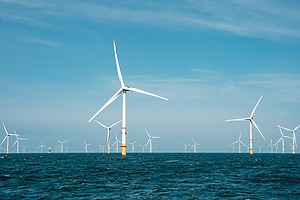
The environmental review for South Africa’s first proposed offshore wind farm has stalled, with the consultancy handling the assessment saying it’s unsure of the project’s current status. The 800-megawatt Gagasi project, planned off Richards Bay on the country’s east coast, was launched in 2022 by GenesisHexicon, a joint venture between Sweden’s Hexicon and South Africa’s Genesis Eco-Energy Developments.
According to Acer (Africa) Environmental Consultants, the environmental authorization application was withdrawn last year, not over environmental concerns but to redesign the project from floating to anchored turbines.
The delay comes just as the World Bank released a new study on South Africa’s offshore wind potential, estimating the country could develop roughly 95 gigawatts of capacity, mostly floating turbines, along its coastline. The report projects that large-scale offshore wind could generate $6.7 billion in employment wages by 2050 and cut South Africa’s electricity generation emissions by 530 million tons of CO2 over the next 25 years, largely by displacing coal power.

Silicon Valley residents push back against the AI data center boom

In San Jose, residents and environmental groups are organizing against a wave of proposed data center projects that city officials have courted in hopes of positioning the city as an AI infrastructure hub. The pushback reflects a tension playing out across the country: how to support an industry seen as critical to economic competitiveness while addressing growing concerns about the electricity, water and pollution costs behind it.
The debate is especially charged in California, home to many of the companies driving the AI boom, including Google, Meta, OpenAI and Anthropic. San Jose, the state’s third-largest city, has embraced the industry’s growth and struck a deal with utility PG&E last year to speed up power delivery for large energy users like data centers.
Not everyone’s convinced that’s the right trade-off. “People are right to question, ‘Is this pushing up my energy costs? Is it using our clean water supplies? Will it degrade quality of life in my city?'” San Jose Mayor Matt Mahan told Reuters.
Air quality is a particular flashpoint. In April, a coalition led by the Center for Biological Diversity petitioned regulators to tighten oversight of diesel backup generators at data centers, arguing existing rules predate the recent surge in AI-related construction. California Governor Gavin Newsom is also weighing a bill package meant to protect residents from the costs of powering data centers.
Editor’s Note: The opinions expressed here by the authors are their own, not those of impakter.com — Cover Photo Credit: Tasos Mansour