If I asked you to picture suburbia, what would you imagine? Lush green lawns with carefully cultivated hedgerows? Shining family cars, perhaps a swimming pool in the garden?
For many millennials, the appeal of suburban life outside the city is growing. But the people living in suburbs are wealthier than city dwellers and their habits are having extreme effects on the poorest in urban communities, according to a new study published in Nature Sustainability, which warns that the water crisis facing urban areas is “due to stark socioeconomic inequalities.”
Over the past 20 years, over 80 cities across the world have reported facing severe water shortages due to drought and unsustainable water use. With the Global Commission On the Economics of Water predicting a 40% deficit in the demand for freshwater by 2030, it is essential that key areas are identified to curb the impact this could have.
The Nature Sustainability study used Cape Town in South Africa as a case study, where it was found that the richest people used 50 times more water than the poorest. For scale, 1.4% of Cape Town’s population belong to the elite and 12.3% fall into the upper-middle class bracket. According to the report, the prolonged period of drought between 2015 and 2017 is one of the reasons that scientists are “assessing the implications that consumption by elites have on the sustainability of the urban water system.”
In Cape Town, the daily figures of water consumption are staggering. The city’s elite and upper-middle income households used 2,161 litres and 988 litres respectively whilst lower-income households used anywhere between 178 and 41 litres per day, with many of the lowest consumers living in informal settlements near city borders.
Cape Town is not the only metropolis with worryingly poor water management: The study identified other cities including Miami, Jakarta, Barcelona, São Paulo and Beijing as having experienced urban droughts linked to socioeconomic inequality.
The data collected in Cape Town provides an important model for identifying key areas of water mismanagement. The richest 14% of Cape Town residents use 51% of freshwater supply, mostly on non-essentials like swimming pools, gardening and for other recreational purposes.
In places like California, where droughts are becoming more frequent and more severe, there are already measures in place to conserve water in wealthy households. In 2015, communities banned the refilling of swimming pools and placed restrictions on building new pools. Other solutions like artificial grass are becoming more popular as Californians want their grass to be green all year round and won’t need to use water to keep it lush.
Amsterdam is building smart roofs. They collect water during rain, to be used during drought.@WEFUpLink reports on the advantages this Dutch urban innovation by @MetroPolder and @RESILIONL
Read more: https://t.co/5QnQBJPTH5
Video by @wef @WEFUpLink pic.twitter.com/xBBpIZU8XJ
— Theo Peters (@NLinSF) April 10, 2023
Human mismanagement has a greater impact on water security than climate change
The elite in areas like California are making changes and Cape Town itself has launched a program that aims to deliver 300 million litres of water everyday by 2030.
But according to the scientists behind the report, their model “is flexible and can be adjusted to analyse urban water dynamics in other cities characterised by socioeconomic inequalities” and shows on a global scale that the rich have the biggest impact on water security; bigger than population changes and the climate crisis.
The report blames “uneven power dynamics” for water mismanagement in urban areas, an unfortunate truth echoed in other countries.
Recently in the UK, the government has considered banning certain types of showers in homes to cut the individual’s demand for water from 144 litres to 122 litres per day. Meanwhile, it was reported that Prime Minister Rishi Sunak’s private swimming pool requires so much energy that the local energy grid was upgraded just to heat it.
Until the rich are held accountable, the way in which water is managed cannot change because they are the ones with the greatest level of access, the Nature Sustainability study explained, as it outlined how the richest citizens in Cape Town were found to be employing private boreholes in times of drought which “could eventually deplete the groundwater sources of the area.”
Related articles: The Huge Carbon Footprint of Billionaires | Delivering on Domestic Inequality Reduction: Why and How SDG 10 can Help | Social Stratification and Inequality: Is There A Way Out? | The World Bank Report Warns of Widening Worldwide Inequality.
“Climate change and population growth mean that water is becoming a more precious resource in big cities, but we have shown that social inequality is the biggest problem for poorer people getting access to water for their everyday needs,” says Professor Hannah Cloke, a hydrologist at the University of Reading and co-author of the study.
She goes on to explain that the projections produced by the study are indicating worse things to come “as the gap between the rich and the poor widens in many parts of the world.”
Water should be a source of peace, not inequality 💧
But 46% of the world’s population lacks access to safe sanitation & the world continues to look away.
It's time to stop the excuses & do more.
More in the #WorldWaterReport: https://t.co/wJ5mUrlZyJ pic.twitter.com/vu9Tf5zUJs
— UNESCO 🏛️ #Education #Sciences #Culture 🇺🇳 (@UNESCO) April 8, 2023
Water conservation efforts at the moment focus on technical solutions like improving water infrastructure. The UN Water Conference provides a good checkpoint, calling for “responsive and innovative” ways of dealing with drought financially.
The report suggests that “future drought resilience strategies should shift away from reactive approaches” and instead implement “proactive adaptation strategies” to identify and more closely address the “long-term socioenvironmental patterns” that threaten water security.
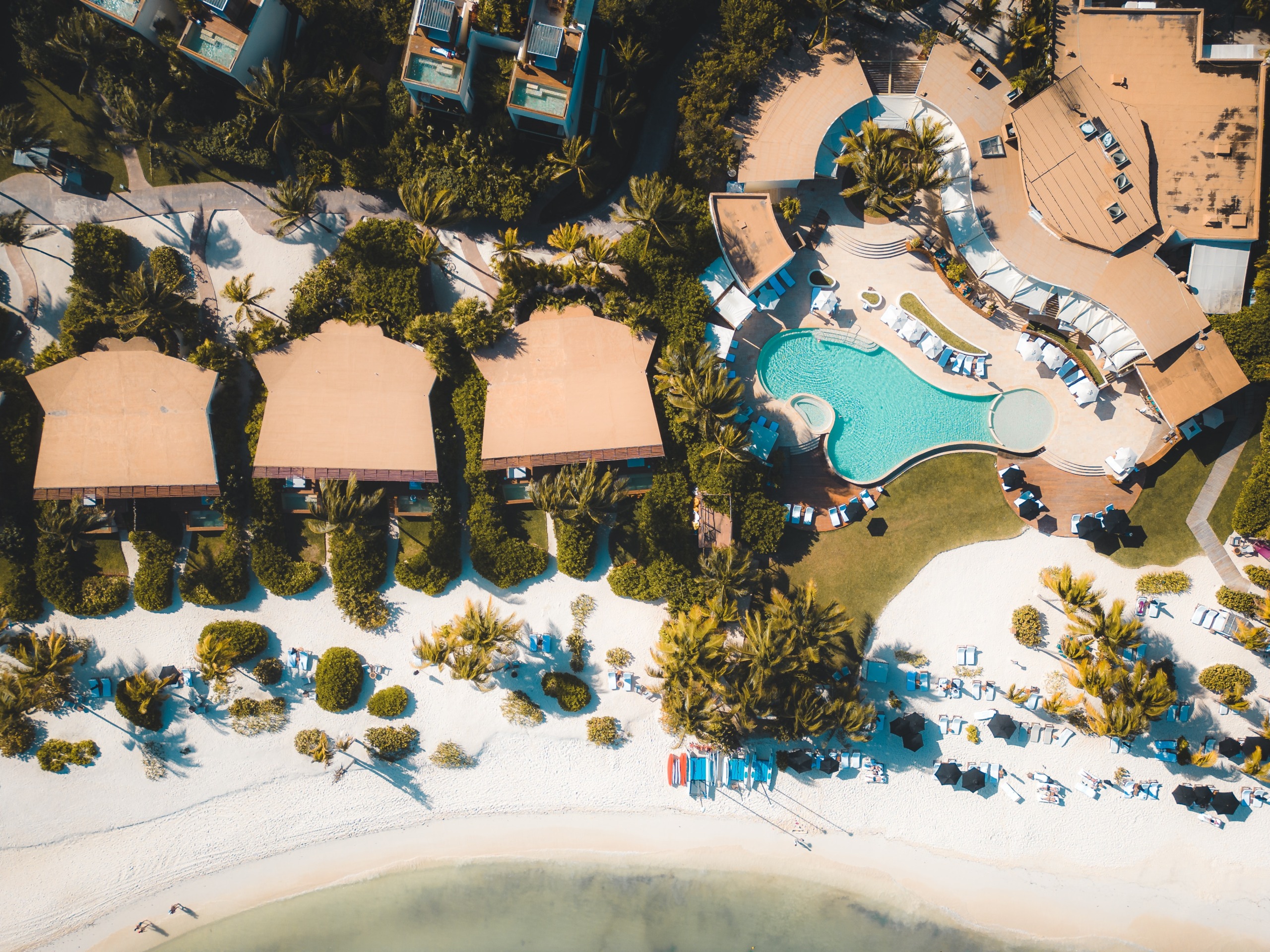
Editor’s Note: The opinions expressed here by the authors are their own, not those of Impakter.com — In the Featured Photo: Aerial view of a resort in Mexico. Featured Photo Credit: Willian Justen de Vasconcellos.