
Vinted’s rise to the top of the European fashion market is celebrated as a sustainability breakthrough, but its green credentials may not be as clear-cut as they appear.
Not long ago, second-hand meant second-best. Pre-used clothing was seen as something bought out of constraint rather than desire. Today, that stigma has been largely overturned, with pre-loved fashion becoming the first stop for millions of shoppers.
In Europe, the shift towards second-hand has been spearheaded by the online resale marketplace Vinted. The platform, which began in Lithuania as two friends looking for a way to clear out their wardrobes, has grown into one of Europe’s biggest e-commerce players, surpassing fast-fashion giants like H&M, Zara, and Amazon.
The rise of Vinted has been framed by the company and commentators alike as a sustainability success story. Yet, as the platform continues to scale, a harder tension emerges: does mass resale actually reduce fashion’s footprint — or does it risk intensifying the very cycles of consumption it seeks to disrupt?
From Wardrobe Clear-Out to Retail Empire
Since launching in the UK in 2014, Vinted’s growth has been strikingly fast. Spendmapper recently ranked it as the UK’s third-largest fashion retailer by revenue, behind only Primark and Next. In France, it has already overtaken Amazon and Kiabi to become the country’s largest clothing retailer by sales volume, according to the French Fashion Institute.
That momentum is still accelerating. In 2025, revenue jumped 40% from the previous year, passing €1 billion. With 80 million users across more than 20 European markets, Vinted is already operating at a vast scale, and its U.S. launch in January 2026 signals ambitions for an even broader global reach.
“High Value at the Lowest Possible Cost”: Inside Vinted’s Formula
Vinted operates on a peer-to-peer (P2P) model: users buy and sell directly with one another, without a traditional retailer acting as intermediary. This model was pioneered by competitors like eBay, Depop, and Poshmark long before Vinted entered the scene. The question, then, is what sets Vinted apart — and why it has scaled so successfully.
The answer lies in a combination of affordability and usability. As CEO Thomas Plantenga puts it, the company’s performance is the result of “hard work to deliver products that bring high value for members at the lowest possible cost…It’s this mix of scale, innovation, [and] cost control that helps us succeed.”
Price is the platform’s primary draw. According to Vinted’s 2025 Climate Impact Report, 47% of users across all markets cite lower prices as their main reason for using it. Shoppers can access branded goods at a fraction of retail cost, often with near-equivalent value. The incentive runs both ways: while users “save” by buying cheaply, they also earn by selling unwanted items. With zero seller fees, listing is frictionless, and low pricing is encouraged. Earnings held in a Vinted Balance can be spent directly in-app via Vinted Pay, keeping value circulating within the platform.

These financial incentives are reinforced by a highly streamlined user experience. The app is designed for ease at every step: intuitive navigation, clean interfaces, and a social-media-style algorithm that learns user preferences. Advanced search tools allow users to filter by brand, size, or condition, or track specific items over time. Shipping is fully integrated, removing logistical friction for both parties. Meanwhile, AI features such as image search and automatic tagging simplify listing and discovery.
Vinted succeeds by aligning with what consumers already want: ease, low prices, and constant novelty. Sustainability, in this context, stops feeling like a trade-off and becomes common sense.
The Environmental Case for Circular Fashion
Vinted positions itself as an antidote to a global fast-fashion crisis that is rapidly reaching a breaking point. Fast fashion’s environmental costs are staggering. The industry accounts for around 10% of global carbon emissions each year — more than international flights and maritime shipping combined. It consumes an estimated 215 trillion liters of water annually, while cheap synthetic textiles have become the fourth-largest source of primary microplastics in the world’s oceans. The human cost is equally severe, from low wages to poor working conditions across global supply chains.
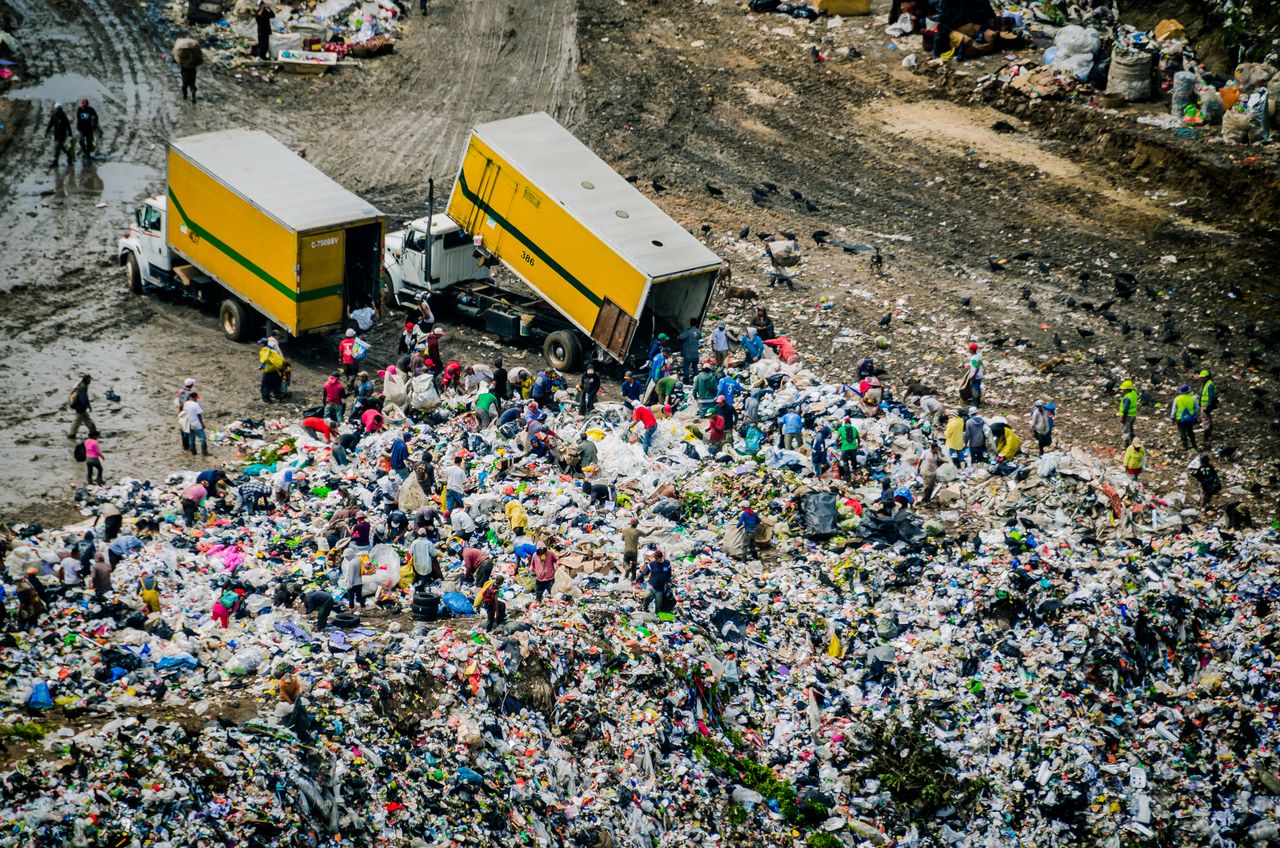
As fast fashion’s costs escalate, garment lifespans continue to shrink. The industry globally generates around 92 million tonnes of textile waste each year. Clothing production doubled between 2000 and 2015 even as garments were worn 36% less.
Vinted reframes fashion around circulation, rather than production. The environmental impact is twofold: it reduces demand for new clothing and cuts the volume of garments heading to landfill.
Its 2025 Climate Impact Report, produced with carbon-tracking platform Vaayu, highlights the scale of this effect. In 2023 alone, 678,691 tonnes of CO₂e emissions were avoided by buying second-hand on Vinted instead of new, equivalent to 512,414 flights between London and Los Angeles. On average, each second-hand item saves 1.25kg of CO₂e, with even higher savings for high-turnover categories such as women’s jeans and men’s blazers.
Notably, 40% of purchases replaced the buying of a new item, while 81% of users say they would not have resold their items without the platform. This progress is set to continue: Vinted’s 2025 Climate Action Plan sets out further emissions reductions, particularly targeting deliveries, which currently account for 98% of their total 287,082-tonne carbon footprint. This figure, while substantial, is dwarfed by traditional fashion giants. Zara’s parent company Inditex, for example, reported around 12.7 million tonnes of CO₂e emissions in 2025.
Beyond these figures, Vinted’s success crucially demonstrates that circular models can operate — and compete — at scale. It has helped move second-hand into the mainstream, lowering barriers to participation and normalizing resale as everyday behavior.
The result is a broader shift within the fashion industry, with pre-loved and fast fashion now in direct competition. In response, brands across the spectrum are adapting. High-street names such as H&M have introduced in-store recycling schemes and second-hand sections, while luxury houses including Gucci and heritage labels like Levi’s are experimenting with resale programs. Even Shein — the emblem of ultra-fast fashion — has begun to engage with the resale market.
When Circular Fashion Meets Overconsumption
When it comes to evaluating the true extent of Vinted’s sustainability, the question is not whether clothes circulate more/for longer through Vinted — they clearly do. The real issue is whether they circulate instead of newly produced garments, or alongside them.
In theory, buying pre-loved items is better than buying new. But by making fashion cheaper, faster, and more frictionless, platforms like Vinted risk expanding consumption rather than reducing it. A recent study published in Nature found that consumers who buy second-hand fashion tend to purchase more overall, including both new and pre-owned items. In this way, Dr. Meital Peleg Mizrachi, a postdoctoral fellow at Yale University, observes that second-hand shoppers can remain trapped in “this cycle of buying a lot of clothes, disposing of clothes in a very fast manner, so they can buy more clothes, which is basically fast fashion.”
Buying second-hand also introduces psychological dynamics that can intensify this cycle. At one level, it creates a form of “moral offset.” When consumption is framed as sustainable, purchasing becomes easier to justify, and users may feel licensed to buy more on the assumption they can simply resell later. The satisfaction of earning money from unwanted items can further reinforce the urge to keep buying.
Vinted also amplifies this through the design of its platform. Features such as bidding, badges and ratings gamify the experience, while a social-media-style algorithm rewards constant engagement and prioritizes novelty. Newly listed items are pushed to the top, creating an illusion of urgency and thrill as customers compete for “one-of-a-kind” pieces. In this way, second-hand shopping mirrors — and potentially deepens — the same psychological drivers of consumption that underpin fast fashion.
Another key consideration is that, while Vinted may extend the lifespan of clothing, it does not necessarily reduce demand for new items. Its model depends on a constant flow of cheap, newly produced garments entering the second-hand economy. At one point in 2024, the platform hosted 61.8 million Zara items, 59.7 million from H&M, and 21.8 million from Shein.
Rather than curbing demand for new fashion, this scale reflects its persistence. Vinted risks accelerating fashion turnover by making clothing feel temporary — less a durable possession than a circulating commodity. In doing so, second-hand platforms can absorb and normalize fast fashion, extending the life of low-quality garments without challenging the system that produces them.
Related Articles
Here is a list of articles selected by our Editorial Board that have gained significant interest from the public:
Systemic Excess: The Promise and Limits of Resale
In many ways, Vinted’s model is not so far removed from the fast-fashion cycle it claims to counter. The medium has changed; the underlying logic of constant turnover and consumption may not have. Yet this tension is also central to its success. Vinted meets consumers where they are, responding to the same demands that drive fast fashion: ease, affordability, and novelty. By mirroring rather than reshaping these behaviors, it has made second-hand feel seamless and familiar — bringing circularity into the mainstream.
Vinted’s sustainability story only tells part of the full story. But placing the burden of fashion’s environmental crisis on resale platforms misdirects responsibility. Vinted addresses waste only after clothing has been produced; it cannot, on its own, fix an industry built on overproduction. Real change requires action across the entire system — production, consumption, and disposal — supported by policy and regulation.
In the end, Vinted is neither a green revolution nor greenwashing. Its success exposes both the promise and the limits of market-led sustainability. It has kept millions of items out of landfill and shown that circular models can scale, but resale alone cannot reform a system defined by excess. Still, it offers a clear lesson: sustainability only succeeds when it aligns with what people actually want.
Editor’s Note: The opinions expressed here by the authors are their own, not those of impakter.com — In the Cover Photo: A hand holds a yellow plastic bag containing clothes. Cover Photo Credit: Armağan Başaran