
Today’s ESG Updates:
- ECB Fining Crédit Agricole Over Sustainability Issues: Banks are expected to embed climate risks into credit risk assessments, stress testing, internal controls and overall business strategy.
- Trump’s Office is Removing Vehicle Emissions Regulations: The administration removes the legal basis for federal limits on tailpipe emissions and weakens the regulatory architecture supporting U.S. climate policy.
- Électricité de France Warns Solar and Wind Energy Fields: The fast growth of solar and wind energy in France and the rest of Europe is increasingly straining the operation and finances of its nuclear power plants.
- A Massive Strike In Kenyan Airports Disrupts Travel Throughout the Region: The employees have stated a concern about their employment conditions, the number of staff, and restructuring, which have caused the staff to take industrial action.
The European Central Bank (ECB) has fined Crédit Agricole €7.6 million, following the bank’s failure to address climate risk issues and not follow the deadlines. The ECB’s roadmap requires banks to diligently implement climate risk into their credit assessments. The situation seems to indicate a plan to enforce climate risk not only as a sustainability issue, but as a financial one as well. The supervisors have indicated that a lack of progress in data, scenario analysis, and transition planning could result in banks facing material losses as the EU moves forward in its decarbonisation plan. This enforcement action makes it clear that climate risk management is now a part of the core prudential supervision of the eurozone banking system and that there are financial implications for banks that do not comply.
***
Further reading: ECB Fines Crédit Agricole €7.6 Million for Not Meeting Climate Risk Expectations
Trump revokes nationwide emissions standard

The administration of President Donald Trump keeps pushing the anti-ESG agenda with the recent termination of the Environmental Protection Agency’s (EPA) ‘endangerment finding’. It was a cornerstone of nationwide regulation of greenhouse gas emissions as part of the Clean Air Act. Framed as an action to reduce vehicle prices and as a regulatory correction, the decision removes the legal basis for federal tailpipe emissions limits. Critics find the move disastrous to the U.S. climate commitments, while the policy is expected to be legally challenged in multiple states.
“This flawed legal theory took the agency outside the scope of its statutory authority in multiple respects,” the EPA stated.
***
Further reading: Trump Revokes U.S. Climate Endangerment Finding, Eliminates Vehicle Emissions Standards
Klimado – Navigating climate complexity just got easier. Klimado offers a user-friendly platform for tracking local and global environmental shifts, making it an essential tool for climate-aware individuals and organisations.
Growing solar and wind generation is increasing equipment wear and maintenance costs
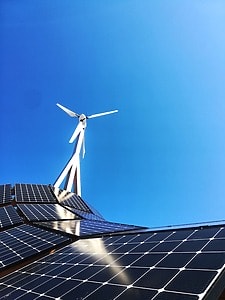
The Électricité de France (EDF) has recently pointed out that the fast growth of solar and wind energy in France and the rest of Europe is increasingly straining the operation and finances of its nuclear power plants. In this regard, EDF has indicated that the sharp growth of renewable energy sources, which are often granted priority access to the grid and economic support, is driving down the wholesale market prices of electricity during periods of high wind and solar power production. This makes it more difficult for nuclear power plants to remain profitable, as they are intended to be stable base-load power plants with high fixed costs and low flexibility.
The modernisation of 13 turbine-generator units, each with a capacity of 900 megawatts, to increase their capacity by around 35 megawatts each in the coming years is expected to cost around €1.4 billion, according to the report. This development is indicative of rising tensions in the design of the European electricity market, as renewable energy sources are at the heart of the EU’s decarbonization strategy.
***
Further reading: EDF Warns Solar, Wind Surge Straining Nuclear Fleet Costs

Delays occur in Kenya airport due to a strike by the aviation union
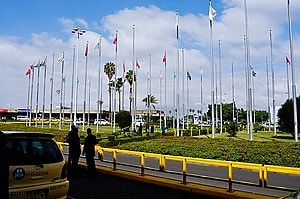
A massive strike unfolds in Kenya. The dispute revolves around employees represented by a union in the aviation industry and the Kenya Airports Authority (KAA), which runs the country’s major airports. From what has been reported, the employees have stated a concern about their employment conditions, the number of staff, and restructuring, which have caused the staff to take industrial action. This has affected employees in passenger processing and in operations on the runway.
As the main East African regional hub, Kenya is critical for the movement of people, goods, and services, as well as for the tourism sector. The disruption in airport operations also negatively impacts the economy and the movement of goods and services outside the aviation industry. This includes the driver of the trade and supply chain. There have been attempts by authorities and union representatives to reach an agreement to end the dispute and resume normal operations. This dispute has highlighted the operational risks that are present in the infrastructure in developing countries. This is especially so when the developing countries are experiencing changes in labour relations, changes in governance, and changes in management in the public sector.
***
Further readings: Worker strike delays flights at Kenya’s main airport
Editor’s Note: The opinions expressed here by the authors are their own, not those of impakter.com — Cover Photo Credit: Wikimedia Commons