
Impakter
  • Environment
    • Biodiversity
    • Climate Change
    • Circular Economy
    • Energy
  • FINANCE
    • ESG News
    • Sustainable Finance
    • Business
  • TECH
    • Start-up
    • AI & Machine Learning
    • Green Tech
  • Industry News
    • Entertainment
    • Food and Agriculture
    • Health
    • Politics & Foreign Affairs
    • Philanthropy
    • Science
    • Sport
  • Editorial Series
    • SDGs Series
    • Shape Your Future
    • Sustainable Cities
      • Copenhagen
      • San Francisco
      • Seattle
      • Sydney
  • About us
    • Our Story
    • Team
    • Partners
    • Write for Impakter
    • Contact Us
    • Privacy Policy
No Result
View All Result
  • Environment
    • Biodiversity
    • Climate Change
    • Circular Economy
    • Energy
  • FINANCE
    • ESG News
    • Sustainable Finance
    • Business
  • TECH
    • Start-up
    • AI & Machine Learning
    • Green Tech
  • Industry News
    • Entertainment
    • Food and Agriculture
    • Health
    • Politics & Foreign Affairs
    • Philanthropy
    • Science
    • Sport
  • Editorial Series
    • SDGs Series
    • Shape Your Future
    • Sustainable Cities
      • Copenhagen
      • San Francisco
      • Seattle
      • Sydney
  • About us
    • Our Story
    • Team
    • Partners
    • Write for Impakter
    • Contact Us
    • Privacy Policy
No Result
View All Result
Impakter
No Result
View All Result
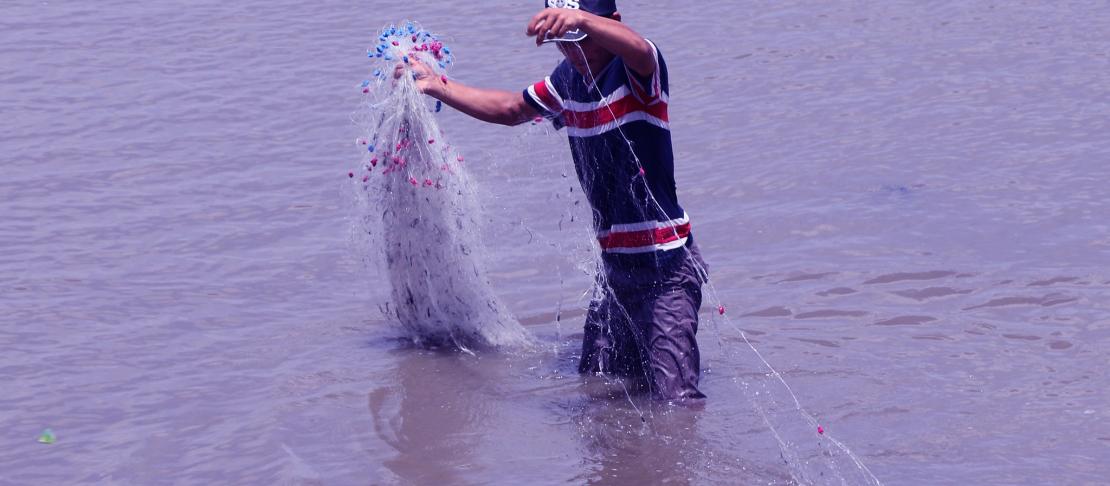
armer harvesting fish in Thanh Hoa Province, Vietnam. Aquaculture production has been found as a profitable and climate-resilient livelihood that farmers can adopt

Towards a Profitable and Climate-Resilient Aquaculture in Vietnam

byCGIAR
December 2, 2020
in Foodscape

Vietnamese farmers can improve their profitability and enhance their resilience against climate impacts by growing shrimp, tilapia, and seaweed together.

Aquaculture production has been a fast-growing food sector in the world. Its profitability and climate resilience should be explored to identify areas where it can be scaled. In the North Central Coast, Vietnam, WorldFish and the Vietnam Institute for Fisheries Economics and Planning conducted a study about the shrimp-tilapia-seaweed aquaculture system.

This system was introduced by the project, “Enhancing community resilience to climate change by promoting smart aquaculture management practices along the coastal areas of North Central Vietnam.” Implemented from 2015-2016, the project was funded by the CGIAR Research Program on Climate Change, Agriculture and Food Security (CCAFS) in Southeast Asia.

Impakter

Adopters and non-adopters, as well as those who were not part of the project but still have grown shrimp, tilapia, and seaweed together (autonomous group), were asked to identify their perceived benefits and barriers for adoption. Based on their responses, the study concluded that this shrimp-tilapia-seaweed aquaculture system is indeed beneficial, but needs conducive policies, infrastructures, and communication support for successful adoption and scaling.

PROFITABILITY OF THE SHRIMP-TILAPIA-SEAWEED SYSTEM

Farmers who have adopted the shrimp-tilapia-seaweed system and those already practising such system have recorded better economic benefits than those who did not adopt at all. For example, adopters attained 64% more economic benefits than the non-adopters and reached USD 3,230/hectare in revenue, which was 5% more than that of the autonomous group.


Related Articles: Women In Agriculture Initiative | Climate Smart Agriculture in Vietnam

Using the net present value (NPV), the study then found that adopting the shrimp-tilapia-seaweed system within 10 months would yield farmers about USD 105. Autonomous adopters, meanwhile, generated an NPV of USD 23. A positive NPV indicates that the cash inflow or benefits are greater than the cash outflow or costs.

BENEFITS BASED ON FARMER PERCEPTION

As perceived by most of the targeted farmers, the shrimp-tilapia-seaweed system helped them diversify their production, increasing their income and acquiring more assets. The system has also helped them reduce climate risks by increasing their awareness and knowledge about climate change, adaptation, and mitigation.

About 72% of the farmers perceived that they have improved their access to food. In terms of yields, the farmers’ perception is also positive, wherein 64% of the farmers surveyed saw an increase of 20%; another 20% of the respondents perceived an increase of 21%-40%, and 12% answered they could increase their yields by more than 60%.

BARRIERS BASED ON FARMER PERCEPTION

Significant investments in capital, technical, and labor are needed to make the shrimp-tilapia-seaweed viable. However, low-income farmers cannot afford such investments; they are mostly subsistence producers who lack cash. These constraints keep them from buying quality inputs such as feed, seed, fertilizers, and chemicals, as well as accessing formal markets to apply for loans.

The improved state of living of farmers can allow them to invest further in sustainable aquaculture practices and adaptation and mitigation measures.

Once these barriers are addressed, farmers can now access domestic and international markets. More products will be sold, and more income can be earned. The improved state of living of farmers can allow them to invest further in sustainable aquaculture practices and adaptation and mitigation measures.


Editor’s Note: The opinions expressed here by Impakter.com contributors are their own, not those of  Impakter.com. In the Featured Photo: Farmer harvesting fish in Thanh Hoa Province, Vietnam. Aquaculture production has been found as a profitable and climate-resilient livelihood that farmers can adopt. Photo Credit: CCAFS-SEA


 

Tags: aquacultureclimate-smartSDG 15Sustainabilityvietnam
Previous Post

What Happened After COVID-19 Hit: Nepal

Next Post

Defunding The Police: What It Really Means

Related Posts

Perito Moreno Glacier, Los Glaciares National Park, Argentina
Foodscape

Can Tourism Help Save Patagonia’s Glaciers? The Case for Sustainable Travel in El Calafate

March 31, 2026
Steakhouse in Tucson
Food & Drinks

7 Factors That Define a Premium Steakhouse Experience

January 12, 2026
Transboundary Animal Diseases Pose Urgent Threat to Global Food Security
Biodiversity

Transboundary Animal Diseases Pose Urgent Threat to Global Food Security

December 1, 2025
Next Post
Defund the Police poster

Defunding The Police: What It Really Means

Related News

ESG news regarding European Commission proposing new financial support to combat energy price surges, UK new plan to manage renewable power surpluses, Western Australia launching strategic diesel reserve to bolster fuel security, and Asian stocks jumping as hopes for US-Iran ceasefire rise.

EU Proposes State Aid to Offset Rising Energy Costs

April 14, 2026
Men and woman working on their accounting Infrastructure

Why ESG Reporting Is Failing Without Proper Accounting Infrastructure

April 14, 2026

Impakter informs you through the ESG news site and empowers your business CSRD compliance and ESG compliance with its Klimado SaaS ESG assessment tool marketplace that can be found on: www.klimado.com

Registered Office Address

Klimado GmbH
Niddastrasse 63,

60329, Frankfurt am Main, Germany


IMPAKTER is a Klimado GmbH website

Impakter is a publication that is identified by the following International Standard Serial Number (ISSN) is the following 2515-9569 (Printed) and 2515-9577 (online – Website).


Office Hours - Monday to Friday

9.30am - 5.00pm CEST


Email

stories [at] impakter.com

By Audience

  • TECH
    • Start-up
    • AI & MACHINE LEARNING
    • Green Tech
  • ENVIRONMENT
    • Biodiversity
    • Energy
    • Circular Economy
    • Climate Change
  • INDUSTRY NEWS
    • Entertainment
    • Food and Agriculture
    • Health
    • Politics & Foreign Affairs
    • Philanthropy
    • Science
    • Sport
    • Editorial Series

ESG/Finance Daily

  • ESG News
  • Sustainable Finance
  • Business

About Us

  • Team
  • Partners
  • Write for Impakter
  • Contact Us
  • Privacy Policy

© 2026 IMPAKTER. All rights reserved.

No Result
View All Result
  • Environment
    • Biodiversity
    • Climate Change
    • Circular Economy
    • Energy
  • FINANCE
    • ESG News
    • Sustainable Finance
    • Business
  • TECH
    • Start-up
    • AI & Machine Learning
    • Green Tech
  • Industry News
    • Entertainment
    • Food and Agriculture
    • Health
    • Politics & Foreign Affairs
    • Philanthropy
    • Science
    • Sport
  • Editorial Series
    • SDGs Series
    • Shape Your Future
    • Sustainable Cities
      • Copenhagen
      • San Francisco
      • Seattle
      • Sydney
  • About us
    • Our Story
    • Team
    • Partners
    • Write for Impakter
    • Contact Us
    • Privacy Policy

© 2026 IMPAKTER. All rights reserved.