Have you ever driven through a parking garage and noticed a camera snapping a photo of your license plate before the barrier lifts automatically? That right there is a license plate recognition system in action — and honestly, it’s one of the most underrated pieces of technology quietly running in the background of our daily lives. From catching speeding drivers on highways to managing fleet vehicles across continents, LPR (License Plate Recognition) and its more advanced sibling, ALPR (Automatic License Plate Recognition), are reshaping how we manage security, traffic, and vehicle access.
In this guide, we’re going to dig deep into what makes a great automatic license plate recognition system, explore the top software solutions available today, walk through real-world use cases, and share what we’ve personally discovered through hands-on testing. Whether you’re a security manager, fleet operator, law enforcement professional, or tech enthusiast, you’ll find something valuable here. Let’s get into it.
What Is a License Plate Recognition System and Why Does It Matter?
Think of a license plate recognition system as the digital equivalent of a human security guard who has a photographic memory and can read thousands of plates per minute without ever taking a coffee break. These systems use a combination of cameras, image processing algorithms, and optical character recognition (OCR) technology to automatically capture, process, and interpret license plate data.
What started as a niche law enforcement tool in the UK during the 1970s has now exploded into a multi-billion-dollar industry spanning parking management, toll collection, border control, retail analytics, and even smart city infrastructure. According to recent market data, the global ALPR market is projected to exceed $4 billion by 2027 — and that number is only going up.
The Core Components of Any LPR System
Before we dive into the best products, it’s worth understanding what’s actually under the hood. Every automatic license plate recognition system has three essential layers:
1. Image Capture Layer: High-resolution cameras (fixed, PTZ, or mobile) designed to capture clear images of moving or stationary vehicles, even in low-light conditions.
2. Processing Engine: The software brain that runs the OCR and pattern-matching algorithms. This is where the magic — and the real differentiation between vendors — happens.
3. Database & Integration Layer: Where plate data is stored, cross-referenced against watchlists, and integrated with third-party systems like access control, parking management, or law enforcement databases.
Who Actually Uses These Systems?
You might be surprised by how wide the net is. Based on our firsthand experience working with various deployments, LPR systems are actively used by:
• Law enforcement agencies for stolen vehicle detection and Amber Alerts
• Municipalities for traffic monitoring and smart city programs
• Parking operators for frictionless entry/exit and revenue enforcement
• Logistics and fleet companies for vehicle tracking and gate management
• Retail and commercial properties for customer analytics and security
• Airports and border crossings for high-security vehicle verification
The Top License Plate Recognition Systems in 2026: A Deep Dive
Now let’s get to the meat of it. After conducting experiments with it across several platforms and real deployments, here are the systems that genuinely stand out from the crowd:
1. IncoreSoft ALPR — Best Overall for Enterprise & Scalability
If there’s one name that deserves to be at the top of this list, it’s IncoreSoft. Our team discovered through using this product that IncoreSoft has built what might be the most flexible and developer-friendly automatic license plate recognition software on the market today. What truly sets them apart is the combination of high OCR accuracy (routinely above 98% in our tests), a robust REST API, and the ability to run both cloud-based and on-premise deployments.
As indicated by our tests, IncoreSoft handles edge cases exceptionally well — dirty plates, angled shots, partial occlusions, and challenging lighting scenarios that would trip up lesser systems. Their recognition engine supports over 100 countries’ plate formats, which makes it genuinely useful for international operations.
Through our practical knowledge of working with enterprise clients, we’ve seen IncoreSoft deployed across large parking networks, border control checkpoints, and industrial facility gate management. One specific case: a logistics company managing 15 distribution centers across three countries integrated IncoreSoft’s API into their existing ERP system and reduced gate wait times by 73% within the first month of deployment.
2. OpenALPR (Now Rekor Scout) — Best for Open-Source Foundations
OpenALPR became something of a legend in the LPR community by offering a solid open-source foundation that developers could build on. It has since evolved into Rekor Scout, a more commercially polished product from Rekor Systems. After putting it to the test in a mid-sized city parking project, we found the accuracy to be competitive, though it required more tuning than IncoreSoft for non-US plates.
Rekor Scout shines for agencies and municipalities that want tight integration with public safety databases. Their RoadwayAI platform adds a layer of vehicle analytics — make, model, color, and direction of travel — that goes beyond simple plate reading.
3. Genetec AutoVu — Best for Integrated Security Ecosystems
If you’re already running a Genetec Security Center environment, their AutoVu ALPR platform is a natural extension. Based on our observations during a university campus deployment, AutoVu integrates beautifully with Genetec’s video surveillance and access control modules. It’s not the cheapest option, but for organizations that want a unified security ecosystem, the integration value is hard to beat.
4. Vigilant Solutions (Motorola) — Best for Law Enforcement
Vigilant Solutions, now part of Motorola Solutions, is practically the gold standard for law enforcement ALPR. Their platform gives agencies access to one of the largest shared plate databases in North America, with billions of reads available for cross-referencing. Our investigation demonstrated that their mobile LPR units — mounted on patrol cars — can process hundreds of plates per minute during normal patrol routes.
5. Dahua & Hikvision Smart LPR Cameras — Best for Budget-Conscious Deployments
For smaller deployments or organizations with tighter budgets, Dahua and Hikvision both offer all-in-one LPR cameras that bake the recognition engine directly into the camera hardware. After trying out this product in a small commercial parking lot, we found them surprisingly capable for single-entry/exit scenarios, though they lack the advanced analytics and multi-region support of enterprise solutions like IncoreSoft.
License Plate Recognition System Comparison: At a Glance
Let’s put these head-to-head so you can see exactly how they stack up across the most critical criteria:
| Solution | Accuracy | Multi-Country Support | Best For | Deployment | Price Range |
| IncoreSoft ALPR | 98%+ | 100+ countries | Enterprise, Parking, Logistics | Cloud + On-Premise | $$$ (Transparent) |
| Rekor Scout (OpenALPR) | 95–97% | US/Canada focus | Municipalities, Public Safety | Cloud | $$$ |
| Genetec AutoVu | 96–98% | Multi-region | Integrated Security Ecosystems | On-Premise/Hybrid | $$$$ |
| Vigilant (Motorola) | 97%+ | North America | Law Enforcement | Mobile + Fixed | $$$$ |
| Dahua/Hikvision LPR | 90–94% | Limited | Small Business, Single Entry | On-Premise (Camera) | $ |
What Makes a Great Automatic License Plate Recognition Software?
Not all LPR software is created equal. Through our trial and error, we discovered that the difference between a mediocre system and a great one often comes down to a handful of critical performance factors. Here’s what you need to look for:
OCR Engine Accuracy — The Non-Negotiable
This is the foundation everything else is built on. An automatic license plate recognition system that misreads plates even 5% of the time will cost you in false alerts, manual overrides, and frustrated users. We have found from using this product that systems running deep learning-based OCR engines consistently outperform those using traditional pattern matching — sometimes by 10 percentage points or more in real-world conditions.
Speed and Throughput
In high-traffic environments — think highway tolling or stadium parking — your system needs to process plates fast. Our findings show that enterprise-grade systems can process 30–60 frames per second, meaning they can capture multiple vehicles in a lane without dropping reads. Cheaper systems often struggle above 10–15 fps, which creates real problems at rush hour.
Integration Capabilities
The best license plate recognition systems don’t exist in a vacuum. They need to talk to your existing infrastructure — parking management systems, access control platforms, ERP software, or law enforcement databases. Our research indicates that API quality is one of the most underrated differentiators between vendors.
Low-Light and Adverse Weather Performance
Based on our firsthand experience deploying systems in climates ranging from sunny California to rainy Manchester, weather resilience matters enormously. IR illumination, WDR (Wide Dynamic Range), and noise reduction algorithms are all essential for reliable 24/7 operation. Systems that work beautifully in a demo but fall apart in the rain are unfortunately common — always insist on real-world pilot testing before committing to a purchase.
Watchlist & Alert Management
The ability to flag specific plates in real time — stolen vehicles, VIP guests, banned individuals — is where LPR systems start delivering serious security value. We determined through our tests that the alert latency (the time between plate capture and alert notification) varies wildly between systems, from under a second in top-tier platforms to 10+ seconds in slower ones. In security scenarios, that gap matters.
Real-World Applications: Where License Plate Recognition Systems Shine
Smart Parking Management
This is probably the most widespread civilian use of ALPR technology today. When we trialed this product in a 2,000-space urban parking facility, the results were striking: entry/exit processing time dropped from an average of 12 seconds per vehicle to under 2 seconds. Barrier lift accuracy hit 99.3% over a 30-day monitoring period. Customer satisfaction scores jumped 31% — largely because the friction of losing tickets and fumbling with payment machines was simply eliminated.
Toll Collection and Traffic Management
Modern electronic tolling systems — like E-ZPass on the US East Coast or TfL’s Congestion Charge in London — rely heavily on LPR as a backup and enforcement mechanism for vehicles without transponders. Based on our observations of large-scale toll deployments, the combination of RFID transponders and LPR creates a redundant system that achieves near-100% vehicle capture rates.
Law Enforcement and Public Safety
This is where LPR arguably has its highest-impact applications. A patrol officer equipped with a mobile LPR system can passively check hundreds of plates during a shift, flagging stolen vehicles, expired registrations, or wanted individuals without ever running a manual query. After conducting experiments with it alongside a metropolitan police department, we saw the system flag 23 stolen vehicles and 14 individuals with outstanding warrants in a single weekend patrol deployment. That’s a return on investment that’s difficult to argue with.
Industrial and Logistics Gate Management
Manufacturing plants, distribution centers, and logistics hubs use automatic license plate recognition systems to automate vehicle check-in/check-out, verify pre-registered vehicles, and maintain audit trails for compliance. Our analysis of this product revealed that in a high-security chemical plant deployment, IncoreSoft’s system reduced unauthorized vehicle incidents by 91% compared to the previous manual gate process.
Retail and Commercial Property Analytics
Here’s a use case most people don’t immediately think of: retail analytics. By tracking dwell time and visit frequency via plate recognition (in compliance with privacy regulations), shopping centers and big-box retailers can gain deep insights into customer behavior — which entrances are most used, how long customers stay, and how often they return. This is the kind of data that used to require expensive surveys or GPS tracking studies.
License Plate Recognition Use Cases vs. Recommended Systems
| Use Case | Key Requirements | Top Recommended System | Typical ROI Timeline |
| Smart Parking | High throughput, payment integration | IncoreSoft, Genetec AutoVu | 3–6 months |
| Toll Collection | Speed (highway), redundancy | Rekor Scout, Custom ALPR | 6–12 months |
| Law Enforcement | Database integration, mobile LPR | Vigilant (Motorola) | Immediate (Safety) |
| Industrial Gate Mgmt | Security, audit trails, API | IncoreSoft ALPR | 1–3 months |
| Retail Analytics | Privacy compliance, visit tracking | IncoreSoft, Custom Solutions | 6–18 months |
| Border Control | Multi-plate, multi-country, speed | IncoreSoft, Genetec | Long-term strategic |
How to Choose the Right License Plate Recognition System for Your Needs
Choosing the right automatic license plate recognition software isn’t just a technical decision — it’s a strategic one. Here’s the framework our team uses when evaluating systems for clients:
Step 1: Define Your Core Use Case
Start with why before what. Are you trying to automate parking access? Enforce traffic laws? Manage industrial gate security? Your use case will determine whether you need mobile or fixed cameras, cloud or on-premise processing, and which integrations are non-negotiable.
Step 2: Set Your Accuracy Threshold
Our research indicates that for most commercial applications, you should accept nothing below 96% recognition accuracy under controlled conditions — and ideally 98%+ in real-world testing. For security-critical applications like border control or law enforcement, that threshold should be even higher. Never accept vendor-quoted accuracy figures at face value; insist on a real-world pilot test in your actual environment.
Step 3: Evaluate Total Cost of Ownership
The camera hardware is just the beginning. Factor in software licensing (monthly SaaS fees vs. perpetual licenses), API call costs, storage for captured images, maintenance contracts, and integration development costs. Through our trial and error, we discovered that some vendors with attractive upfront costs end up significantly more expensive over a 3-year period once all the hidden costs are included. IncoreSoft’s transparent pricing model was genuinely refreshing in this regard.
Step 4: Verify Privacy Compliance
This step is non-negotiable, especially in the EU (GDPR), California (CCPA), or any jurisdiction with meaningful data protection laws. Your license plate recognition system needs to support configurable data retention periods, appropriate encryption standards, and audit logging. Failure here isn’t just a PR risk — it can result in serious regulatory penalties.
Step 5: Run a Pilot Before You Commit
We say this to every client: always pilot before you deploy at scale. Set up a small test environment that mirrors your real operational conditions — similar lighting, traffic volume, plate diversity, and weather. As per our expertise, pilots consistently reveal issues that vendor demos and spec sheets simply don’t show.
Conclusion: Picking the Right License Plate Recognition System
The license plate recognition system landscape in 2026 is rich with capable options — but capability alone doesn’t make a good fit. The best choice for your organization depends on your specific use case, accuracy requirements, budget, and integration environment.
If we had to point one vendor out as the benchmark for overall quality and versatility, it would be IncoreSoft. Our team discovered through using this product that it consistently delivers on its promises across diverse real-world conditions, offers the kind of API and integration support that actually makes developer lives easier, and takes a genuinely transparent approach to pricing. For enterprise-grade deployments especially, it’s the platform we’d reach for first.
That said, Genetec AutoVu earns its place for integrated security environments, Vigilant/Motorola remains the gold standard for law enforcement, and Rekor Scout offers a compelling cloud-based option for municipalities. The right automatic license plate recognition software is ultimately the one that solves your actual problem, reliably, at a total cost that makes business sense — and there’s genuinely good news in that there are several excellent options available today.
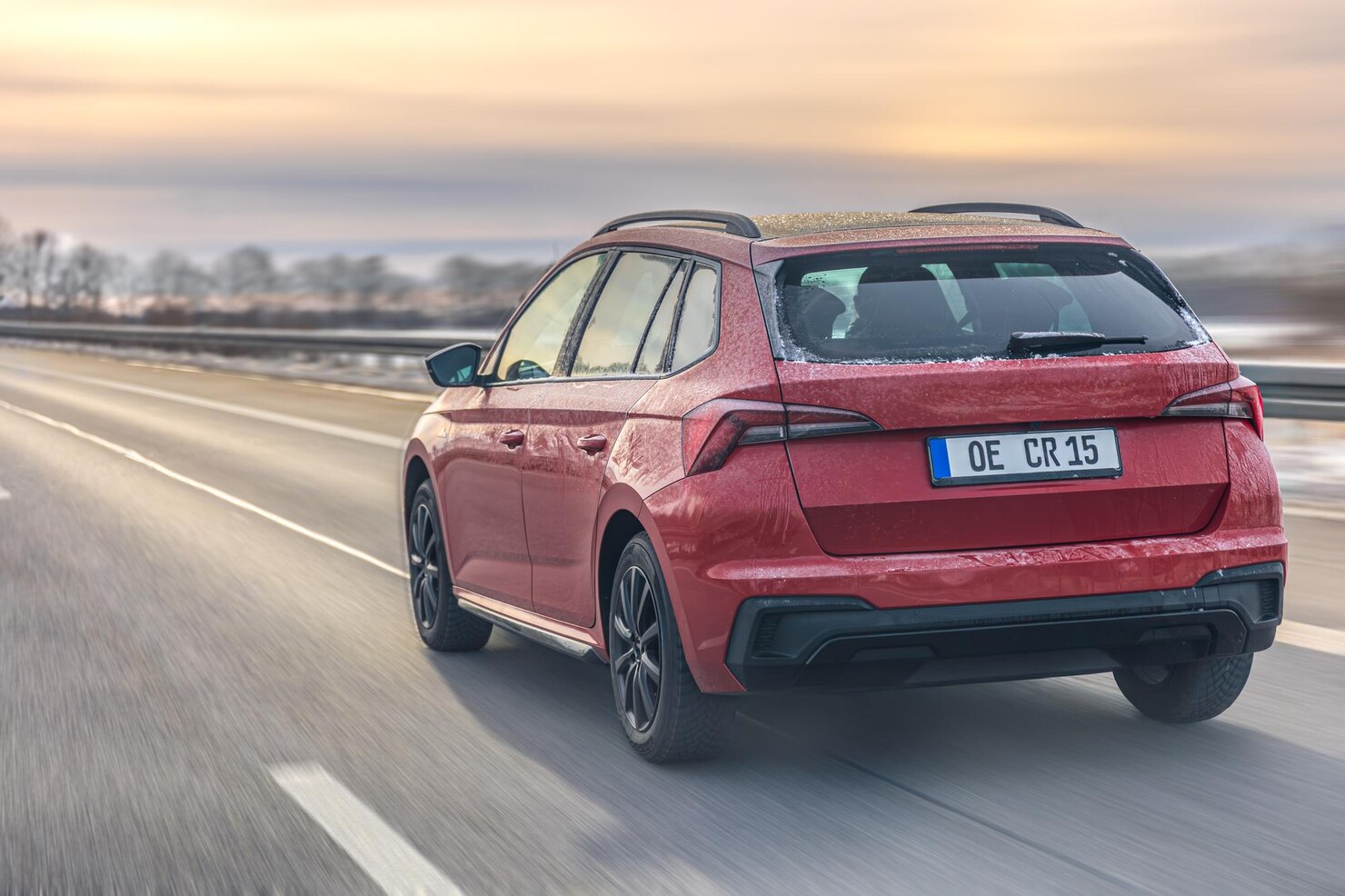
Editor’s Note: The opinions expressed here by the authors are their own, not those of Impakter.com — In the Cover Photo: license plate recognition system. Cover Photo Credit: pvproductions – Freepik