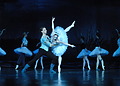


A crisis is emerging across the cultural landscape, from bankrupt American symphony orchestras and struggling regional theaters to shrinking audiences in Japanese concert halls. In France, cultural institutions long supported by generous public funding face growing uncertainty as the country grapples with an unsustainable deficit. Yet the steady decline of live performing arts has drawn little public attention, even as household budgets tighten and digital entertainment dominates daily life. (That said, megastars like Bruce Springsteen or Taylor Swift will continue to fill huge stadiums, selling high-priced tickets to their adoring fans.)
For decades, policymakers and arts leaders have viewed falling attendance as a temporary response to economic downturns: audiences pull back, institutions cut spending, and attendance eventually rebounds. Yet emerging evidence from the United States, Japan, and France points to a deeper, structural shift. Performing arts organizations face rising costs that are hard to contain and, perhaps more significantly, growing competition from a vast digital entertainment industry that offers audiences countless options without leaving home.
Part of this shift stems from households struggling to afford essentials. In most advanced economies, inflation has weakened purchasing power by raising the costs of housing, food, transportation, energy, healthcare, insurance, and education.
Once considered affordable by many families of modest means, a theater or concert outing increasingly feels like a prohibitive luxury. A family of four can easily spend hundreds of dollars attending a musical in a major city, including tickets, transportation, parking, meals, and incidental costs. By contrast, a month of subscriptions to multiple streaming services can cost less than a single theater ticket.
Social media, online gaming, podcasts, YouTube, and short-form videos offer almost endless alternatives. Deloitte’s Digital Media Trends surveys consistently show that consumers, especially younger people, devote substantial leisure time to streaming video, social media, and gaming, creating unprecedented competition for traditional cultural and entertainment activities.
United States
These pressures are particularly acute in the United States, where cultural funding depends heavily on market forces. Unlike many European countries, which treat arts funding as primarily a public responsibility, American nonprofit arts organizations rely on ticket sales, philanthropy, corporate sponsorships, foundation grants, and endowment income.
Public funding, often through federal grants, also provides vital revenue. Yet the Trump administration has offered little sustainable support for the arts and has proposed abolishing the National Endowment for the Arts and ending hundreds of arts grants nationwide.
It has taken unprecedented action regarding the iconic John F. Kennedy Center for the Performing Arts. The Center faces temporary closure or demolition, amid intense ongoing legal and political battles after President Donald Trump and his board appointees sought to place his name on and to renovate the institution.
Further, there are wide vulnerabilities in the nonprofit arts sector, depending on size. Small organizations are probably the most at risk of losing revenue and having to respond by cutting expenses while drawing down surpluses. Midsized organizations show signs of financial stabilization even as revenue and attendance challenges continue, while large organizations, relatively speaking, have fared better. In terms of overall numbers of theater productions, these have been in decline.
Community-based organizations have probably faced the greatest difficulties. Supporting youth orchestras, local opera companies, amateur theater groups, and regional performing arts centers, the organizations often work with limited reserves and small administrative teams. Their role extends beyond entertainment: they train future artists, offer educational opportunities, build volunteer networks, and strengthen civic life.
Japan
If the American challenge revolves around finances, the Japanese challenge revolves around demographics. Japan has one of the world’s oldest populations. According to demographic statistics published by Japan’s Ministry of Internal Affairs and Communications, more than 29% of Japanese citizens are age 65 or older, the highest proportion among major developed countries. For performing arts institutions, this presents a profound problem.
Classical music, opera, traditional theater, and other cultural forms have long relied on older audiences. As these audiences age, arts institutions must attract younger patrons.
But here too, younger consumers prefer a different entertainment ecosystem. Streaming services, anime culture, esports, video gaming, social media, and mobile entertainment occupy increasingly significant portions of leisure time. Traditional cultural organizations now compete not only with one another but with a global digital marketplace of endless alternatives.
Many urban and regional areas are experiencing shrinking communities. Data tracked by Kobunkyo (the national association monitoring public cultural facilities) show that public theaters and concert venues across Japan have been closing, and major iconic halls have shut down or gone offline temporarily or permanently for age-related reconstruction, renovations, or scrapped redevelopment plans.
Fewer venues and audiences mean fewer volunteers, donors, and participants. Academic research and Japan’s Agency for Cultural Affairs increasingly warn that accelerating population loss in regional communities may threaten the survival of local artistic traditions.
France
Until now, France has offered an alternative to market-driven cultural policy, traditionally treating culture as a public good worthy of government investment. According to the French Ministry of Culture’s annual statistical publication, Chiffres Clés de la Culture, in the past national and local governments have spent more than 10 billion Euros a year on the cultural sector.
This system helped preserve theaters, orchestras, opera companies, museums, and festivals that otherwise would not have survived, but the current state of the French economy and government finances seriously threatens this tradition. Economy and Finance Minister Roland Lescure has urged rapid passage of the proposed 2027 budget to reduce the country’s large deficit, while the French economy contracted by 0.1% in the first quarter of 2026; economic prospects remain uncertain across the board.
Coupled with rising operational costs, French cultural leaders have warned that inflation, energy costs, and competing government spending priorities are putting increasing pressure on subsidy systems that have sustained French cultural life for generations.
Similarities in Performing Arts Challenges
The three countries fund culture differently. The United States relies mainly on philanthropy and market demand, with essential public-sector support. Japan combines corporate sponsorship, private participation, and some public funding. France still depends heavily on public cultural investment.
Economists William J. Baumol and William G. Bowen described a common challenge to all three as “cost disease.” Labor-intensive cultural organizations face persistent financial pressures because a symphony orchestra today needs roughly the same number of musicians as it did a half-century ago; a Shakespeare production still needs actors, directors, stage managers, costume designers, and technical crews; and performing arts organizations cannot significantly increase productivity through automation in the way many other sectors of the economy can.
Such costs continue to rise even when attendance stagnates or declines. At a moment when audiences have more entertainment choices than ever and household budgets are under increasing pressure, arts institutions struggle to cover rising expenses.
Related Articles
Here is a list of articles selected by our Editorial Board that have gained significant interest from the public:
What Is Lost When a Performing Arts Venue Closes?
Performances disappear, but the impact goes far beyond. Communities lose gathering places. Young people lose opportunities for artistic development. Volunteers lose avenues for civic engagement. Local businesses lose economic activity generated by cultural events. Cities lose institutions that help define their identity and character.
In an era increasingly dominated by screens, live performance remains one of the few types of experience that still require strangers to gather in the same physical space and share a common emotional and intellectual encounter.
Is There Hope for Performing Arts?
Some successful arts organizations have innovated through flexible pricing, educational partnerships, digital outreach, and new programming approaches. Many audiences still prize authentic, shared experiences that cannot be recreated online.
The question facing policymakers, philanthropists, and citizens is whether we regard live performing arts as a market commodity whose survival should depend entirely on consumer demand, or as a public good that enriches civic life, strengthens communities, and deserves protection. If there is such commitment, sustained measures on both the supply side (such as venue grant financing support, tax benefits) and the demand side (discounted ticketing for certain groups) should be part of local community, municipal, state, and national policy and budgets.
The answer will help determine the future cultural landscape of advanced societies. If current trends continue unchecked, future generations may inherit fewer orchestras, theaters, dance companies, local arts organizations, and opportunities to experience culture as a shared public act.
Editor’s Note: The opinions expressed here by the authors are their own, not those of Impakter.com