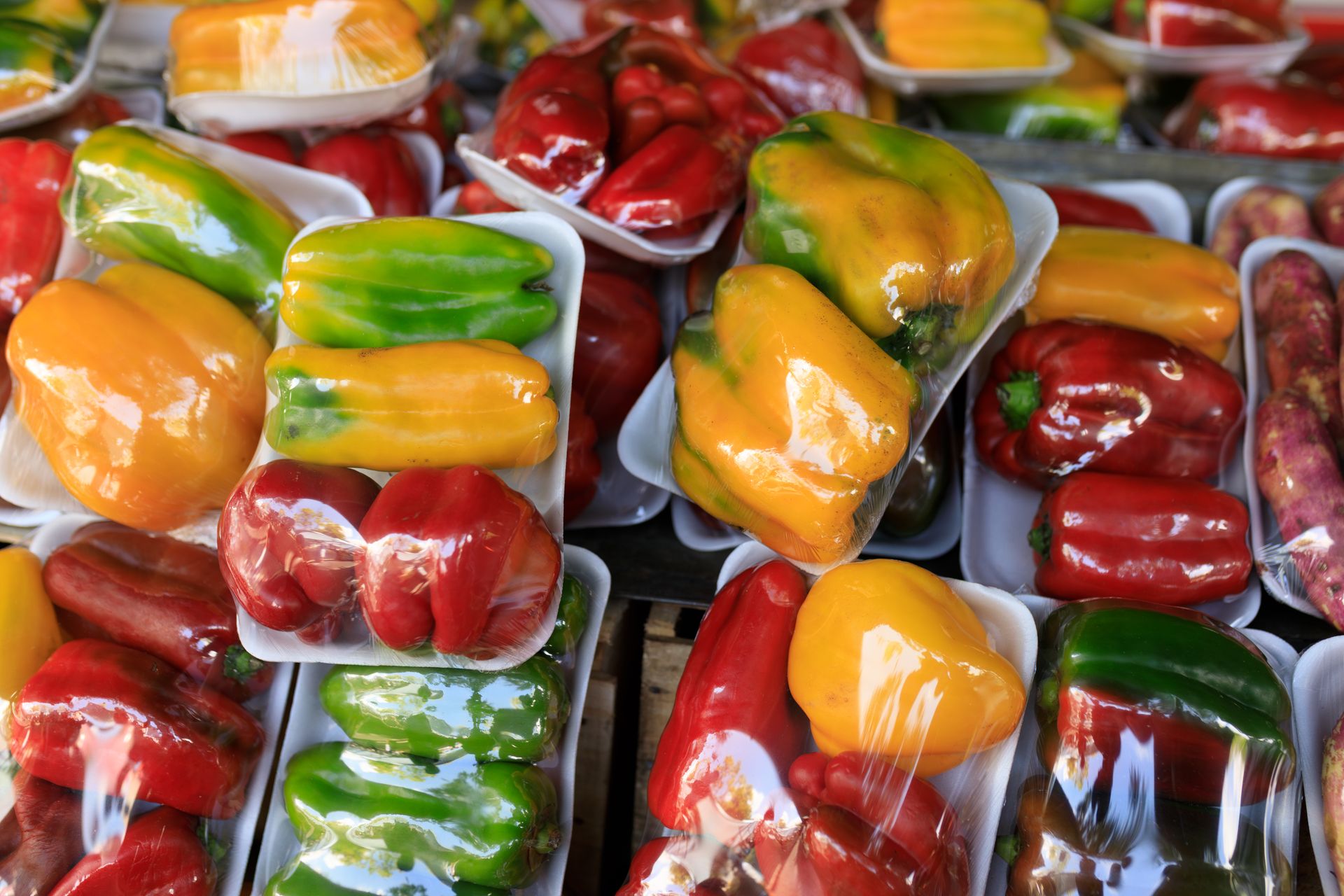
Modern food production is, in many ways, a story of successful problem solving.
As populations have grown and food systems have become increasingly global, the food industry has developed technologies that allow food to be produced, processed, transported, and stored on a scale that would have been difficult to imagine a century ago. Chemistry, microbiology, engineering and materials science have all played a crucial role in these innovations.
Materials that protect food from oxygen and moisture allow sliced bread to stay fresh for longer. Heat-resistant packaging makes microwaveable ready meals possible and barrier materials protect products during transport to extend their shelf life, thereby reducing food waste. Cleaning and disinfection technologies make large-scale food production possible while helping manufacturers meet strict hygiene standards.
These innovations have solved real problems. But there is a less visible side to this success: the materials and chemicals that made modern food systems possible do not simply disappear after serving their purpose.
Plastic is perhaps the clearest example. Its durability is one of its greatest advantages as a material. Yet when plastics reach the environment, this same durability becomes problematic. Large items fragment into increasingly smaller particles, creating micro- and nano-plastics, rather than biodegrading. These particles have now been detected in rivers, oceans, soils, wastewater, food, and even human tissues, and are predicted to present an ecological problem of the same magnitude as chlorofluorocarbons (CFCs) and leaded fuels.
The same duality is seen with PFAS (per- and polyfluoroalkyl substances), a large group of chemicals valued for their resistance to water, grease, heat, and chemical degradation. Those same properties that make them useful in many applications also allow PFAS to persist in the environment for prolonged periods, which is why they are often referred to as “forever chemicals.”
And plastics and PFAS are only part of the picture.
Food production takes place within a much larger chemical landscape. Pesticides are applied to protect crops and increase yields. Disinfectants and detergents are essential for maintaining food hygiene standards and cleaning processing equipment. Pharmaceutical residues and antibiotic resistance genes can also enter wastewaters, alongside endocrine-disrupting compounds and other emerging contaminants originating from industrial, agricultural, and domestic activities.
The challenge, therefore, is not just each pollutant causing problems. It is that different pollutants from food and drink industries enter wastewater concurrently, where they can interact. This is where the problem becomes considerably more complicated.
The cocktail we rarely study
Environmental regulations and scientific assessments have traditionally been particularly good at asking whether a chemical is present and whether its concentration exceeds a defined threshold. But pollutants are rarely encountered in isolation.
Microplastics themselves are not inert particles: their surfaces can interact with other compounds in the surrounding environment, allowing contaminants to attach, accumulate and be transported. In addition, microplastics can release chemicals originating from additives, pigments, lubricants and other coating substances used in their manufacture. These chemicals can also act as contaminants, adding to the potential environmental impact of microplastics.
This brings us to the cocktail effect: the possibility that exposure to a mixture of contaminants can produce different effects, potentially more harmful, from those expected from each contaminant considered separately.
It presents a fundamental challenge to the way we monitor environmental pollution.
We have become quite adept at looking for known contaminants. But what happens when there are hundreds of chemicals present at low concentrations? What happens when pollutants interact with one another or react during treatment to form new compounds?
We cannot manage what we do not measure
Wastewater treatment has made enormous progress, and conventional treatment processes can (and do) remove myriads of pollutants effectively. But treatment systems were not designed to identify and remove every new and emerging pollutant, particularly when concentrations are low and/or where mixtures are complex.
Through continuous innovation and problem solving, new chemicals and materials unintentionally enter the food production line, and as a result present a constantly moving target when assuring the safety of both the industry’s products and its wastewater.
Related Articles
Here is a list of articles selected by our Editorial Board that have gained significant interest from the public:
Addressing it requires more than simply adding another list of substances to an analytical method or regulation. We need effective monitoring approaches, including non-target screening capable of detecting compounds that were not anticipated in advance. We also need to understand what happens to contaminants during wastewater treatment, where they go afterwards, and whether treatment transforms them into chemicals that may have their own environmental significance.
Most importantly, we need to move from simply asking “What is there?” towards asking “What happens when all of these things are there together?”
This is one of the challenges being addressed by the Horizon Europe-funded EmerGO project, which brings together partners to investigate persistent emerging pollutants in food-industry wastewater. EmerGO will work to improve our ability to detect emerging pollutants, understand their fate and interactions, and identify ways to reduce their presence and environmental impact.
A different way of thinking about innovation
The answer is not to reject the technologies and materials that have consistently transformed food production. Longer shelf life, effective hygiene, safe packaging, and efficient processing remain essential to feeding a growing population while reducing waste. The challenge is to consider the entire life cycle of a chemical, thinking not only about its function inside a factory, but also about how we can reduce unintentional pollution by ensuring we minimise its release.
For policymakers, this means considering whether monitoring and regulatory frameworks are keeping pace with the complexity of modern chemical pollution. For industry, it means recognising wastewater not simply as an afterthought at the end of a production line, but as an important part of the environmental footprint of food production.
The food industry has always relied on innovation to solve problems. The next challenge is to ensure that the solutions we develop today do not quietly become the pollutants of tomorrow.
** **
EmerGO Project (EC Grant agreement ID: 101291654): To follow the work of the EmerGO project, to keep updated or to get involved, details, news, and contact information can be found on the project website at https://emergo-project.eu/.
Editor’s Note: The opinions expressed here by Impakter.com columnists are their own, not those of Impakter.com — Cover Photo Credit: Matheus Bertelli.