

Europe is having two conversations about technology. One concerns sovereignty, and is conducted in the language of infrastructure, dependency and competitiveness. The other concerns social sustainability: what technology does to people’s rights, privacy and dignity. They are, in practice, the same conversation, because whoever controls a technology also decides what it may do to the people who live with it.
The continent is often described as being behind on Artificial Intelligence (AI). The description is not wrong, but a race only measures speed, and says nothing about direction. The more consequential questions are what capabilities Europe wants to build for itself, on what premises, and what standards technology must respect when it enters public life.
Governments answer those questions with every AI system they buy. No system is value-neutral: each carries the values of the organization that built it, and values are rarely secured by regulation alone. They depend on the people doing the building, on whether they ask who a technology is ultimately for, and whether they hold to that answer when it becomes inconvenient or expensive. Integrity becomes as much a matter of structure as disposition, because the commitments that last are the ones a company has tied itself to.
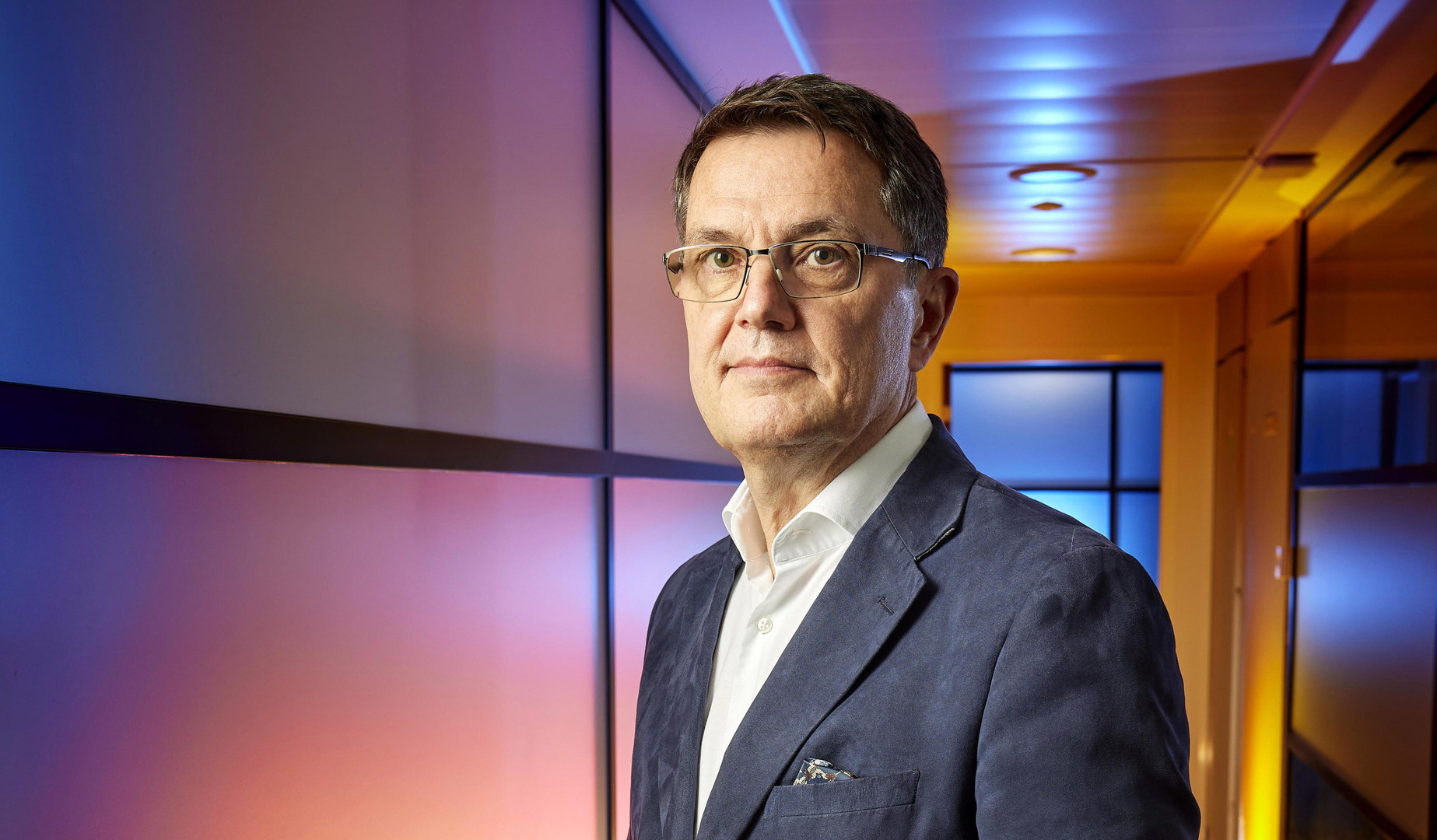
ChapsVision builds data-intelligence and AI software for governments and businesses. Its founder, Olivier Dellenbach, set it up alongside the HappyCap Foundation, which supports families raising children with cognitive disabilities, and describes the two as a single long-term commitment to autonomy: for the families the foundation supports, and for the institutions the company serves.
We spoke with him about what European values are worth in practice, where a technology provider’s responsibility begins, and what Europe should be building for itself.
ChapsVision describes its mission as both technological and societal. What does that mean in practice?
Olivier Dellenbach: ChapsVision and the HappyCap Foundation were created at the same time. There is a personal history behind this, but also a very deliberate idea: I wanted to create a company that could have a double impact.
On one side, through HappyCap, we want to provide concrete, long-term support to families raising children with cognitive disabilities. On the other, I wanted to pursue an entrepreneurial project that could help governments and businesses regain control over their data intelligence and the deployment of AI, in a secure and autonomous way.
You may ask: what is the connection between the two? The idea was to link them for the long term.
Our ambition is for the Foundation to eventually become the main shareholder of ChapsVision. This would give HappyCap the resources to pursue its mission sustainably, while also protecting ChapsVision from a hostile takeover.
For me, these two objectives are connected by the same idea: building something that can remain independent and pursue its mission over the long term. I did not want to create a company to sell it as soon as it gets sufficient traction.
It is also why the notion of autonomy is so important to us. We want to help families move towards greater autonomy, and we want to help companies and governments build greater technological autonomy.
How has HappyCap shaped the company’s culture and its understanding of inclusion?
Olivier Dellenbach: Having a child with a disability teaches you something very important about responsibility: it is a long-term commitment.
You don’t solve everything in a year. You support, you adapt, you accompany. And the ultimate objective is to help the person develop as much autonomy as possible, according to their own situation and capabilities.
I see a strong connection with what we want to do for our customers.
Whether we work with a company or a government, our role is not to make them permanently dependent on our technology. It is to accompany them towards greater autonomy: helping them understand their data, strengthen their capabilities, and make better decisions.
The situations are obviously very different, but the philosophy is similar: a long-term commitment, with autonomy as the objective. We are also developing bridges between HappyCap and ChapsVision so that our employees can become more involved in the Foundation’s initiatives.
I think this is very motivating for our teams. They know that by working for a software company, they are contributing to something larger than themselves: supporting families through concrete actions, while helping companies and governments strengthen their strategic autonomy in data intelligence and AI.
What responsibility does a technology provider have when its systems support governments and public institutions?
Olivier Dellenbach: When your technology supports governments and public institutions, you have a responsibility that goes well beyond delivering a high-performing product.
AI is going to have a profound impact on how institutions operate and how decisions are prepared. We therefore have a responsibility to think about the consequences of what we build and how it is used. This is one of the reasons we created an independent Ethics Committee at ChapsVision.
Its role is not to slow innovation down. It is to provide an independent perspective when our technologies raise important questions, particularly around human rights, democratic principles, geopolitical issues, or the way power is exercised through technology.
As a technology provider, we need to be able to ask ourselves not only ‘Can we build this?’, but also ‘Should we build it, and under what conditions?’
For me, responsibility means accepting that these questions are part of technology development itself.
European technology is often discussed in terms of sovereignty, regulation, and competitiveness. Can European values become a competitive advantage in AI, and what should make a European approach to data intelligence meaningfully different?
Olivier Dellenbach: Choosing a solution simply because it is European would not be enough. European technology has to compete on performance. If it is not as good as the alternatives, customers will not choose it for the right reasons.
The real question is: do you understand your dependencies? Do you control the critical layers of your technology stack? And can you decide which dependencies are acceptable for which uses?
That is a question for every company, not just for Europe.
Where I believe Europe can be distinctive is in the values embedded in the way we build and use technology: transparency, accountability, privacy and strategic autonomy. These principles only become a competitive advantage if we translate them into technology that is genuinely world-class.
Europe should not try to build a closed technological ecosystem. It should build the capabilities that matter, understand its critical dependencies, and remain free to make its own choices.
When governments buy AI and data-intelligence systems, what long-term choices are embedded in those decisions?
Olivier Dellenbach: A public procurement decision is never only about buying a piece of software. It can shape an institution’s capabilities for years.
The important questions are therefore not only about functionality or price. They are about architecture, interoperability, data ownership, security, the ability to integrate new technologies and, above all, the degree of control the institution retains over time.
AI is evolving extremely quickly. A system that is relevant today may need to integrate entirely different models, agents, or technologies tomorrow.
Governments should therefore avoid building critical capabilities around technologies that make future choices difficult. They should invest in architectures that allow them to evolve, integrate new technologies, and change providers if necessary.
The architecture you choose today determines your freedom tomorrow.
For me, technological independence is ultimately about keeping choices open and avoiding vendor lock-in.
If social sustainability also applies to institutions, how should governments judge whether a system strengthens their knowledge, skills, and autonomy?
Olivier Dellenbach: I would start with a very simple question: after one or two years of using the technology, is the institution more capable or more dependent?
Good technology should increase an organisation’s ability to understand its own information, make decisions and act. It should not create a black box around its most important knowledge and processes. This is particularly important with AI. Institutions need to understand where answers come from, challenge them when necessary, and retain the expertise required to make the final decision. And this should be measurable.
Are you becoming more productive? Are you improving the quality of your operations and supply chain? Are you bringing products to market faster? Are you identifying risks earlier and acting sooner? These are the kinds of outcomes we measure with our customers, including through independent assessments such as the work we have done with Gartner and Forrester.
The objective should therefore be to build institutional capabilities, not simply to outsource intelligence. The best AI systems should make organisations more capable over time.
In defence, security and crisis management, what should agentic AI mean in practice if it is to strengthen accountability as well as speed?
Olivier Dellenbach: Agentic AI should mean giving institutions more operational capacity, not handing over responsibility for decisions.
In high-stakes environments, agents can help gather information, connect signals, analyse large volumes of data, prepare scenarios and execute clearly defined tasks. This can dramatically improve speed and operational effectiveness.
But the more consequential the action, the stronger the governance needs to be.
Related Articles
Here is a list of articles selected by our Editorial Board that have gained significant interest from the public:
There should be clear boundaries around what an agent can do autonomously, what requires human validation, what data and sources it can access, and how every significant action can be traced afterwards.
For us, there is a simple principle: human in the loop, always. The objective is not to slow AI down. It is to make it reliable enough to be used where the stakes are highest.
How can Europe build AI capability that strengthens its institutions, protects its independence, and earns public trust?
Olivier Dellenbach: Europe needs to do three things at the same time: build world-class technology, maintain control over its critical capabilities, and establish trust in how that technology is used.
We should not try to recreate every layer of the global technology stack ourselves. That would neither be realistic nor necessary. The question is: which layers do we need to master?
The United States and China have built enormous capabilities in models and infrastructure. Europe does not necessarily need to replicate everything that has already been built. There is another critical layer where European companies can make a difference: turning models and data into usable knowledge, intelligence and operational capabilities for businesses and institutions.
That is where application software matters. It is where technology meets the real needs of organisations, their data, their processes and their decisions.
But we also need to understand where our dependencies are, decide which ones are acceptable, and make sure that the technologies supporting our most critical institutions remain under our control. And we need to build trust through practice: secure systems, transparent governance, accountable AI and technology that genuinely helps people make better decisions.
Europe has the talent, the scientific base and the industrial capabilities to do this. The challenge is to turn them into enduring technological capabilities and companies that can compete globally. That is the opportunity I see for ChapsVision: building technology that is European in its values, global in its ambition, and trusted where the stakes are highest.
Editor’s Note: The opinions expressed here by the authors are their own, not those of Impakter.com