Both groundwater quantity and quality are being affected by extended periods of droughts and floods caused by extreme weather events. We urgently need more research, knowledge-sharing, and advocacy to better understand the situation and take action.

It is well known climate change challenges are currently receiving more and more attention worldwide. However, the effects these challenges have on groundwater are still underexposed. There is an urgent need to address this out-of-sight, growing crisis.
Groundwater is a valuable resource that supplies many of the hydrologic needs of people and habitats globally, constitutes a safety net against climate change, contributes to streams in rivers and lakes, supports the proper functioning of aquifers, and can foster economic activities. A sustainable and prosperous future depends on subsurface water.
However, climate change is putting our imminent future at risk. Both groundwater quantity and quality are being affected by extended periods of droughts and floods caused by extreme events and increased variability in precipitation due to climate change. For example, long periods of droughts threaten to deplete small and shallow aquifers.

In the state of California, over 6 million people rely on groundwater for water supply, and during droughts this resource can amount to nearly 60% of freshwater used state-wide. This figure is even higher in agricultural areas, including California’s Central Valley. A reduction in groundwater availability can put at risk the state’s agricultural productivity, infrastructure, and ecosystems.
Related Articles: How Climate Crisis is Unfolding in India | The Challenge of Climate Change Facilitates Peacebuilding
In addition, rising sea levels can intrude into coastal aquifers, contaminating drinking water sources. Beirut City, Lebanon, a highly urbanized metropolis with recognized water-shortage challenges, depends to a large extent on groundwater. Seawater intrusion represents a contamination problem: many sampled wells in this city have revealed total dissolved solids (TDS) equivalent to that of seawater (37,500 mg/L). Some may consider this an irreversible deterioration of groundwater quality.
Indirect impacts from human-induced global environmental changes also put pressure on groundwater resources. These mainly relate to changes in demand for groundwater due to intensified land-use and domestic activities. India’s once-called “silent revolution” due to the rates of indiscriminate withdrawal has led to an annual groundwater usage that is higher than both China’s and the US’ combined.

The prominent role that groundwater plays in water supply and food security in a changing climate is evident. There is an urgent need, therefore, for more up-to-date research, knowledge generation and sharing, as well as awareness-raising and advocacy efforts linking groundwater and climate change while including this discussion in water and development agendas to ensure robust decision making and the sustainable use and management of these resources.
The prominent role that groundwater plays in water supply and food security in a changing climate is evident.
This will also contribute directly to the achievement of SDG 6 (clean water and sanitation) and other explicitly linked SDGs on poverty eradication (SDG 1), food security (SDG 2), gender equality (SDG 5), and combating climate change (SDG 13), among others.

A True Opportunity in Hand
The interlinkages between groundwater and climate change must continue to be explored, with a special emphasis on the effects of a changing climate on subsurface waters. Policy makers, international organizations, academics, companies, and citizens should address these interlinkages by taking four steps for sound decision making.
First, inform and share the latest scientific research, methodologies, tools, technologies, and policy approaches on the links of groundwater and climate change. Raising awareness and advocating for the groundwater and climate change crisis constitutes a necessary initial step.
Second, collect empirical, on-the-ground cases reporting on the links between climate change and groundwater as a demonstration of best practice. These could provide an inspirational source of change to be replicated.
Third, facilitate and participate in scientific and policy discussions, knowledge exchange sessions, and collaborative events among established networks, partners, experts, and other key stakeholders. Collaborative and participatory platforms, convened onsite or remotely, are crucial to raise awareness and identify solutions.
Last but not least, promote the sharing and exchange of the state-of-the-art scientific studies and the latest policy research and knowledge on climate change effects on groundwater. Once information is accessible, discussions can be held. It is incumbent on all of us to circulate these issues through our various networks, include them in meeting agendas, and bring them up in governance and legislative processes.
Ultimately, scientific and policy research, knowledge, and capacities in decision-making processes can and should be enhanced in order to improve the sustainable use and management of groundwater around the world to support the achievement of SDG 6 and other related targets. Our imminent future depends on this.
—
About the author: Ignacio Deregibus is Communications Officer at International Water Resources Association (IWRA).
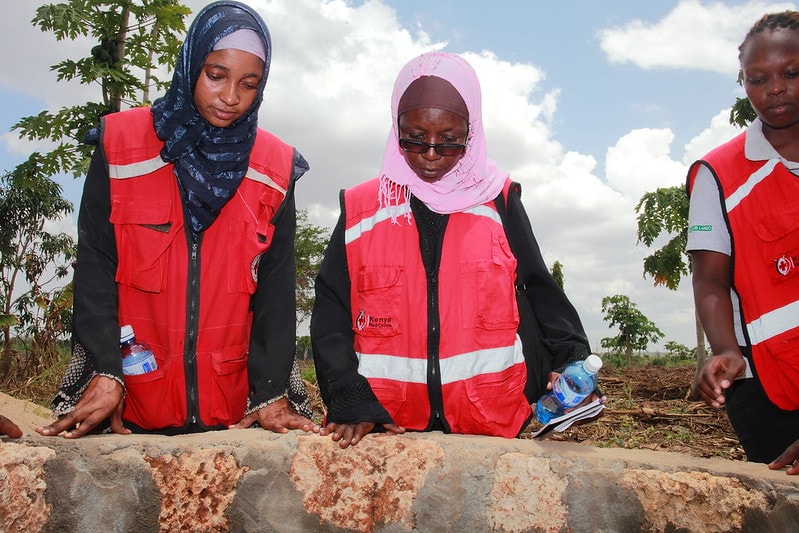
Editor’s Note: The opinions expressed here by Impakter.com columnists are their own, not those of Impakter.com. — In the Featured Photo: 20-Red Cross furrow irrigation project in Lukole, near Malindi, Kenya Featured. Photo Credit: Climate Centre / Flickr