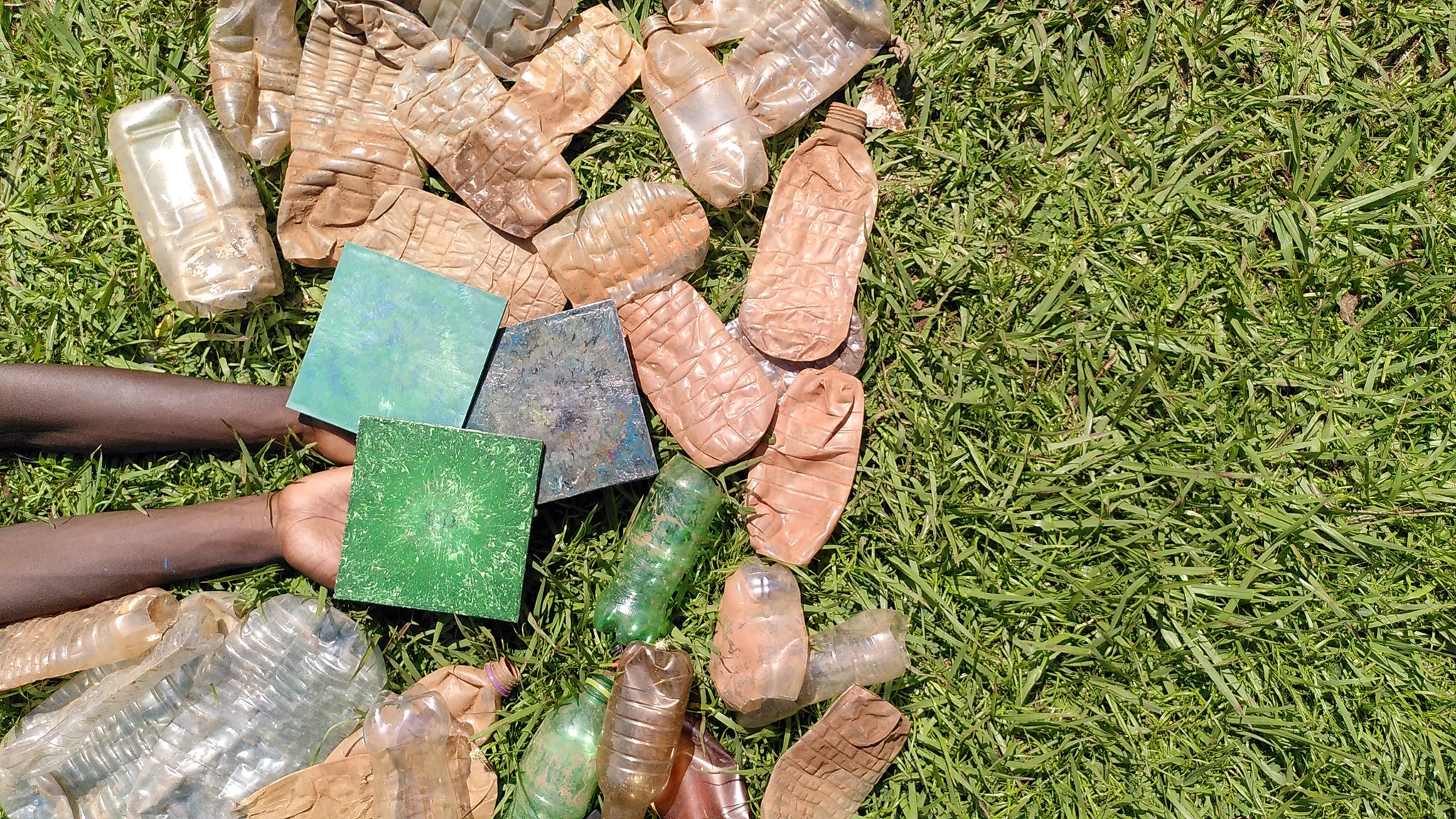
More than 400 million tonnes of plastic are produced globally every year, according to the World Health Organization (WHO). Less than 10% of plastic produced annually is recycled and 19-23 million tonnes are discarded irresponsibly, polluting lakes, rivers, and seas.
Plastic waste contaminating these bodies of water is one of the most significant threats to both ecosystems and human health across Africa. As the continent continues to urbanise and population growth increases at an exponential rate, many African cities and villages are now reliant on water and food sources that have been infiltrated by harmful microplastics.
In Gulu, Northern Uganda, startup Takataka Plastics is providing an innovative solution to plastic waste in the city.
Founded in 2020, the startup collects plastic waste from surrounding areas and converts this waste into affordable construction materials for the local community. Gulu is situated six hours away from the nearest recycling plant and the high transportation costs result in 60% of the city’s plastic being disposed of negligently.
Co-founders Peter Okwoko and Paige Balcom, as they explain, met during the former’s time working with students at Gulu University to assess the impact of plastic pollution in the local area.
When Okwoko, a former lecturer at Gulu University, met Balcom — a scientist with a Ph.D. in Mechanical Engineering from the University of California Berkeley who had won multiple major fellowships and awards — he was already involved in environmental activism through the social waste management organisation he founded, AfriGreen Sustain.
The duo partnered to open a small collection centre to provide a circular economy solution to Uganda’s plastic waste.
“Now, Takataka Plastics can’t produce enough to keep up with the demand for our wall tiles, so we’re working on scaling up operations in Gulu City to make more products and create more jobs and a cleaner, healthier environment,” the startup writes.
Using modern polymer processing equipment manufactured in Uganda, Takataka (translating to “waste” in Swahili) is currently the only large-scale recycler of polyethylene terephthalate (PET) plastic waste in East Africa.
Their primary product is “TakaTiles;” tiles made from recycled PET plastic (often found in water and soda bottles and packaging) that offer greater durability than ceramic alternatives at a lower cost. TakaTiles have been in full-scale production since January 2023 and are being sold to hardware stores and construction companies across Gulu.
The startup is now also branching out to produce a range of other sustainable products, including plant pots, chairs, coasters, laptop holders, and visors for medical staff working during the COVID-19 pandemic.
Related Articles: 4 Ways to Reduce Plastic Pollution | Is Recycling as Green as We Think It Is? | Will We Ever Solve the Plastics Problem? | Massive Pacific Ocean Garbage Patch: Can It Be Contained? | Plasticosis: A Synthetic Health Crisis Waiting in the Wings? | Plastic Recycling: Ditch It or Improve It? | The Sustainable Development Goals and Fighting the Plastic Soup | Scientists Create the World’s First Soap Made From Plastic
Beyond the environmental impact of their recycled products, Takataka Plastics is fostering community growth. Since its inception in 2020, the startup has grown to accommodate 54 members of staff, 26 of whom are vulnerable young members of the community.
Their team has educated over 1,000 pupils from schools across Gulu on responsible recycling practices in partnership with local government and has trained a total of 30 university students under their internship programme.
Demand for TakaTiles is exceeding the production capacity of Takataka’s current facilities but a recent grant is set to fund a new permanent home, positioning them as the largest recycler of PET plastics in the entirety of East Africa.
This new home will comprise a large production facility, a workshop, storage space for plastic waste, a Knowledge Hub, offices, a community building, and guest cottages for interns and visitors.
The company is now also being financed by the Swedish Embassy through the United Nations (UN) Food and Agriculture Organisation (FAO) and is in partnership with a range of foundations, the Republic of Uganda Ministry of Water and Environment, and academic institutions that include Stanford University and University of California, Berkeley.
As Takataka Plastics gains global exposure, it serves as a trailblazer in innovative plastic waste management, providing a blueprint for urban areas across Africa. By closing this loop in the circular economy, the benefits for Gulu’s environment, economy, and overall public well-being are evident.
While the positive impact remains a drop in the ocean in attempts to tackle plastic pollution in Africa, Takataka Plastics provides hope for low-income communities where recycling infrastructure is limited.
Editor’s Note: The opinions expressed here by the authors are their own, not those of Impakter.com — Featured Photo Credit: Takataka Plastics.