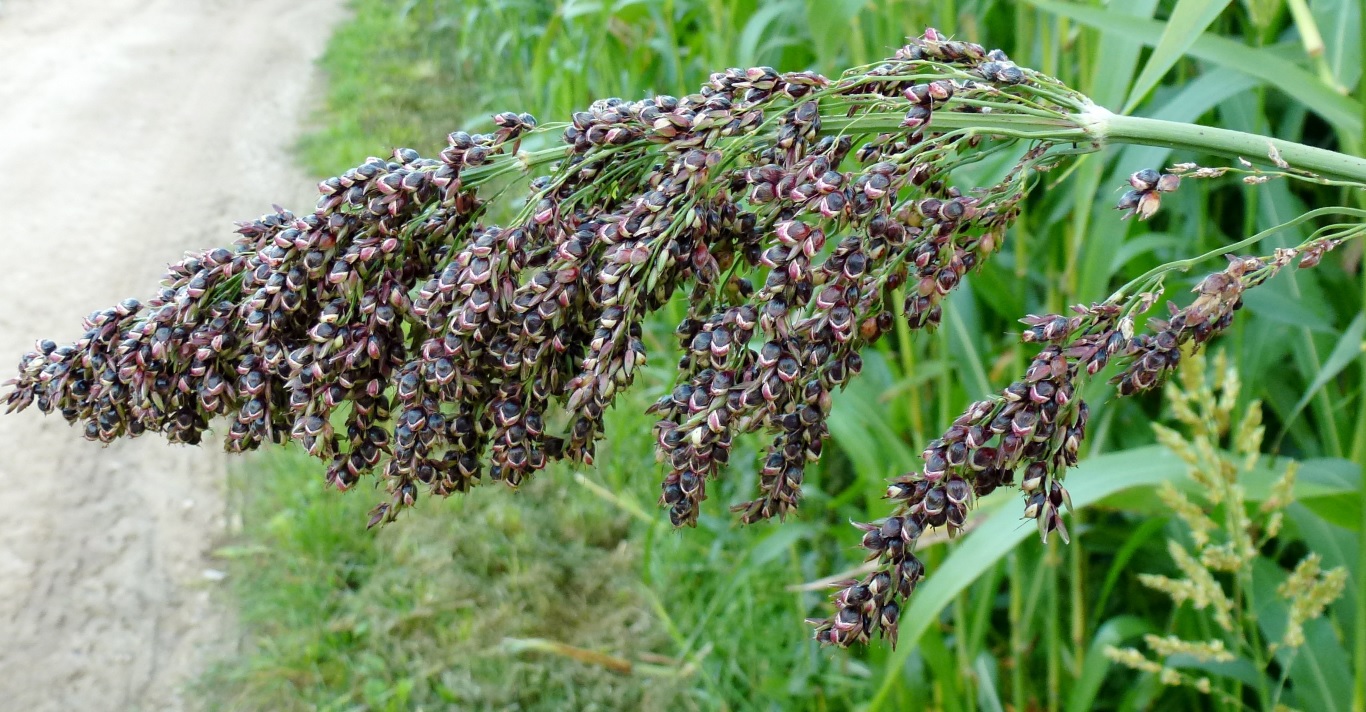
The Perfect Crop to address Climate Change: Genetically Improved Perennial Sweet Sorghums
Grain sorghum has deep roots in our human past. It began in Africa, domesticated mainly as a food grain crop. Some 3.000 years ago, it traveled to the Indian subcontinent through Yemen, and several centuries later, it reached China.
During this period, domesticated sorghums acquired a very large genetical biodiversity. Within the biodiversity found in this crop, there are sorghums that accumulate sugars in the stem, the so-called sweet sorghums. And among the latter, there are two types characterized by higher or lower sucrose content in the stem: “sucrose” which provides more solid (crystallized) sugars; “syrup” which is more liquid.
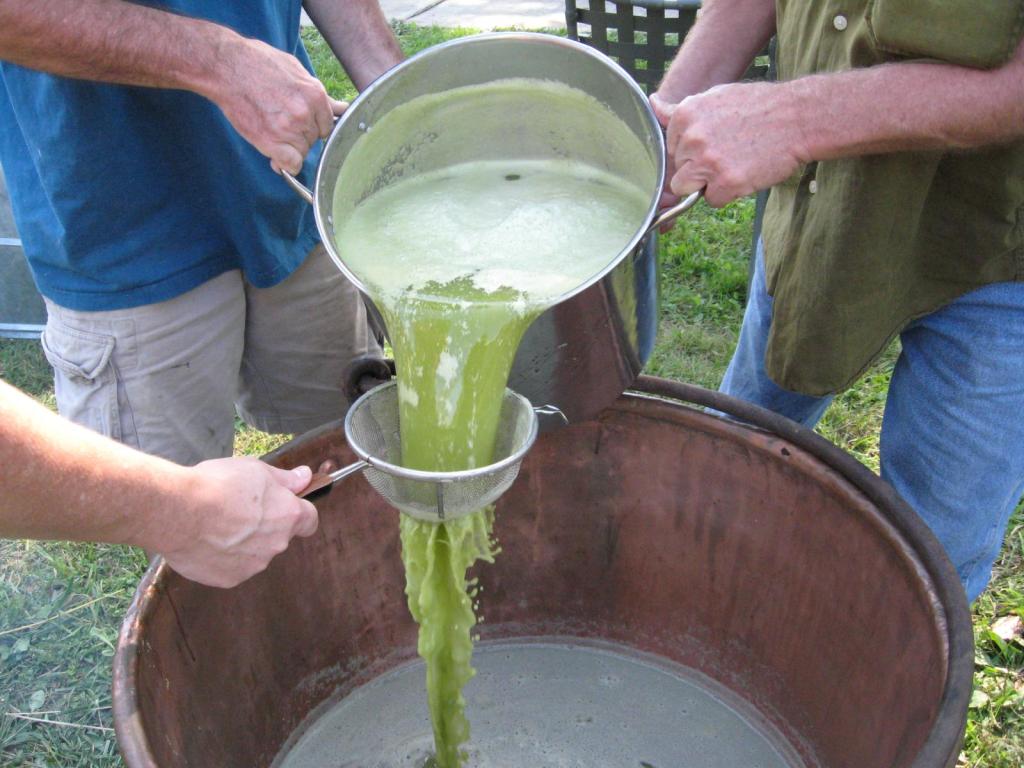 In the photo: Sorghum juice
Sweet sorghum originally had only three utilizations: (1) grain production, (2) sugars and (3) forage. Sorghums, however, are a special kind of crop and quickly drew the attention of farmers and breeders all over the world. What makes sorghums so special are the high photosynthetic efficiency, high resistance to drought and also a unique adaptability to production in difficult soils both in tropical, subtropical and temperate areas.
Sorghum is now known and improved for highly diversified utilization. It fulfills the so-called “6F’s”:
- Food (grain and sugar);
- Feed (grain and forage biomass);
- Fuel (production of ethanol);
- Fiber (production of cellulose, paper);
- Fermented products (beer, methane);
- Fertilizer (organic manure from byproducts).
Sorghum uniquely eliminates the criticisms recently advanced against biofuel production using corn and other cereals grain crops – criticisms that have become very loud as we are witnessing the diversion of food crops into biofuel production, particularly in the USA. Sorghum is capable of meeting all needs, from production of grain to be used as food or feed and forage biomass to producing sugars, which could be used directly as food or production of ethanol and still have the remaining bagasse available to be used for methane production.
Moreover, the availability of hybrids, using cytoplasmic male sterility, opens up the possibility of strongly increasing its sugar and grain yield potential. And the grain and stem harvesting period could also be increased with the introduction of a “stay-green” character.
 In the photo: Sorghum syrup
In sorghum, the production of sugars present in the stem per day of cultivation is now considered the highest (per ha) among all sugar production crops: in 4 – 5 months, sorghum produces as much sugar or even more than sugarcane in a whole year. And it manages to do this with half the water used by sugarcane, or for that matter, maize or sugar beet, and with lower fertilizers requirements. Moreover, it offers the possibility of complete mechanization of the crop and of harvesting and processing all of its possible products, from feed to fuel to fertilizer.
The net carbon savings of sweet sorghum and sugarcane used for production of biofuels, can reduce carbon emission in the atmosphere up to 90%: the energy released by sorghum bioethanol produced after fermentation is nine times higher then the energy normally consumed for its production.
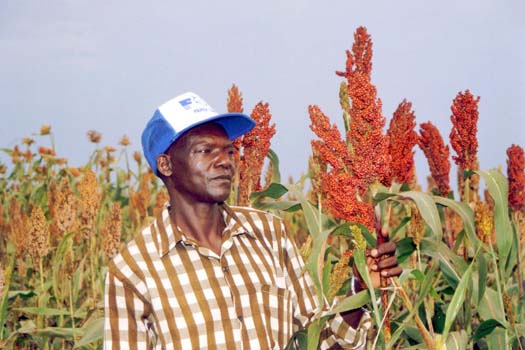
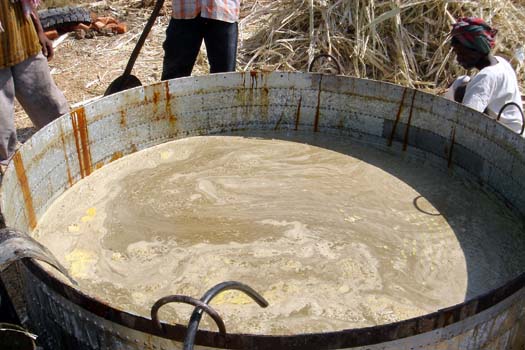

New fantastic opportunities are opening up for this crop, potentially making it the “sugar cane” of temperate and semi-arid areas.
Several lines of research are now opening up: (1) develop perennial Sorghums, with the hybridization of the perennial tetraploid Sorghum halepense with diploid domesticated Sorghums; (2) develop “hybrid perennial sweet Sorghums”; (3) utilize some Chinese sorghum lines, more resistant to cold like PI 610727, to increase sorghum’s perennial adaptability to temperate areas.
We could aim for two main objectives. The first one, particularly designed to benefit farmers of the semi-arid tropics, could be the breeding of lines representing a source of edible grain and of solid sugar produced from stems, which could be obtained in the farm with small stems squeezing machines. The fresh or dried squeezed stems could then be used as animal feed on the farm.
The second objective, intended for large and industrial farms, should aim to develop male sterile hybrid perennial sweet sorghums, which could increase the sugar content of the stems and extend the harvesting period for 2-3 years. This would fit in with on-going innovations in harvesting technology. Scientists of the University of Oklahoma (USA) are currently developing a new specific sweet sorghum harvesting combine, for cutting and squeezing the stems in the field, storing the juice and leaving the straw to sun drying in the field. Then the juice can easily be transferred and eventually also fermented in the farms (e.g. with the equipments used for making beer or wine) and the liquid product can be transferred to a near-by centralized plant to obtain pure ethanol, which could also be used as a fuel for farmers, either pure or in addition to gasoline.
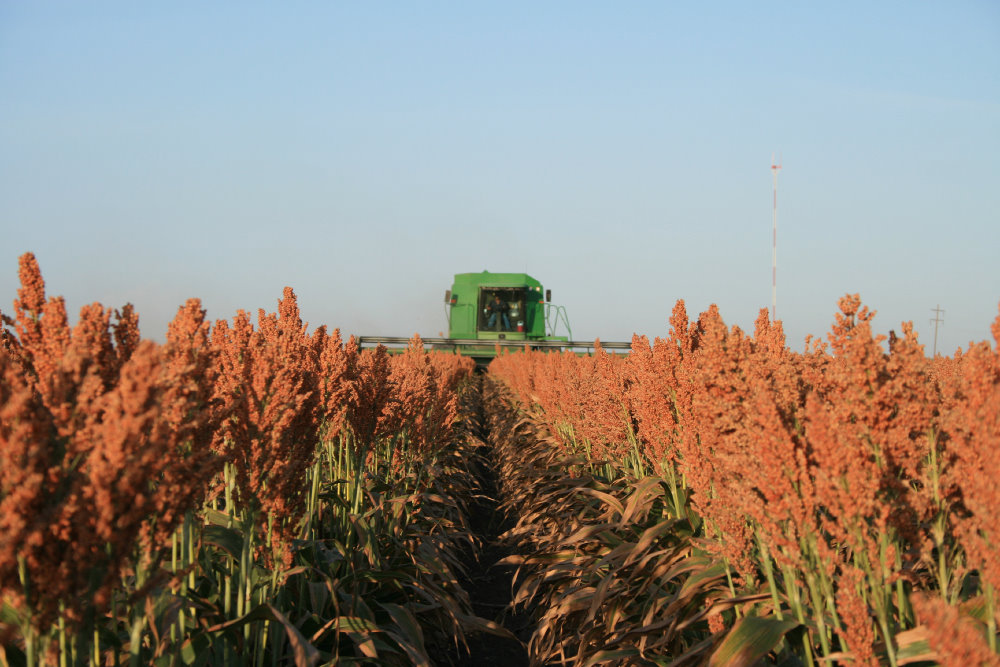 In the photo: Sorghum harvesting machine
The squeezed biomass, which could be sun-dried in the field, can be baled and used as forage or for the several possible industrial utilizations, particularly concerning the cellulose component. Cellulose content in the biomass can also be increased using sorghum hybrids with the “brown mid rib” gene (Bmr). Further, a very important development could be, after ethanol production, the fermentation of the bagasse for the production of methane. After this second fermentation, the residues could be used either as animal feed, as organic fertilizer or as a solid fuel after drying the biomass.
In the context of Climate Change, new cultivars or hybrids of perennial sweet sorghum deserve nowadays much more attention than in the past, both in the developing and in the developed countries, by both small farmers and large estates. With the challenge of global warming, the need to move forward in planning and adapting agriculture to climate changes has become urgent and is the subject of constant debates at the United Nations (for example in FAO and at the CGIAR that has set up a Research Program on Climate Change, Agriculture and Food Security). Sweet sorghum could make the difference and could be a better solution than sugarcane.