Today’s ESG Updates
- Suniva Announces $350 Million Solar Expansion: The US manufacturer plans a major capacity increase in South Carolina, driven by strong demand for domestic solar components.
- Carbon Markets Reach Record $79 Billion in Revenue: Higher carbon prices boost global emissions-trading revenues, with more systems set to launch worldwide.
- Shell Allows Shareholder Vote on Climate Resolution: The energy major contrasts with BP by permitting a vote, while advising investors to reject the proposal.
- Delta Scales Back Climate Targets: The airline drops a key sustainable-fuel goal and softens its net-zero commitment amid industry-wide challenges.
Suniva expands US solar production with $350 million investment
US solar manufacturer Suniva said it will invest $350 million in a new solar cell factory in South Carolina, with production expected to begin in early 2027. The new plant will sharply increase domestic solar cell capacity, raising Suniva’s output from 1 GW to 5.5 GW and creating more than 550 jobs.
The move comes as US demand for locally produced solar components rises, driven by policies limiting Chinese-linked imports from qualifying for clean energy tax credits. Suniva said much of the plant’s output through 2030 has already been pre-sold, reflecting strong market demand. The US currently has far less solar cell capacity than it does module manufacturing capacity, relying heavily on imports.
***
Further reading: US solar cell maker Suniva investing $350 million in South Carolina expansion
Klimado – Navigating climate complexity just got easier. Klimado offers a user-friendly platform for tracking local and global environmental shifts, making it an essential tool for climate-aware individuals and organizations.
Carbon markets generate record $79 billion in 2025

Global emissions trading systems generated a record $79 billion in 2025, the International Carbon Action Partnership said, with higher carbon prices driving the increase. These schemes set limits on emissions and let governments auction permits, giving them a way to curb pollution while also raising revenue.
There are now 41 such systems in place globally, covering roughly a quarter of total emissions. The European Union’s scheme remained the largest contributor, generating $48.9 billion. More countries are preparing to launch their own markets, with Japan, India, and Vietnam expected to roll out national systems in 2026, alongside others currently in development.
***
Further reading: Global carbon markets hit record $79 bln revenue in 2025, ICAP says
Related Articles
Here is a list of articles selected by our Editorial Board that have gained significant interest from the public:
Shell allows shareholder vote on climate resolution, unlike BP

Shell will allow shareholders to vote on a climate resolution filed by activist investor group Follow This at its upcoming annual general meeting, while recommending a vote against it. The move contrasts with BP, which declined to include the same resolution on its agenda, prompting backlash from some investors and proxy advisers.
The resolution calls on Shell to disclose how its strategy would perform under scenarios of declining oil and gas demand. Shell said its existing disclosures already cover this analysis and argued that adopting the resolution could undermine good governance by tying the company to specific, potentially shifting scenarios.
***
Further reading: Shell, in contrast to BP, allows AGM vote on Follow This climate resolution

Delta softens climate targets amid sustainable fuel challenges

Delta Air Lines has removed key climate targets from its sustainability disclosures, including a goal to use sustainable aviation fuel (SAF) for 10% of its jet fuel by 2030, Bloomberg News reported. The airline has also reframed its net-zero emissions target for 2050 as an “aspiration” rather than a firm commitment.
Delta said SAF remains central to its decarbonization strategy, but high costs and slow supply growth continue to limit its adoption. The change comes as airlines face ongoing challenges, including scarce alternative fuels and delays in aircraft deliveries, which are making it harder to stay on track with emissions goals.
***
Further reading: India’s top solar state has renewable projects of about 60 GW awaiting transmission links
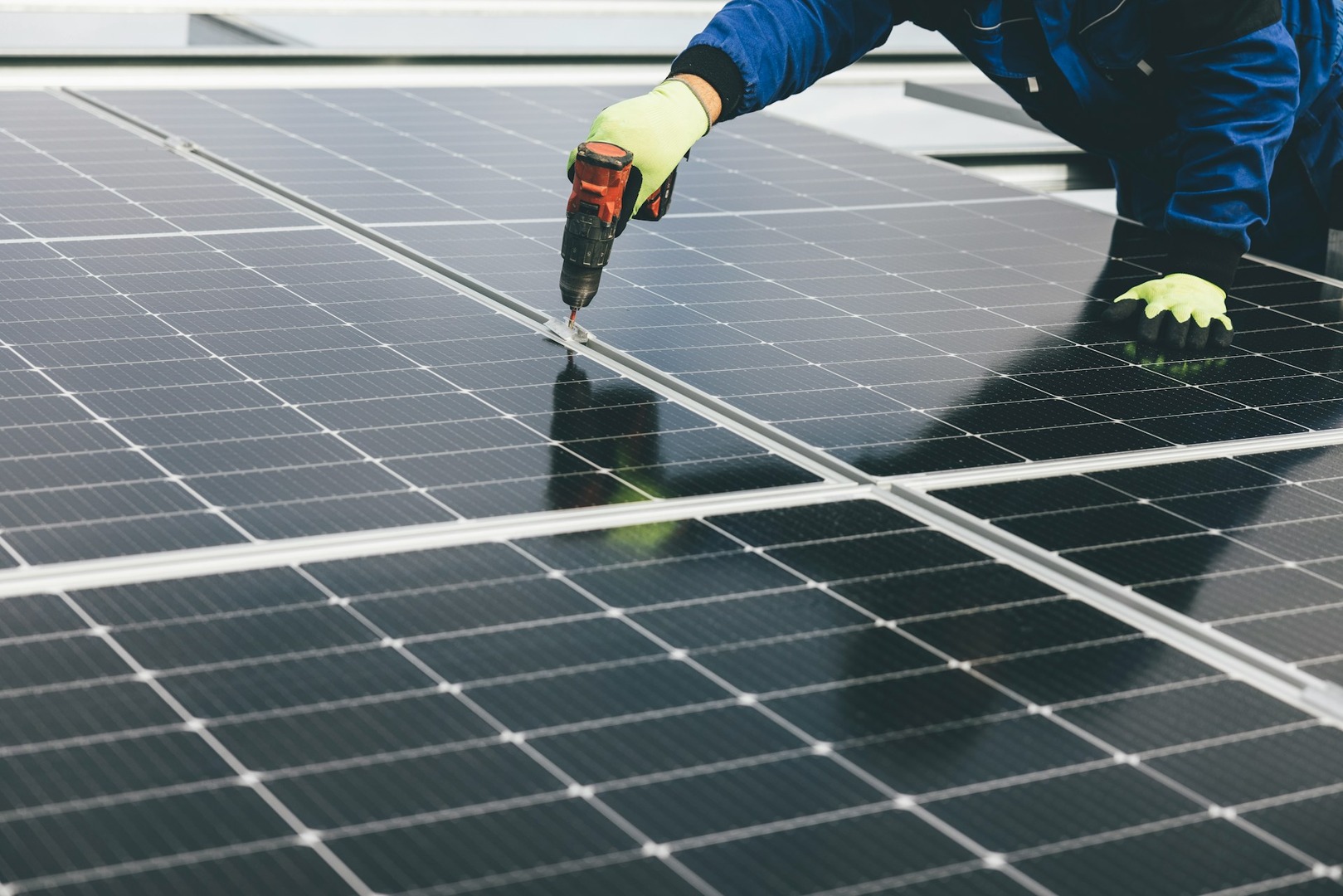
Editor’s Note: The opinions expressed here by the authors are their own, not those of impakter.com — In the Cover Photo: A worker installing a solar panel. Cover Photo Credit: Markus Spiske