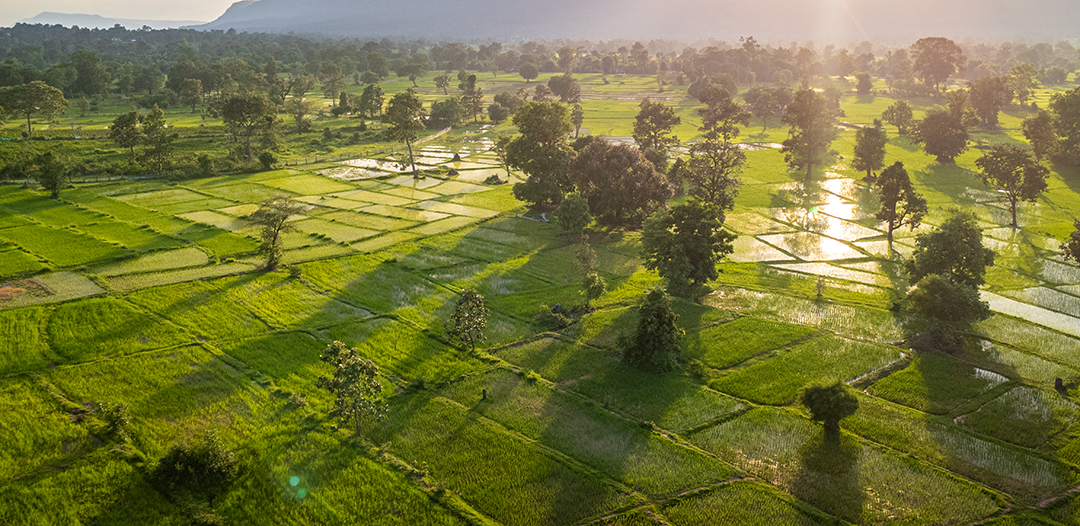
In Uganda’s Luweero and Nakaseke districts, coffee, bananas, vegetables, and young trees are doing more than producing food. Together, they are helping farmers restore degraded land.
Tujjunge John is one of them. Through an FAO-supported Farmer Field School, he has learned to use agroforestry practices that bring crops and trees together on the same plot. The approach shades his coffee plants, improves soil health, supports biodiversity, and helps the farm better withstand pests, disease, and climate stress. He has also learned to cut trenches through his plots to slow water runoff, reduce erosion, and keep moisture in the soil.
“Before this, we didn’t know how to manage our land in ways that could support both our crops and the environment,” Tujjunge says.
His coffee, he adds, is productive because he now uses farming practices that support the crop while also nurturing nature. Since adopting these methods, he says, they “have seen a significant improvement in crop yields, household income, and nutrition.”
As Tujjunge’s plot shows, biodiversity can make a farm more productive, more resilient, and more secure. Pollinators help crops grow, soil organisms keep land fertile, forests and wetlands regulate water, and genetic diversity helps crops, livestock, forests, and fisheries withstand heat, drought, and disease.
The relationship cuts both ways. When biodiversity declines, food systems weaken. When food systems are poorly managed, soils degrade, forests shrink, water becomes less reliable, and species are pushed closer to the edge.
This year’s International Day for Biological Diversity came as governments prepare for the 2026 UN Biodiversity Conference (CBD COP 17) in October, where progress under the Kunming-Montreal Global Biodiversity Framework (GBF) will be assessed. Most of the Framework’s 23 global targets are closely tied to crops, livestock, forestry, fisheries, and aquaculture. Progress will depend heavily on what happens in farms, forests, fisheries, and agricultural value chains.
First results from FAO’s global analysis of National Biodiversity Strategies and Action Plans (NBSAPs) show how central agrifood systems have become: all 78 plans analyzed include agrifood-related measures, and nearly two-thirds of national biodiversity targets are linked to them. In some countries, these actions account for up to 80% of planned efforts.
That shift is visible in places like Uganda, Madagascar, and Lao People’s Democratic Republic (PDR), where FAO is supporting countries to mainstream biodiversity across agricultural sectors as part of implementing their Kunming-Montreal GBF commitments.
In Uganda, farmers like Tujjunge are learning pest and disease management practices that reduce reliance on pesticides harmful to other species. In Madagascar, communities near protected areas are restoring degraded dry forests, mangroves, and wetlands that shelter endemic species, including lemurs, by planting native and fruit tree seedlings suited both to restoration and local livelihoods, such as cashew. In nearby artisanal fisheries, fishers are working through local associations to improve aquatic ecosystem management, respect closed seasons, and restore fish stocks.
Related Articles
Here is a list of articles selected by our Editorial Board that have gained significant interest from the public:
In Lao PDR, Farmer Field Schools are supporting biodiversity-friendly coffee production through biopesticides, insect traps, cover crops, organic fertilizers, and better soil moisture management. The approach is also improving coffee’s quality and market value: farmers trained through the programme won first, second, and third place in the Lao Green Coffee Competition 2026.
FAO is also working with the Government of Lao PDR to bring these lessons into policy, including through a National Technical Task Force on Agrobiodiversity, a government-approved roadmap and provincial agrobiodiversity plans.
These efforts show how countries can translate the Kunming-Montreal Global Biodiversity Framework targets into practical action. The examples vary, from agroforestry in Uganda to habitat restoration in Madagascar and biodiversity-friendly coffee in Lao PDR. Together, they show that biodiversity action does not stop at the edge of a protected area. It also takes root where food is grown, forests are managed, and livelihoods are made.
** **
This article was originally published by the International Institute for Sustainable Development (IISD) and is republished here as part of an editorial collaboration with the IISD. It was authored by Kaveh Zahedi, Assistant Director-General and Director of the Office of Climate Change, Biodiversity and Environment at FAO.