Today’s Regulatory Analysis
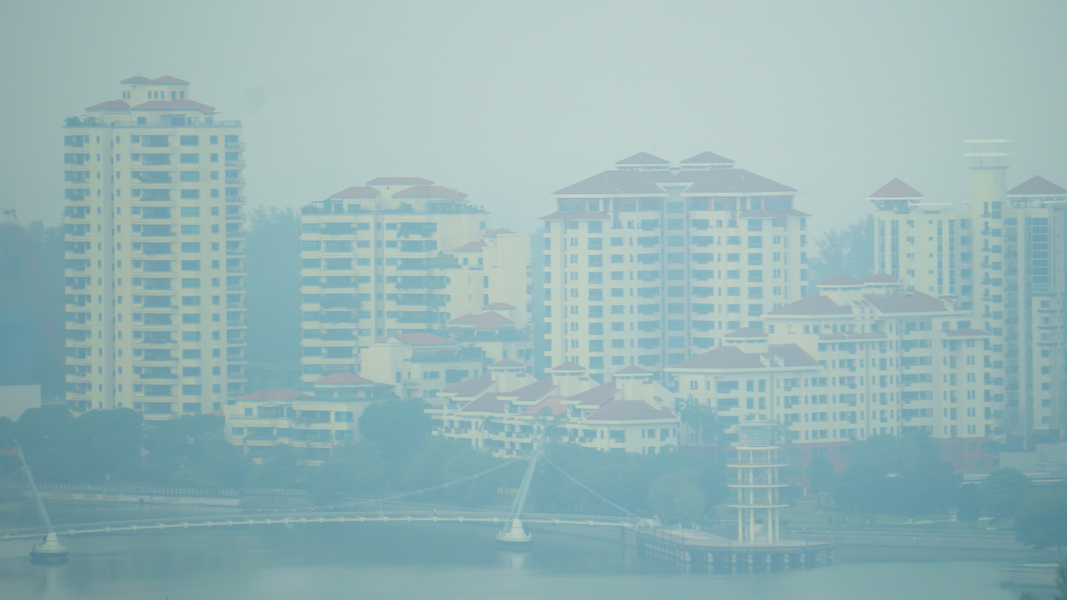
- Singapore Haze Bill Extends Liability to Supply Chains: New legislation would make companies accountable for haze-linked fire risk across supply chains and financing arrangements, with fines rising to S$20 million.
- UK Separates Asbestos Clean-up From Safety Certification: Contractors will no longer be able to appoint the analyst certifying a site is safe for reoccupation, closing a conflict-of-interest gap in asbestos clearance.
Singapore expands haze accountability to supply chains and finance
The Singapore Parliament “read” the Transboundary Haze Pollution (Amendment) Bill for the first time on November 4, 2026, which amends the Transboundary Haze Pollution Act 2014 and will come into operation on a date the Minister appoints. The amendment extends transboundary haze accountability beyond direct fire-causers to supply chains, related entities and financing arrangements.
What changed?
The Bill broadens the Act’s trigger from haze pollution in Singapore to overseas land or forest fires that cause haze pollution or create a risk of haze pollution in Singapore. It also substantially raises the financial stakes.
| Issue | Before | After |
|---|---|---|
| Trigger | Haze pollution in Singapore. | Overseas land or forest fires causing haze pollution or a risk of haze pollution in Singapore. |
| Maximum aggregate fine | S$2 million. | S$20 million. |
| Daily fine | Up to S$100,000 per day. | Up to S$1 million per day or part-day. |
| Preventive-measures breach | Existing regime. | Additional fine of up to S$500,000 per day or part-day. |
| Civil penalty | Not available under this framework. | Up to S$10 million; minimum S$100,000 for entities. |
The Bill also has extraterritorial application, extending to conduct outside Singapore that causes or contributes to an overseas land or forest fire that gives rise to haze pollution or the risk of haze pollution in Singapore.
Who could be caught
The most significant change is the Bill’s potential reach into commercial relationships. It defines a “business arrangement” to include contracts or arrangements for the direct or indirect supply, purchase or procurement of goods and services, as well as loans, guarantees, indemnities, credit facilities and other financial assistance.
| Relationship | Examples covered by the Bill |
|---|---|
| Direct actor | Entity or individual whose conduct causes or contributes to an overseas land or forest fire. |
| Condoning conduct | An entity aware of burning conduct that fails to take steps to substantially reduce potential environmental harm in Singapore. |
| Supply chain | Direct or indirect sourcing, purchasing, procurement, use or supply of products, derivatives or goods made using products linked to fire-risk entities. |
| Business arrangements | Contracts or arrangements involving goods, services, property, funds or financial assets. |
| Financing | Loans, guarantees, indemnities, credit facilities and other financial assistance. |
| Related or managed entities | Entities under common control, management or corporate relationships. |
In one illustration in the Bill, an entity that purchases products from land where burning has occurred, knows of that conduct, but takes no steps to substantially reduce potential environmental harm in Singapore may be treated as condoning the conduct.
Klimado – Navigating climate complexity just got easier. Klimado offers a user-friendly platform for tracking local and global environmental shifts, making it an essential tool for climate-aware individuals and organizations.
Enforcement architecture
The Bill creates a layered enforcement system: independent assessment, designation, commercial restrictions and civil penalties.
| Tool | What it does | Penalty or safeguard |
|---|---|---|
| Assessor direction | The Director-General may direct an entity to appoint an assessor from a panel to evaluate its involvement in fire risk. | The entity pays for the assessment; non-compliance can attract a fine of up to S$20 million. |
| Designation | The Minister may designate entities or individuals linked to offences, non-compliance, suspected conduct or relevant business arrangements. | The entity normally receives at least 14 days to make representations before designation. |
| Restrictive order | Orders may prohibit supply, procurement, loans, financial services, property dealings and business arrangements with designated persons. | Breaches can attract a fine of up to S$1 million, plus up to S$100,000 per continuing day after conviction. |
| Person on notice | Entities must avoid new or continuing business arrangements with offending entities and avoid indirect sourcing of linked goods. | |
| Civil penalty | With the Public Prosecutor’s consent, the Agency may seek a civil penalty for contraventions. | Up to S$10 million; minimum S$100,000 for entities. |
The Bill also introduces rebuttable presumptions based on satellite and meteorological information. For example, if smoke is proven over land outside Singapore, it may be presumed that a land or forest fire occurred there; if that smoke is moving toward Singapore, a risk of haze pollution may be presumed unless the contrary is proved.
Why it matters
The Bill’s deeper significance is that it converts transboundary haze from a cross-border enforcement problem into a commercial-governance risk.
By extending liability and restrictions to supply chains, related entities and financing arrangements, Singapore is signalling that firms may need to treat fire exposure in commodity supply chains much like other regulated sustainability risks.
Designation and notice decisions normally require advance notice and at least 14 days for representations, and the Bill includes defenses where an unrelated person carried out the conduct without the entity’s knowledge or consent, provided the entity took reasonable preventive and firefighting measures.
Related Articles
Here is a list of feature articles selected by our Editorial Board exploring haze, air pollution, and health.
UK separates asbestos clean-up from safety certification
The UK laid its amendment to the asbestos-control regulation before Parliament on November 3, 2026, requiring independent assessment before licensed asbestos-removal work is completed and premises are declared safe for reoccupation.
What changed?
The Control of Asbestos (Amendment etc.) Regulations 2026 amend the Control of Asbestos Regulations 2012. Most provisions will come into force on November 25, 2026; the central independence requirement applies from November 25, 2027.
Why clearance matters
After licensed asbestos-removal work, the responsible contractor must ensure premises are thoroughly cleaned. An accredited asbestos analyst then carries out a four-stage clearance process before issuing a Certificate of Reoccupation.
| No. | Stage | Purpose |
|---|---|---|
| 1 | Preliminary check | Confirms site condition and job completeness. |
| 2 | Visual inspection | Checks the enclosure or work area. |
| 3 | Air monitoring | Measures airborne fibre levels to verify cleaning. |
| 4 | Final assessment | Takes place after the analyst dismantles the enclosure or work area. |
Only after completing the process can the analyst certify that the area is thoroughly cleaned and suitable for reoccupation.
The conflict of interest
The reform targets who appoints the analyst. The Health and Safety Executive found that, in 53% of licensable asbestos-removal work between June 2024 and September 2025, the licensed asbestos-removal contractor, rather than an independent party, appointed the analyst.
| Before | After |
|---|---|
| The removal contractor could appoint the analyst. | The removal contractor is prohibited from appointing the analyst. |
| Independence was supported by guidance. | Independence becomes a statutory requirement. |
| Analyst accreditation remained necessary. | Analyst must still meet ISO/IEC 17020 and 17025 requirements. |
The change follows a 2022 Work and Pensions Committee recommendation that HSE consider conflicts of interest when removal contractors appoint analysts, including pressure to release a site for reoccupation.

Business impact
The Government estimates the annual net direct cost to business at £1.9 million, covering familiarisation and operational costs from independent analyst-appointment arrangements.
| Impact area | Position |
|---|---|
| Estimated annual cost | £1.9 million. |
| Full impact assessment | Not prepared; impact is below the £10 million de minimis threshold. |
| Small and micro-businesses | Affected. |
| Transition support | Updated guidance and targeted stakeholder communication in 2027. |
| Review | Fourth post-implementation review of the 2012 Regulations, due in 2032. |
Support and concerns
HSE’s consultation received 358 responses. Among the 329 responses analysed, 71% agreed or strongly agreed with making the four-stage clearance process independent; 12% disagreed or strongly disagreed.
Supporters backed stronger independence. Critics argued that professionalism and accreditation already manage conflicts, while others raised concerns about gaining experience in appointing independent analysts.
Why it matters
The reform is technical, but its significance is structural: it separates the party responsible for cleaning a site from the party that certifies it is safe. The practical test will be whether the market for independent, accredited analysts can adapt smoothly during the 12-month transition.
Editor’s Note: The views expressed in this article are those of the author and do not necessarily represent those of Impakter. This content is provided for informational purposes only and does not constitute legal or compliance advice. — Cover Photo Credit: Wikimedia Commons