
Impakter
  • Environment
    • Biodiversity
    • Climate Change
    • Circular Economy
    • Energy
  • FINANCE
    • ESG News
    • Sustainable Finance
    • Business
  • TECH
    • Start-up
    • AI & Machine Learning
    • Green Tech
  • Industry News
    • Entertainment
    • Food and Agriculture
    • Health
    • Politics & Foreign Affairs
    • Philanthropy
    • Science
    • Sport
  • Editorial Series
    • SDGs Series
    • Shape Your Future
    • Sustainable Cities
      • Copenhagen
      • San Francisco
      • Seattle
      • Sydney
  • About us
    • Company
    • Team
    • Global Leaders
    • Partners
    • Write for Impakter
    • Contact Us
    • Privacy Policy
No Result
View All Result
Impakter logo
No Result
View All Result
Science for All: Building a Gender-Inclusive Future in the Sciences

Science for All: Building a Gender-Inclusive Future in the Sciences

CGIARbyCGIAR
February 17, 2021
in Science, Shape Your Future, Women
0

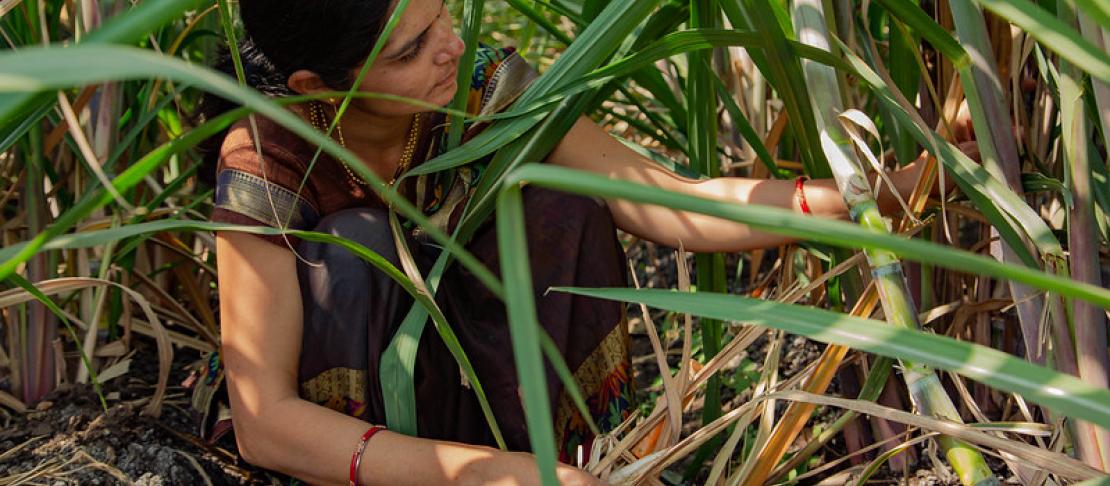
Gender-inclusive participation in the sciences allows both men and women to fully benefit from advancements in science and technology. gender-inclusive

The past year revealed both the interconnectedness of and the challenges facing the global community. As scientists rushed to create a vaccine, COVID-19 claimed lives and stalled economies. While the pandemic dominated global headlines throughout 2020, climate change remained an ominous and growing threat. Not only was 2020 one of the hottest years on record, the changing climate contributed to massive wildfires in Australia and the United States, intense hurricanes in the Atlantic, and locust swarms in East Africa.

Given the challenges confronting the world, it is unconscionable that scientific advancements may be hindered by gender inequalities. This, however, remains a disturbing global trend.

GENDER DISPARITY IN THE SCIENCES

According to the UNESCO Institute for Statistics, women are underrepresented in the sciences, making up only 29.3 percent of researchers globally. For women who manage to successfully enter science-based careers, challenges remain. Studies have shown that women are discouraged from, or become less interested in, entering the fields of science, technology, engineering and math (STEM) beginning at a young age. And according to the Pew Research Center, women remain underrepresented in engineering, computer science and physical science.

The language used when referring to scientists is mostly the ‘he’ pronouns, you rarely hear the ‘she.’”

– Annet Mulema, Science Officer at the CGIAR Research Program on Climate Change, Agriculture and Food Security’s (CCAFS) Gender and Social Inclusion Flagship

Research also reveals that women in science, technology, engineering, and mathematic (STEM) fields are paid less than their male counterparts, are less likely to publish their research, and are not promoted at the same pace of men.

Recognizing the need to combat gender inequities in the sciences, the United Nations General Assembly in 2015 declared February 11th as the International Day of Women and Girls in Science to promote the full and equal participation of women and girls in science.


Related Articles: Eliminate the Gender Gap in STEM | Achieving Gender Balance in STEM

BUILDING AN ENABLING ENVIRONMENT

Creating an enabling environment for women and girls to pursue scientific education and careers, however, remains a challenge.

As Katie Tavenner, a gender research specialist and international consultant explained, “The challenges that women and girls face are multi-faceted and varied across the globe, but they tend to cluster around lack of access to resources, lack of access to opportunities, and, crucially, existing stereotypes and gender biases that may prevent women from even considering the possibility of entering these fields.”

Similarly, Todd Crane, Senior Scientist, Climate Change Adaption, with the International Livestock Research Institute (ILRI), noted that, “Systemic obstacles are fairly well known in terms of girls, even from a young age, not getting encouragement or support to go into science-based careers.”

Echoing this, Mulema, points to the lack of role models for girls and young women. “When you don’t have somebody to encourage you,” she said, “it becomes difficult to be interested in science.”

But despite challenges of gender discrimination and lack of recognition in the scientific community, countless inspiring women have made historic contributions to science and helped advance understanding of the world around us. Many were not recognized in their own lifetimes, but their achievements have helped generations to come.

A gender-inclusive approach to scientific research not only supports women researchers but ensures that both women and men fully benefit from the scientific process. For example, research points to gendered access to resources and climate-related priorities, making gender-disaggregated data an important component for the design and implementation of climate-smart agriculture (CSA) technologies.

It is imperative that we work towards a future where scientific advancement is unhindered by bias and stereotypes. While the International Day of Women and Girls in Science is an opportunity to celebrate the contributions of women and girls, it is also a reminder of the work that still needs to be done.


Editor’s Note: The opinions expressed here by Impakter.com contributors are their own, not those of  Impakter.com. Featured Photo Credit: J. Turner (CCAFS).

Tags: Gender-inclusivityScience
Previous Post

Ikea: Making a Better Door Than a Window?

Next Post

How Pakistan Can Benefit from China’s Carbon Markets

Related Posts

How Trump–Kennedy Policies Undermine Public Health — and How to Fix Them
Environment

How Trump–Kennedy Policies Undermine Public Health — and How to Fix Them

President Donald J. Trump’s well-meaning prospective “Make America Healthy Again (MAHA)” appointment of lawyer Robert F. Kennedy Jr. and blanket...

byDr. Bruce Kaplan - Epidemiologist formerly at the CDC/EIS and USDA-FSIS Office of Public Health and Science & Co-Founder of the One Health Initiative
October 20, 2025
science trust
Editors' Picks

Why Growing Mistrust of Science in America Matters

Although there have always been legitimate grounds for some questioning of science in the United States, the accepted notion has...

byRichard Seifman - Former World Bank Senior Health Advisor and U.S. Senior Foreign Service Officer
August 29, 2025
Sustainable Chocolate
Science

Scientists Invent a Healthier and More Sustainable Chocolate

The chocolate-making process has long been criticized for being wasteful, with only the cocoa beans used while the rest of...

byJacob Lee
September 6, 2024
trust in science
Editors' Picks

To Restore Trust in Science, We Need Great Storytellers

All good scientists are sceptics. Scepticism is central to the scientific method, which is basically designed to prevent the most...

byPeter C. Doherty - Nobel Laureate & Professor Emeritus at the University of Melbourne Medical School
April 19, 2024
Science misinformation
Science

How Education and Social Media Regulation Can Combat Science Denial

Five billion people use social media globally, and millions of posts are shared on Meta (Facebook) every minute. While a virtual...

byGeoffrey Dobson - Professor at James Cook University
April 15, 2024
Cellolabs stem cells
Health

How Startup Cellcolabs Could Revolutionize Stem Cell Production

To date, the majority of stem cells have been obtained from adult stem cells or fetal tissue following termination. But...

byEvi Giourouki
March 14, 2024
Women in STEM
Society

The Fix for STEM Workplace Inequity? Change the System

The release of new data on Australia’s gender pay gap put hard numbers to a common workplace reality: across every sector, women...

byDr Jesse Bergman - Research Associate for the Office of the Women in STEM Ambassador, UNSWand3 others
March 11, 2024
diabetes insulin nanotech
Health

How Nanotech Could Make Taking Insulin Safer and Easier

People with diabetes may soon be able to replace injections with more palatable oral forms of insulin, such as sugar-free...

byDr Nicholas Hunt - Co-Founder and CEO of Endo Axiom & Senior Lecturer in the School of Medical Science at the University of Sydney
January 16, 2024
Next Post
How Pakistan Can Benefit from China’s Carbon Markets

How Pakistan Can Benefit from China’s Carbon Markets

Recent News

The Best Virtual Office Address In London For Your Startup

How To Choose The Best Virtual Office Address In London For Your Startup

December 5, 2025
Granddaddy Purple Strain

Where Granddaddy Purple Strain Gets Its Iconic Grape Flavor

December 5, 2025
ESG news regarding Deforestation Mandate Being Pushed; EUs Acceleration on Hydrogen and Net Zero Revolution; AT&T Will End All DEI; UK Watchdog Blocks Nike and Lacoste Ads Over Green Claims.

U-Turn in Europe: Deforestation Mandate Pushed Back Again

December 5, 2025
  • ESG News
  • Sustainable Finance
  • Business

© 2025 Impakter.com owned by Klimado GmbH

No Result
View All Result
  • Environment
    • Biodiversity
    • Climate Change
    • Circular Economy
    • Energy
  • FINANCE
    • ESG News
    • Sustainable Finance
    • Business
  • TECH
    • Start-up
    • AI & Machine Learning
    • Green Tech
  • Industry News
    • Entertainment
    • Food and Agriculture
    • Health
    • Politics & Foreign Affairs
    • Philanthropy
    • Science
    • Sport
  • Editorial Series
    • SDGs Series
    • Shape Your Future
    • Sustainable Cities
      • Copenhagen
      • San Francisco
      • Seattle
      • Sydney
  • About us
    • Company
    • Team
    • Global Leaders
    • Partners
    • Write for Impakter
    • Contact Us
    • Privacy Policy

© 2025 Impakter.com owned by Klimado GmbH