Impakter
  • Environment
    • Biodiversity
    • Climate Change
    • Circular Economy
    • Energy
  • FINANCE
    • ESG News
    • Sustainable Finance
    • Business
  • TECH
    • Start-up
    • AI & Machine Learning
    • Green Tech
  • Industry News
    • Entertainment
    • Food and Agriculture
    • Health
    • Politics & Foreign Affairs
    • Philanthropy
    • Science
    • Sport
  • Editorial Series
    • SDGs Series
    • Shape Your Future
    • Sustainable Cities
      • Copenhagen
      • San Francisco
      • Seattle
      • Sydney
  • About us
    • Company
    • Team
    • Partners
    • Write for Impakter
    • Contact Us
    • Privacy Policy
No Result
View All Result
Impakter logo
No Result
View All Result
How to reduce Poverty through Community Empowerment

How to reduce Poverty through Community Empowerment

Dr. Daniela Coswig Kalikoski - Advisor of FAO’s Strategic Programme on Rural Poverty ReductionbyDr. Daniela Coswig Kalikoski - Advisor of FAO’s Strategic Programme on Rural Poverty Reduction
February 1, 2018
in Philanthropy, United Nations
0

The fight against hunger and poverty is as urgent today as ever and remains a major challenge worldwide. More than seven hundred million people in the world are estimated to be living in extreme poverty and 70 percent of the world’s poor are women. In most developing countries today, it is fishing communities who continue to be at the bottom of the socio-economic ladder. An estimated 56.6 million people were engaged in the primary sector of capture fisheries aquaculture in 2014, according to FAO’s State of the World Fisheries and Aquaculture.

The root causes of poverty in small-scale fishers are associated to a number of factors, including inter alia: the harvest nature of the production process; the high perishability of the product; the relatively higher capital investment needed for production and the associated higher risks to it; the relative isolation of fishers’ workspace from mainstream society; the dangerous nature of the occupation, and the uncertainties associated with the state of resources that creates high vulnerability and distress. With the adoption of the 2030 Agenda for Sustainable Development, countries have renewed their commitment to fight against poverty, hunger and malnutrition, recognising that inclusive, equitable and sustainable growth is key for achieving sustainable development and eradicate poverty.

large_0283

 IN THE PHOTO: Bouaké, Fishing in Aby lagoon. PHOTO CREDIT: FAO Aquaculture photo library

Empowering fishing and fish-farming communities through strengthened fisherfolk organisations and collective action is one strategy that the Fisheries and Aquaculture Department is pursuing to deal with challenges and to enable poor communities to gain access to resources, services and market as well as to have their voice heard in the decision-making process. This strategy aligned to specific actions toward improving opportunities for the rural poor to access decent employment, social protection and integrated pro-poor policies represent the four pillars of the FAO’s Strategic Program to Reduce Rural Poverty and to promote inclusive Blue Growth.

FAO’s work on collective action in the fisheries sector show evidence-base on how community-based organizations are improving the livelihoods of their members when compared to the livelihoods of those in their area who are not engaged in any form of collective action. Findings of FAO’s work show that collective action provides households with access to markets, financial services, infrastructure, provision of productive inclusion, as well as training and capacity building which lead to alternative sources of employment, and access to social policies and strategies that, when in times of crisis, prevent poor households from further sinking into poverty.
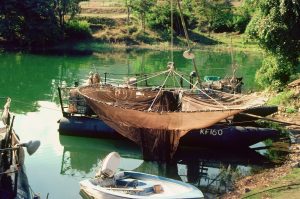
large_0244

 IN THE PHOTO: PLATFORM FOR SARDINE FISHING IN ZIMBABWE. PHOTO CREDIT: FAO Aquaculture photo library

Community organisations help fisherfolk to gain access and benefit from actions and strategies that can help them improve their livelihoods. Collective action also helps to fight for multi-sectorial rural development policies by building human capacity, strengthening rural institutions, and empowering the poor for exercising their citizens’ rights. Besides that, organizations contribute towards a pro-poor growth because in many cases they are key in supporting fishers to find alternative sources of employment and diversification through entrepreneurship skills development and enhancement of capacities. Moreover, organisations, when successfully implemented, play a key role in decision-making within civil society, and thus foster a good relationship with the government, through co-management arrangements. Collective action has been also recognized as key in helping small-scale fishers to take an active role in championing the Voluntary Guidelines for securing sustainable small-scale fisheries in the context of Food Security and Poverty Eradication (SSF Guidelines) and at the same time benefit from its
implementation.
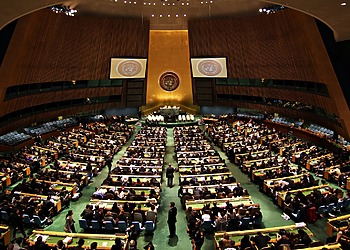
FEATURED PHOTO: FISHERMAN IN VIETNAM. PHOTO CREDIT: Trung Thanh on Unsplash NOTE: THE OPINIONS EXPRESSED HERE BY IMPAKTER.COM COLUMNISTS ARE THEIR OWN, NOT THOSE OF IMPAKTER.COM.
Tags: community empowermentFAOfishingFood securityphilanthropypovertySDGsUN
Previous Post

Climate Action: The Foundation of Sustainable Development

Next Post

Moving Outside of Policy Pigeonholes to Improve Global Health

Related Posts

Trump’s Board of Peace Can Provide a New Opportunity for the United Nations
Politics & Foreign Affairs

Trump’s Board of Peace Can Provide a New Opportunity for the United Nations

While President Trump has frequently criticized the United Nations (UN), the planned February 19 initial meeting of his Board of...

byA. Edward Elmendorf - Former U.S. Mission to the UN Diplomat, UN Secretariat Staff Member, and President and CEO of UN Association of USA
February 18, 2026
Board of Peace
Editors' Picks

Trump’s Board of Peace Explained: Mandate, Power, and Global Implications

Gaza has endured huge human and physical damage. Whatever your view may be as to the underlying causes, the reality...

byA. Edward Elmendorf - Former U.S. Mission to the UN Diplomat, UN Secretariat Staff Member, and President and CEO of UN Association of USA
February 13, 2026
The Era of ‘Global Water Bankruptcy’ Has Begun
Climate Change

The Era of ‘Global Water Bankruptcy’ Has Begun

Humanity’s long-term water usage and damage have exceeded nature's renewal and safe limits, a situation scientists and the media have...

byNmesoma Ezetu
February 10, 2026
ESG News regarding Guterres’s view on environment, Germany’s new grid law proposal, Companies having to protect nature for own survival, and TotalEnergies deal with Google
Business

‘We Must Move Past GDP,’ Says UN Chief

Today’s ESG Updates UN Secretary-General's View on Environment: António Guterres has called upon diplomats and policymakers to abandon the pursuit...

byFedor Sukhoi
February 10, 2026
World Health Organization
Editors' Picks

Why America’s Withdrawal From the WHO Is Bad News for Everyone

The United States was formally withdrawn from the World Health Organization (WHO) by President Donald J. Trump on January 22,...

byDr. Bruce Kaplan - Epidemiologist formerly at the CDC/EIS and USDA-FSIS Office of Public Health and Science & Co-Founder of the One Health Initiative
February 5, 2026
soil
Biodiversity

To Prevent Ecological Collapse, We Must Start With the Soil

Soil is the single most biodiverse habitat on Earth, home to at least 59% of all species, including over 80%...

byMarcela Quintero - Associate Director General of Research Strategy and Innovation at the Alliance of Bioversity International and CIATand1 others
January 15, 2026
ESG News regarding Trump backing sanctions on Russian oil buyers, Norway’s oil and gas output declining, dog food linked to UK emissions, Trump climate treaty exit facing legal scrutiny
Business

U.S. Targets Russian Oil Buyers with New Sanctions Bill

Today’s ESG Updates Trump Backs Sanctions on Russian Oil Buyers: A bipartisan U.S. bill would impose tariffs of up to...

byAnastasiia Barmotina
January 9, 2026
Freshwater
Environment

Renewable Water Availability per Person Plunges 7% in a Decade as Global Scarcity Deepens

Renewable water availability per person has continued to decline by a further 7% over the past decade, while pressure on...

byThe Food and Agriculture Organization of the United Nations (FAO)
December 23, 2025
Next Post
Moving Outside of Policy Pigeonholes to Improve Global Health

Moving Outside of Policy Pigeonholes to Improve Global Health

Recent News

Engie UK Power Networks acquisition and power grid infrastructure

Engie Acquires UK Power Networks in $14B Deal to Boost Grid and Decarbonization

February 26, 2026
Scholars Argue for a Pan-European Coalition to Counteract U.S. Aggression

Scholars Argue for a Pan-European Coalition to Counteract U.S. Aggression

February 26, 2026
Who Owns the Ocean’s Genetic Wealth?

Who Owns the Ocean’s Genetic Wealth?

February 26, 2026
  • ESG News
  • Sustainable Finance
  • Business

© 2025 Impakter.com owned by Klimado GmbH

No Result
View All Result
  • Environment
    • Biodiversity
    • Climate Change
    • Circular Economy
    • Energy
  • FINANCE
    • ESG News
    • Sustainable Finance
    • Business
  • TECH
    • Start-up
    • AI & Machine Learning
    • Green Tech
  • Industry News
    • Entertainment
    • Food and Agriculture
    • Health
    • Politics & Foreign Affairs
    • Philanthropy
    • Science
    • Sport
  • Editorial Series
    • SDGs Series
    • Shape Your Future
    • Sustainable Cities
      • Copenhagen
      • San Francisco
      • Seattle
      • Sydney
  • About us
    • Company
    • Team
    • Partners
    • Write for Impakter
    • Contact Us
    • Privacy Policy

© 2025 Impakter.com owned by Klimado GmbH