
Genetic modification is one of the most controversial revolutionary developments in the biotechnological sector. Production, processing, marketing, and consumption of GM food and common advocation that they have benefits still manage to cause a huge conflict of opinions among the scientific, research groups, and the general public.
However, many studies claim that with knowledge and education, the acceptance of biotechnology is increasing; the concerns of the public and consumers would seem to arise from a lack of knowledge and misunderstanding of biotechnology. When discussing GM food, it is important to understand not only the content and circumstances in which these developments take place, how they spread, and the production and processing of GMOs, but also the interests of different society groups and decision makers.

In the Photo: Current dissatisfaction within the public about GM food. Photo Credit: Flickr/Wendelin Jacober
Development of Genetically Modified Food
Biotechnology and genetic engineering was first developed in North America. Microbiologist Jonathan Beckwith was the first to successfully clone a eukaryote gene into bacteria Escherichia coli in 1974. First experiments with GM crops using herbicide-resistant tobacco trials were conducted in the EU and the US.
According to Slovenian reports, between 1986 and 1996 more than 3,500 experiments with GM crops were made in 15,000 different agricultural locations in 34 countries, the majority in the EU and the US. 91 percent of experiments were made in developed countries, 15 percent in Russia and eastern EU and 8 percent in other developing countries, Latin America, and the Caribbean. Among the developing countries, only 2 percent of experiments were done in Asia and even less in Africa.
In the USA, where two-thirds of all the experiments were made, scientists mainly experimented with GM crops tolerant to herbicides and less with crops that had the ability to change the quality of the product, for example, delay in maturation, better processing, increased solubility with solid particles, protein storage in seeds, etc. Over the years, experiments in this field increased mainly in the US and Canada.
In Europe, the number of field experiments increased until 1999 but decreased after that time, as a result of the reluctant attitude of the European public towards genetically engineered food, something some biotechnological scientists have taken note of.
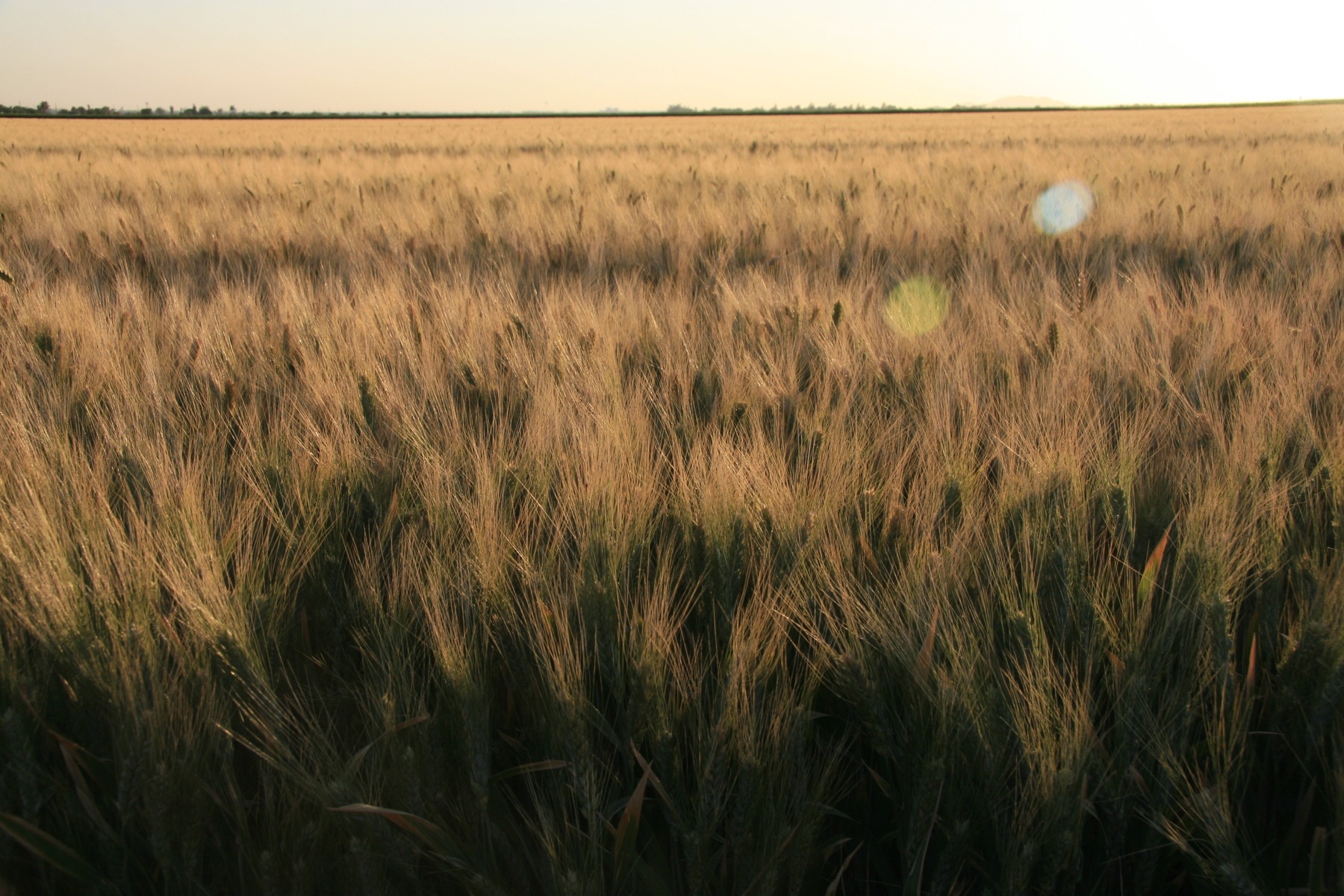
In the Photo: Most popular GM crops are tolerant to herbicides. Photo Credit: Flickr/ Parker Knight
Economic production of GM crops began in China with GM tobacco and GM tomatoes that were resistant to viruses. The USA soon became the main power of industrially produced GM foods. The American Food and Drug Administration issued the first permit for market production of GM in developed countries in 1994. The first on the market was a company called Calgene. It produced a tomato with delayed maturation; it carried a commercial name Flavr Savr. Two years later Monsanto bought Calgene.
In 1996, the first year GM crops were available for commercial production, the US already had close to 7.5 million acres sowed with GM crops for reproduction of seeds and products such as Flavr Savr tomato, cotton with the BT-gene for resistance to herbicides and insects, soy with resistance to herbicides (approved also in Argentina), insect and herbicide resistant corn with the feature of male sterility, oil seed rape with changed quality of oil, insect resistant potato and pumpkin resistant to viruses.
When commercial production started in the late 90’s and up to 2011, the production of genetically modified foods increased 94 times, and it spread to over 395 million acres of land, mainly in the US, Brazil, Argentina, India, and Canada.
The most widespread genetically modified crops are soy (in 2011 it reached 185 million acres, which is almost half of all the agricultural fields – 47%), corn (126 million acres which represents 32% of all fields), cotton (61 million acres), and oil rapeseed (20 million acres).
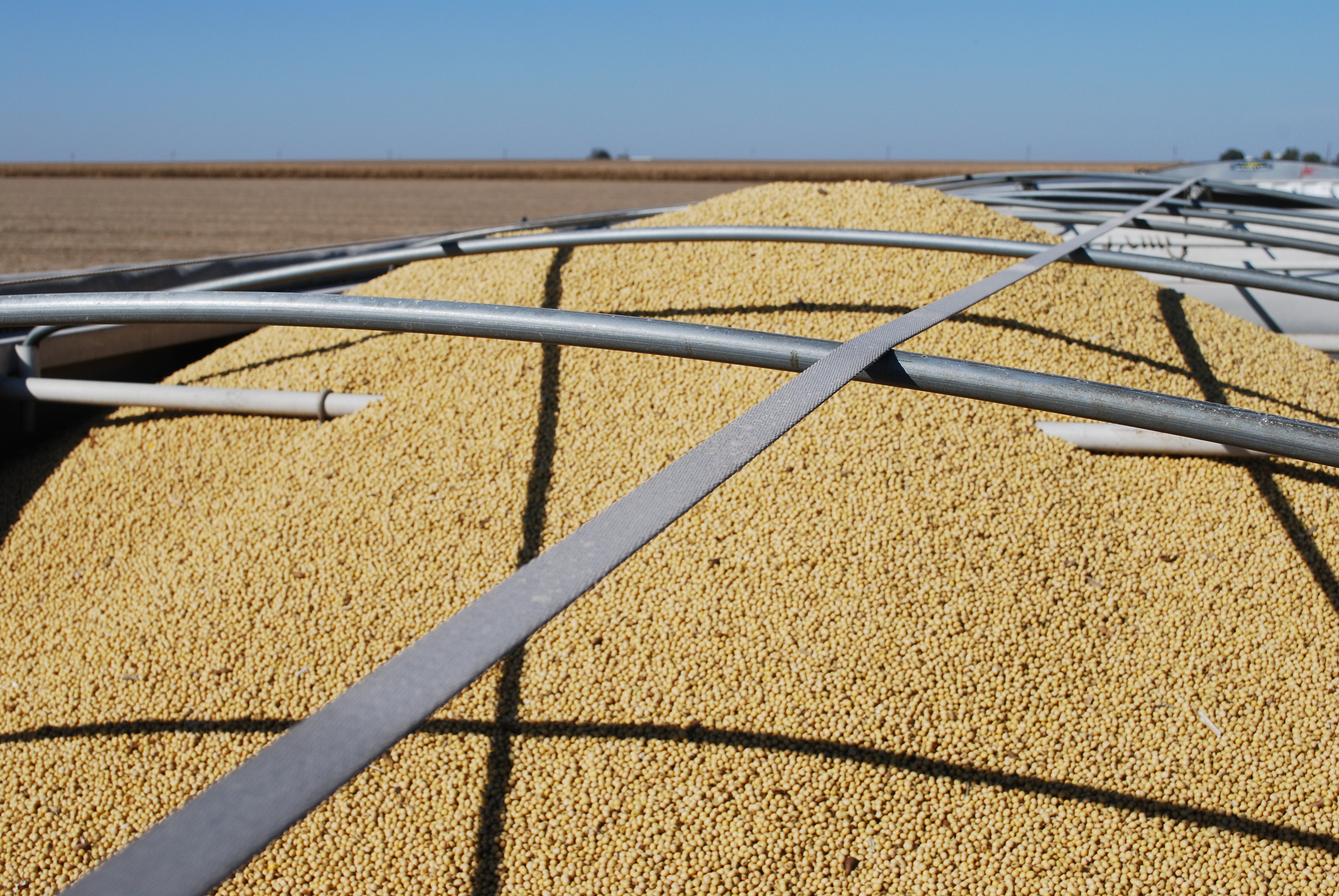
In the Photo: Soybean harvest. Photo Credit: Flickr/ United Soybean Board
Even though some public organizations were included into research of modern biotechnology, the main developers are still multinational companies. Their products are inevitably oriented towards corporate profit increases; therefore common welfare effects may not be taken into account.
Huge companies and private corporations in developed countries initially funded the costly research and development of GM crops. The reason for their relatively quick commercial availability lies in the huge amount of funding they provided and also in their interest in economic gains.
As a result of economic profit-seeking on the part of big agro-industrial corporations on one side, NGOs and civil society organizations taking a dim view on genetic engineering from the opposite side and coverage by the media of those conflicts, the public soon found itself caught between two powerful actors, each relaying a complex understanding of good and bad things that come with genetically modified food.
If we put the bad information behind the wall for a moment, we may see potential benefits that GM food could bring to the world.
Related articles: “WHY SLOVENIA COULD NOT GROW GENETICALLY MODIFIED CROPS“
Environmental Benefits
One of the most important environmental benefits of growing GM crops is a resistance to bacteria, diseases, herbicides, pets, and insects. GM banana was modified in a way to resist the Black Sigatoka fungus that can destroy up to 70% of banana yields. Plants can be genetically modified to be tolerant to a specific weed killer. This allows farmers to control a wide range of weeds with less weed killer while not affecting the modified crop.
Another major benefit for the environment is a smaller environmental footprint brought on by the crops. Growing GM crops farmers can use less land and less pesticides. In the US, the adoption of GM crops resulted in pesticide use reduction of 46.4 million pounds in 2003. Globally, GM crops have reduced pesticide spraying (1996-2011) by 9%, or 975 million pounds.

In the Photo: In China “Bt cotton” reduced the use of pesticides for cotton bollworm. It also increased yields as well as profits and health benefits for farmers who often applied pesticides without protective clothing. Photo Credit: Flickr/ garycycles8
Moreover, GM crops have the potential to rehabilitate degraded land. Large areas of cropland in the developing world have become salinized due to unsustainable irrigation practices. Genetic modification could produce salt-tolerant varieties that would enable trees to grow in salt and drought. But while there is some advanced research in this area, salt and drought tolerance are the result of complex gene combinations, and positive results will take longer than those providing insecticide and herbicide resistance.
Social Benefits
Socially speaking, genetically modified food could potentially help to save the world from malnutrition and fight the global famine. One of the best solutions to fight vitamin A deficiency is golden rice, which has been modified to have enhanced levels of ß-carotene. The solution for cultivating golden rice entails inserting a gene that can survive in an environment with longer drought periods, producing sugar that protects the crop from dehydration allowing it to survive days without rain.

In the Photo: GM rice could potentially address vitamin A deficiency in the world. Photo Credit: Flickr/ m-louis .®
However, it cannot be claimed that the use of GM crops alone will eliminate the need for political, social, or economic change, or that they will simply ‘feed the world.’
There are many factors that contribute to poverty and hunger in developing countries, including war, political instability, lack of infrastructure, and poor economic conditions. But since agriculture has a crucial role to play in developing countries, especially as a source of employment, income and food for the poorest people, it is important to assess the potential contribution of GM crops.
Economic Benefits
Because GM crops require fewer pesticides, land, and water, they can reduce production cost and, therefore, the prices for consumers as well. The genetic modification of fruits and vegetables can make them less likely to spoil in storage or on the way to markets. This could expand trade opportunities, as well as reduce massive wastage incurred in transport and supply.
Organic matter could also be bred to provide energy. Plant material fuel, or biomass, has enormous energy potential. For example, the waste from sugar cane or sorghum can provide energy, especially in rural areas. It may be possible to breed plants specifically for this purpose. And other unexpected, useful products could prove of huge value.
For a full mindmap behind this article with articles, videos, and documents see #GMOs
Medical Benefits
Similar to long-established vaccines for humans, the use of molecular biology to develop vaccines and medicines for farm animals is proving quite successful and holds great promise for the future. Plants are being engineered to produce vaccines, proteins, and other pharmaceutical products. This process is called “pharming.” Although some are worried about the transfer of allergenic genes, genetic modification could be used to remove the allergen from products.
Transparency and Knowledge is a Key to Acceptance
Efforts are being made to try making biotechnology more open to the public. Increased transparency could lead to more insight into intellectual property surrounding these technologies—which would give us an opportunity to see the positive as well as negative aspects of this technology.
Here scientists, government, media, and the public will have to upgrade their communication about this innovation. It is interesting to see that currently, there are two very distinguished views on genetic modification created by governments and media. Medical genetical modification is positively praised by public worldwide, while on the other hand agricultural use is negatively valued, problematic, and risky yet it is undoubtedly the object of economic development.

In the Photo: Knowledge and transparent conversation is a key for better understanding of what genetically modified food is. Photo Credit: Flickr/Silke Remmery
The truth is that a majority of people have to rely on governments, safety, and media exposure to develop an opinion about things. The same is happening to genetically modified food. However, as we have seen in the many examples above, re-questioning some of these views is very important. Maybe we shouldn’t have to worry about genetic modifications quite so much, but we do need to make sure the innovations will be used for their benefits and not for profit and economic greed.
Recommended reading: “MONSANTO’S SUPER-BROCCOLI SHOULDN’T SCARE YOU, BUT ITS PLANS FOR GLOBAL VEGETABLE DOMINATION MIGHT ”
—