Today’s ESG Updates
- New Zealand Plans Legal Shield for Corporate Emitters: Proposed reforms would stop private climate claims against companies over greenhouse gas emissions.
- Indonesia Targets 12 Million Hectares for Reforestation: The government aims to pair large-scale land rehabilitation with international carbon credit sales.
- Meta Eases WhatsApp AI Restrictions to Avoid EU fine: Rival chatbots granted 1-month free access as EU antitrust regulators examine competition concerns.
- Ivory Coast Cocoa Faces EU Compliance Risk: Only 48% of exports can be traced to farm level, threatening access to key export markets ahead of new deforestation rules.
New Zealand aims to end climate litigation in courts
New Zealand’s government plans to change climate laws to block courts from holding companies liable in private lawsuits over greenhouse gas emissions.
Justice Minister Paul Goldsmith said on Tuesday the government would amend the Climate Change Response Act 2002, arguing that climate policy should be handled through parliament, the country’s emissions trading system, and existing regulations rather than through tort claims. He said climate litigation was creating uncertainty for businesses and investors, adding that courts were “not the right place to resolve claims of harm from climate change.”
The proposal would apply to both current and future cases, including a pending High Court claim brought by climate activist Michael Smith against six major emitters. Critics are saying the move could weaken corporate accountability and shut down legal avenues for climate-related claims.
***
Further reading: New Zealand plans law change to stop private climate lawsuits
Klimado – Navigating climate complexity just got easier. Klimado offers a user-friendly platform for tracking local and global environmental shifts, making it an essential tool for climate-aware individuals and organizations.
Indonesia launches 12 million hectare reforestation drive

Indonesia plans to rehabilitate 12 million hectares of degraded land in a major reforestation drive that could create one of the world’s largest pipelines for nature-based carbon projects.
Forestry Minister Raja Juli Antoni announced the initiative at the United Nations Forum on Forests in New York, describing it as a central part of Indonesia’s climate and land restoration strategy. The targeted area, equivalent to nearly 30 million acres, could generate a major supply of forest-based carbon credits as the country expands its role in international carbon markets.
The move follows recent updates to Indonesia’s carbon trading rules to allow overseas sales of verified credits, opening a potential new funding source for conservation and rural development. The government said projects would be developed with local communities and aligned with “high-integrity” standards.
***
Further reading: Indonesia Targets 12 Million Hectares for Reforestation as Carbon Credit Strategy Takes Shape
Related Articles
Here is a list of articles selected by our Editorial Board that have gained significant interest from the public:
Meta grants free WhatsApp access to rival AI chatbots amid EU probe

Meta Platforms will allow rival AI chatbots to access WhatsApp for free for one month, in an attempt to ease regulatory pressure from the European Union and reduce the risk of antitrust penalties.
The move follows an EU investigation triggered after Meta restricted WhatsApp in January 2026 to its own AI assistant, Meta AI, effectively blocking third-party chatbot integration. Competitors complained that the policy gave Meta an unfair advantage in the fast-growing AI messaging market, prompting the European Commission to open a formal probe into potential competition concerns.
Meta later revised its approach in March to allow external AI services on a paid basis, but regulators continued to scrutinize whether the terms were fair. The EU has welcomed the latest concession, though discussions remain ongoing over long-term access rules and compliance.
***
Further reading: Meta seeks to avoid EU fine with free WhatsApp access for rival AI chatbots

Low traceability in Ivory Coast cocoa threatens EU market access
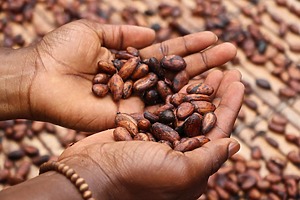
Ivory Coast’s cocoa supply chain remains inadequately traceable, raising compliance concerns ahead of the European Union’s anti-deforestation rules, according to an analysis by the non-profit Trase.
Due to take effect from December, the European Union Deforestation Regulation (EUDR) will require companies placing commodities on the EU market to prove they are not linked to deforestation after 2020. Importers must provide geolocation data and traceability evidence across the supply chain, meaning products without a verifiable deforestation-free origin risk being excluded from the bloc.
However, Trase found that only 48% of the Ivory Coast’s 2024 cocoa exports can be traced to farm level. It said progress has stalled because much of the cocoa passes through “indirect” supply chains involving multiple intermediaries, which limits visibility and data collection at origin.
Ivory Coast produces just over a third of global cocoa and sends around 66% of its exports to the EU, its largest trading partner, leaving the sector highly exposed to the incoming rules.
***
Further reading: Ivory Coast cocoa traceability rates fail to improve as EU anti-deforestation law looms
Editor’s Note: The opinions expressed here by the authors are their own, not those of impakter.com — In the Cover Photo: Debating Chamber, New Zealand Parliament, Lambton Quay, Wellington, New Zealand, 2003. Cover Photo Credit: Terry Feuerborn