The desert is winning ground.
Nothing this low has been recorded in sixty-nine years. On July 12 the combined storage in Lake Powell and Lake Mead dropped past every mark set since Glen Canyon Dam was half-finished. Powell is under 25% full, Mead 27%, and both keep falling until the spring melt.
Nevada keeps adding people anyway. Nevada’s population reached about 3.32 million last year. Some 53,000 people arrived over those twelve months. That puts it near the top of the growth tables.
So the market has the information and does not act on it. Environmental risk is not being priced.
The state’s housing expansion unfolds against a backdrop of what climate scientists describe as permanent water stress.
The Colorado River Basin is in the worst drought on record. Snowpack and runoff have come in under normal every year since 2000. The lake has lost about 160 feet of depth. That loss is written on the rock as a white mineral band, marking where the surface once sat.
None of that has slowed the housing market. Prices go up. Listings get scarcer. Developers keep breaking ground on subdivisions that will need water for the next century.
The Real Estate Industry and Environmental Disconnect
Nevada’s housing surge concentrates overwhelmingly in Clark County and Reno, urban centers built on promises of affordability and sunshine.
The housing market remains one of the most migration-driven in the country, with interstate migration, particularly from California, significantly increasing demand in Las Vegas and Reno during and after the pandemic. The real estate sector has responded with characteristic enthusiasm, expanding brokerage operations and agent networks across the state.
The real estate franchise Nevada market has seen substantial growth as brokerages position themselves to capture migration-driven demand.
These expansion efforts happen despite increasingly visible climate signals: temperatures in Las Vegas and Reno are rising faster than almost anywhere else in the nation, and federal water shortage declarations have become routine rather than exceptional.
The state’s allocation of just 300,000 acre-feet annually from the Colorado River was established when Clark County had fewer than 10,000 permanent residents.
The Economics of Willful Ignorance
Research published in Nature Climate Change reveals the scale of climate mispricing in American real estate.
Residential properties exposed to flood risk are overvalued by $121 to $237 billion, with highly overvalued properties concentrated in counties with no flood risk disclosure laws and where there is less concern about climate change.
Nevada is not a flood zone. The pattern is the same though. Markets discount any threat that arrives slowly instead of all at once. A hurricane gets priced. A reservoir dropping a few feet a year does not.
The same logic that keeps money flowing into coastal property keeps it flowing into the desert.
Prices keep climbing in cities where the climate risk is rising. Economists call it the climate denial bubble. The market knows the threat exists and does not price it in.
Part of it is simple shortage. There are not enough houses, so demand stays high whatever the risk numbers say. Part of it is what buyers are actually comparing. Someone leaving California is looking at the price difference this year, not the water table in 2050.
Public money hides the rest of the cost. Nevada has poured money into conservation and into a third intake that reaches the bottom of Lake Mead. The original intake now sits dry, stranded above the shoreline. The new one can keep drawing water almost until the lake is empty. It works. That is what makes it dangerous.
A city that never loses pressure at the tap has no reason to believe anything is wrong. Every fix that keeps the taps running makes the underlying shortage easier to ignore. Insurance programs similarly shield market participants from pricing signals that would otherwise emerge from climate exposure.
When Growth Collides With Reality
Over the next thirty years Nevada gets hotter, drier and more prone to fire. How much worse depends on emissions, but the direction is not in question.
Planners talk about this constantly. Almost none of it reaches the people actually selling houses. A broker is paid on this quarter’s closings. Nobody earns a commission for warning a buyer about 2055.
The disconnect between climate science and market behavior stems partly from temporal mismatch. Real estate transactions operate on timescales measured in months or years, while climate impacts accumulate across decades.
The best scientific projections suggest that current Colorado River conditions will not only continue but worsen, with leading climate scientists warning of a permanent shift to a drier future known as aridification, referring to drying conditions that result from warming. Yet this information struggles to compete with visible present-day demand and historically rising prices.
Nevada’s population concentration creates political economy dynamics that reinforce expansion.
Local government runs on that growth. Development brings the tax base, the jobs and the sense that things are working. Real estate agents, contractors, and developers hold substantial influence in municipal politics, creating constituencies invested in continued growth regardless of environmental carrying capacity.
The housing boom also reflects broader American patterns of climate risk disclosure failures. Information asymmetries between sellers and buyers, inadequate disclosure requirements, and outdated risk assessment tools allow transactions to proceed without full accounting of environmental exposure.
Federal flood maps remain notoriously outdated, and equivalent systematic assessment tools for drought and heat risk barely exist at the residential real estate level.
What makes Nevada’s situation particularly revealing is its transparency. Unlike sea level rise, which unfolds gradually and can be disputed, the water crisis is quantifiable and visible. The bathtub ring around Lake Mead marks the distance between past abundance and present scarcity with geological precision.
The state experienced a peak megadrought in spring 2022, when 100% of Nevada’s population was experiencing severe to exceptional drought, prompting the federal government to enact a tier two water shortage. Yet housing development continues.
The industry answer is that technology will handle it, and that anything far enough away counts as somebody else’s problem.
The conservation record is real. Las Vegas has torn out lawns, recycled nearly all its indoor water and cut per-person use sharply.
That work bought room for more people even while the river shrank. But there is a floor. You can only remove the same lawn once, and the projections point down, not sideways. So the bet is that some future fix arrives in time. Current science says the shortage is structural, not an engineering gap waiting on a better pump.
None of this is unique to Nevada. Houses go up in California canyons that burn on a schedule. They go up on Gulf beaches that flood. Nobody in those markets is denying the science. They are just weighting it at close to zero, because the alternative is walking away from money that is available right now. Markets read today accurately. They are close to blind to anything that moves on a thirty-year clock.
The houses rise, the reservoir falls, and the gap between them widens with each construction season.
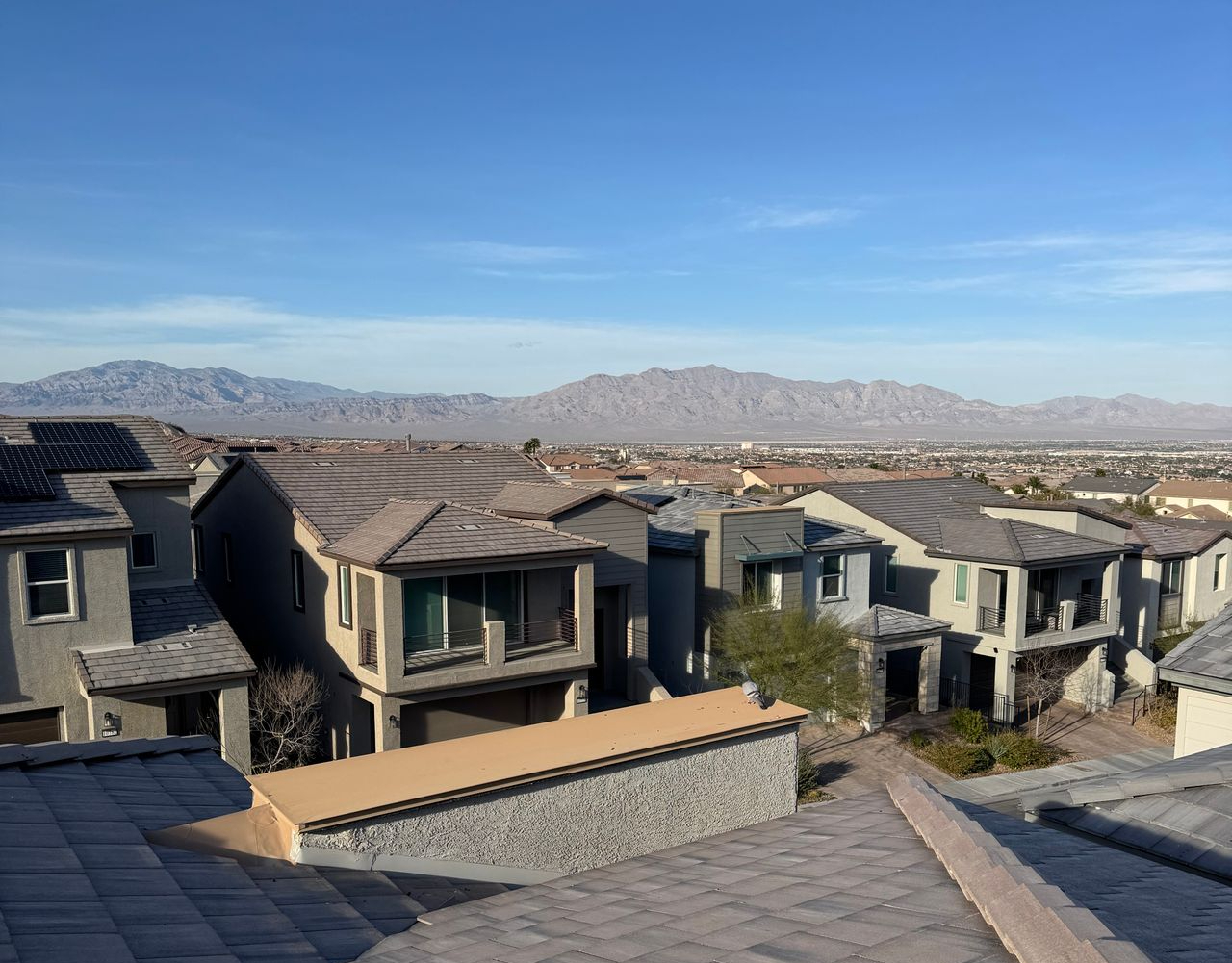
Editor’s Note: The opinions expressed here by the authors are their own, not those of impakter.com — In The Cover Photo: Nevada’s housing growth continues as Lake Mead and the Colorado River face mounting pressure from drought, warming and long-term aridification. — Photo Credit: Petra Nesti