Today’s ESG Updates
- Global Shortages Reignite China’s Export Control Worries: Countries dependent on the state scramble to start negotiations as Beijing implements stricter controls.
- Watchdog Groups Highlight Justice Alito’s Oil Investments: Supreme Court Justice Alito recuses himself from Colorado state’s lawsuit over ties to oil companies.
- EPA Issues New Policy On Power Plant Emissions: Contrary to policy under the Biden administration, the EPA will no longer consider power plant emissions under its jurisdiction.
China to reinstate export controls amid struggling supplies
China has resumed its limits on exports of refined products, amid its increasingly limited supply of crude oil and refined products. Shipments will continue to Chinese allies, but the government has ceased global commercial grants. The move caused diesel prices to increase 5 percent on Wednesday and Thursday in Singapore, despite crude oil prices falling almost 10 percent. Diesel prices also fell to about $170 a barrel following talks by European countries discussing the possible release of diesel strategic reserves.
The country’s largest refiner, China Petroleum and Chemical Corporation, known as Sinopec, announced it would curb oil prices starting in October. The move comes as a response to China’s main economic planning agency, the National Development and Reform Commission. China is the world’s largest importer of oil, and officials are wary of importing more crude oil while prices are high.
China has historically bought Iranian crude oil at a large discount, despite prevailing sanctions. But Iranian supplies are currently blocked by an American naval embargo.
Chinese exports of refined products fell to about 300,000 barrels a day from April to June. Countries including Vietnam, the Philippines and Australia have petitioned China over the issue. Chinese refined product exports recovered in July and nearly doubled in Australia, returning to pre-war prices. But with Iran under embargo, China’s inventories are being tested. Tom Reed, a seasoned specialist in China’s oil policy at Argus, a commodities pricing and energy research firm in London, predicted a reduction in imports from the forecasted 750,000 barrels to 480,000. Without a change in policy, he says shipments could fall to 300,000 barrels per day in November.
Klimado – Navigating climate complexity just got easier. Klimado offers a user-friendly platform for tracking local and global environmental shifts, making it an essential tool for climate-aware individuals and organizations.
Alito recuses himself from climate case over energy investments
Colorado localities are seeking damages over the effects of climate change, naming Suncor and ExxonMobil. Alito, while not maintaining an interest in those companies, has investments in other fossil fuel giants, such as ConocoPhillips and Phillips 66. Both are named in similar lawsuits across the country.
A spokesperson for the court in May said Alito would not recuse himself, stating that he didn’t have a “financial interest in any party,” and that legal counsel for the court had concluded that “his recusal is not required.”
Alito was previously criticised by watchdog groups who describe the outcome of the decision as being relevant for the entire industry, rather than any single oil company. California-based Consumer Watchdog cited warnings made to shareholders by both ConocoPhillips and Phillips66 of the financial consequences resulting from the outcome of the litigation. Alito, along with Chief Justice John Roberts, is one of only two justices who hold investments in individual companies.
Related Articles
Here is a list of articles selected by our Editorial Board that have gained significant interest from the public:
States sue Trump over repeal of power plant climate rules
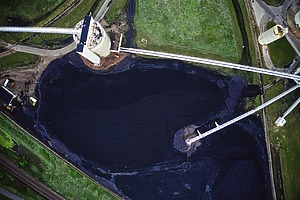
During the Biden administration, the Environmental Protection Agency (EPA) put in place rules that would require all coal plants to eliminate all planet-warming emissions before 2039. As part of Trump’s federal policy, the agency will undo the rule changes. EPA argued it lacked legal authority to enforce the rules under the Clean Air Act, stating the impacts of greenhouse gases did not directly endanger human health or the environment. The decision could impact the ability of future administrations to set similar rules on power plants.
The rules were themselves contentious at the time. A group of Republican-led states, led by West Virginia, sued and called the regulations unachievable and destabilising for the power grid. In the current lawsuit, a coalition of states and cities led by New York intends to argue the EPA did not properly consider the health and climate effects of allowing more planet-warming gas into the atmosphere.
Separately, the group sent the EPA a notice of intent to sue over unregulated planet-warming emissions from existing power plants that burn natural gas. The plaintiffs argue the EPA similarly has an obligation to regulate emissions from some natural gas plants that they allege cause air pollution in low-income neighbourhoods.
In March, a similar coalition of Democratic-run states, including Massachusetts, California, New York and Connecticut, challenged the repeal of a document concluding that carbon dioxide and greenhouse gases threatened public health and welfare.
Editor’s Note: The opinions expressed here by the authors are their own, not those of impakter.com — Cover Photo Credit: Jason Hu